
Product Details
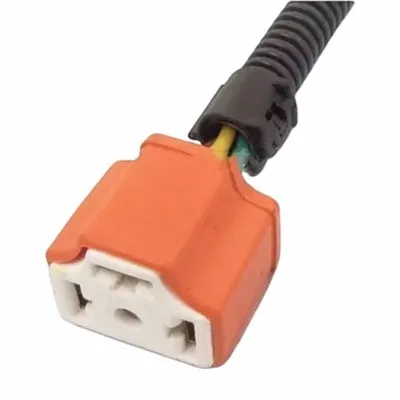
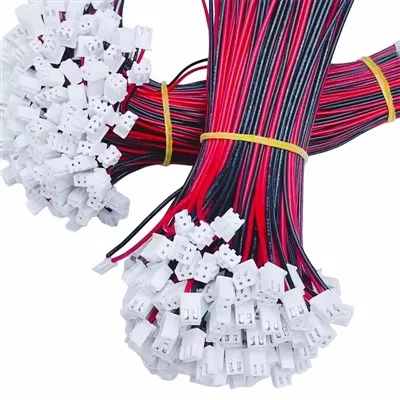
Custom cable harness is tailor-made according to customer specifications for unique equipment and system integration. It covers custom wire selection, connector matching, cable routing, shielding and assembly. Widely used in automotive, industrial, medical and energy industries. Complete design validation, electrical testing and reliability inspection ensure the harness meets specific application requirements.

Requirement Analysis During Development
Successful custom harness development begins with a detailed understanding of application requirements.
Engineering teams typically evaluate:
- Operating voltage
- Current requirements
- Signal types
- Installation space
- Environmental conditions
- Regulatory requirements
- Service life expectations
Early requirement analysis helps prevent design changes during later development stages and reduces overall project risk.
A clear specification also supports more accurate material selection and testing plans.

Prototype Development and Design Verification
Prototype production is an important step in custom cable harness development.
Initial samples allow engineers to evaluate:
Connector Compatibility
Connectors must fit correctly within the intended system architecture.
Routing Feasibility
Cable paths should match installation requirements without excessive stress.
Mechanical Fit
Harness dimensions and branch locations must align with the equipment layout.
Assembly Accessibility
The design should support efficient installation and servicing.
Prototype verification often identifies opportunities for design optimization before volume production begins.
Electrical Validation Testing
Electrical performance verification ensures that the harness meets functional requirements.
Typical testing activities include:
Continuity Testing
Electrical pathways are verified throughout the assembly.
Insulation Resistance Testing
Insulation systems are evaluated for electrical safety.
Contact Resistance Measurement
Connection quality is assessed to ensure stable performance.
Signal Integrity Evaluation
Communication circuits are checked for transmission stability.
These tests help confirm that the harness performs as intended under operating conditions.
Environmental Reliability Testing
Many custom cable harnesses operate in challenging environments.
Environmental testing helps evaluate long-term durability.
High Temperature Exposure
Performance is assessed under elevated temperature conditions.
01
Low Temperature Operation
Material flexibility and electrical performance are verified at low temperatures.
02
Humidity Testing
Resistance to moisture-related degradation is evaluated.
03
Vibration Testing
Mechanical stability is verified under dynamic operating conditions.
04
Chemical Resistance Evaluation
Protective materials may be tested against oils, solvents or industrial fluids.
Environmental validation helps reduce field failures and improve product lifespan.
05
Mechanical Performance Verification
Mechanical reliability is equally important for many applications.
Typical evaluations include:
Pull Force Testing
Terminal retention strength is measured.
01
Bend Cycle Testing
Repeated flexing assesses cable durability.
02
Connector Mating Evaluation
Insertion and removal performance is verified over multiple cycles.
03
Strain Relief Assessment
Mechanical protection structures are evaluated for effectiveness.
These tests help determine whether the harness can withstand real-world operating conditions.
04
Shielding and Signal Performance Validation
Many modern electronic systems require protection against electromagnetic interference.
Custom harnesses may incorporate:
- Shielded cables
- Braided protection
- Twisted pair conductors
- Grounding structures
- EMI suppression components
Testing verifies that signal quality remains stable in electrically noisy environments.
This is particularly important for communication systems, medical equipment and industrial control devices.

Pilot Production Evaluation
Before mass production begins, pilot builds provide valuable manufacturing feedback.
Pilot production activities commonly include:
√ Process Capability Assessment
Manufacturing consistency is evaluated.
√ Material Verification
Production materials are confirmed against design requirements.
√ Assembly Workflow Optimization
Processes are refined to improve efficiency.
√ Quality Documentation Review
Inspection procedures and production records are validated.
Pilot production helps reduce manufacturing risks and supports smoother project launches.
Applications of Custom Cable Harnesses
Custom harnesses are used across a wide range of industries.
Typical applications include:
√ Industrial Automation
Supporting sensors, controllers and automation equipment.
√ Medical Devices
Providing reliable electrical connections for healthcare systems.
√ Automotive Electronics
Supporting control systems, power distribution and communication networks.
√ Communication Equipment
Maintaining signal integrity in networking and data transmission systems.
√ Energy Infrastructure
Supporting monitoring, control and power management systems.
Different industries often require different validation methods and performance criteria.
Engineering Support and Design Optimization
A strong engineering team can provide valuable support throughout product development.
Services may include:
- Design review
- Material selection
- Connector recommendations
- Prototype development
- Reliability testing support
- Manufacturing optimization
Early engineering involvement can help improve product performance while reducing development costs and lead times.

FAQ
Q: What is a Custom Cable Harness?
A: A Custom Cable Harness is a cable assembly designed according to specific application requirements rather than using a standard configuration.
Q: Why choose a custom harness instead of a standard cable assembly?
A: Custom designs can improve installation efficiency, electrical performance, durability and compatibility with specialized equipment.
Q: What tests are commonly performed during development?
A: Continuity testing, insulation resistance testing, pull force testing, vibration testing and environmental testing are commonly used.
Q: Which industries use Custom Cable Harnesses?
A: Industrial automation, medical equipment, automotive systems, communication devices and energy infrastructure frequently use custom harness solutions.
Hot Tags: custom cable harness, China custom cable harness manufacturers, suppliers, factory, control panel cable assembly, engine compartment wiring harness, harness cable connector, the wiring harness, universal car stereo wiring harness kit, universal EV wiring harness kit