
Product Details
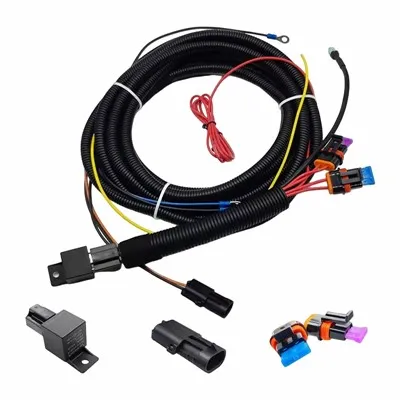
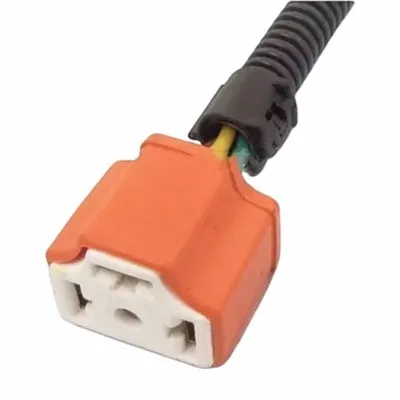
Industrial Cable Harness is a cable assembly designed to connect power, control, communication and sensing circuits within industrial equipment and automated systems. Unlike harnesses intended for consumer products, industrial cable assemblies must often withstand continuous operation, vibration, mechanical movement, dust, moisture and electrical interference. They are commonly used in factory automation, robotics, machine tools, control cabinets, material handling systems and industrial instrumentation.

Where Industrial Cable Harnesses Are Used
Industrial equipment rarely relies on a single electrical connection. Motors, sensors, controllers, actuators, switches and communication devices need organized wiring between different parts of the system.
Industrial cable harnesses can be found in:
- PLC control systems
- Industrial robots
- CNC machines
- Servo motor systems
- Automated assembly equipment
- Conveyor systems
- Packaging machinery
- Control cabinets
- Industrial sensors
- Material handling equipment
The harness normally combines multiple wires or cables into an organized assembly, reducing loose wiring inside the equipment and making installation and maintenance more manageable.
The required construction depends heavily on the machine architecture. A stationary control cabinet may prioritize identification and connection density, while a robotic application may require continuous flexing performance.

Selecting the Harness for the Operating Environment
Industrial cable harness selection should start with the actual working environment rather than only the electrical specification.
A harness installed inside a clean control cabinet may require relatively simple protection. Equipment operating on a factory floor can face oil, coolant, dust, vibration and repeated movement. Outdoor machinery introduces additional exposure to moisture and temperature changes.
Several environmental conditions should be evaluated during procurement:
Temperature
The conductor insulation, connector housing and protective materials should be suitable for the expected temperature range.
01
Vibration
Industrial machines can generate continuous mechanical vibration. Terminals, connectors and cable fixation need to remain secure during operation.
02
Flexing
Robotic arms and moving machine assemblies may bend cables repeatedly. Flexible cable structures and appropriate strain relief become more important in these applications.
03
Moisture and Dust
Outdoor or exposed equipment may require sealed connectors, protective tubing or suitable cable jackets.
04
Oil and Chemicals
Machine tools and manufacturing equipment can expose wiring to lubricants, coolants and cleaning chemicals. Material compatibility should therefore be considered before production.
05
Power, Control and Communication Wiring
An industrial harness may contain several circuit types within one assembly.
Power circuits deliver energy to motors, actuators and other electrical loads. Control circuits connect switches, relays, PLC inputs and outputs. Signal circuits transmit information from sensors or measurement devices. Communication circuits connect industrial networking equipment and controllers.
These circuits should be arranged according to their electrical characteristics.
Separating sensitive signal circuits from higher-power conductors can help reduce unwanted interference. Appropriate cable selection, shielding and grounding methods may also be required for systems containing sensitive analog signals or high-speed communication.
This is particularly important when motors, variable-frequency drives and other electrically noisy equipment operate close to control electronics.
Connector and Terminal Configuration
Connectors are selected according to electrical requirements, installation space and environmental conditions.
Industrial harnesses may use:
- Wire-to-wire connectors
- Wire-to-board connectors
- Circular connectors
- Terminal blocks
- High-density connectors
- Sealed connectors
- Custom connector assemblies
Terminal selection also affects long-term reliability. The conductor size must be compatible with the terminal, while crimping parameters should be controlled during production.
For equipment exposed to vibration, connector locking mechanisms are particularly important. A secure connection reduces the possibility of terminal movement or intermittent contact during machine operation.
Cable Management and Mechanical Protection
Industrial wiring must remain organized while allowing the machine to operate normally.
Protective solutions may include corrugated tubing, braided sleeving, flexible conduit, heat-shrink tubing and protective tape.
The correct method depends on the installation structure.
For fixed wiring, the main objective may be protection and organization. For moving assemblies, the harness must also accommodate bending and movement without excessive mechanical stress.
Cable length and routing should be controlled carefully. Excessive cable length can complicate installation, while insufficient length can place tension on connectors and terminals.
Strain relief at connection points is another important consideration because repeated mechanical force can eventually affect the conductor or terminal connection.
Manufacturing Controls for Industrial Harnesses
Production consistency is particularly important when industrial cable harnesses are purchased in repeated batches.
A typical manufacturing flow can include wire cutting, stripping, terminal crimping, connector assembly, branching, protective sleeving, labeling and electrical testing.
Automated or controlled cutting helps maintain consistent cable lengths. Stripping parameters should prevent conductor damage. Crimping requires appropriate tooling and controlled process parameters.
For multi-branch assemblies, visual work instructions and assembly fixtures can help maintain the correct routing and connector position.
First-piece inspection is useful before a production batch begins. It provides an opportunity to verify wire lengths, terminal positions, connector configuration and labeling before the same process is applied to the remaining quantity.
Quality Checks That Matter to Buyers
For industrial applications, quality inspection should cover more than appearance.
Typical controls include:
- Wire and component verification
- Connector part-number inspection
- Terminal position inspection
- Crimp height or crimp quality checks
- Pull-force testing where applicable
- Continuity testing
- Short-circuit detection
- Insulation testing where required
- Final visual inspection
Electrical testing is especially valuable for assemblies containing many circuits. A harness can look correct while still containing an open circuit, incorrect wire position or unwanted connection.
Traceability can also help manufacturers identify the production batch, materials and test records associated with an assembly.

Cost Drivers in Industrial Harness Procurement
The purchase price of an industrial cable harness depends on more than cable length.
Major cost factors include conductor size, cable type, connector selection, terminal quantity, shielding, protective materials, branching complexity and testing requirements.
Connector cost can become significant when the assembly uses specialized industrial connectors. Additional protection may increase material cost but can be justified when the harness operates in a harsh environment.
Labor also increases with assembly complexity. A simple two-wire cable may require limited processing, while a multi-branch harness with dozens of terminals, labels and protective components requires considerably more assembly work.
For this reason, comparing suppliers only by unit price may not provide a complete picture. Procurement teams should also consider defect risk, installation effort, expected service life and the cost of replacing a failed harness.
Industrial Automation and Robotics
Factory automation is one of the major application areas for industrial cable harnesses.
PLC systems require organized connections between controllers, sensors and actuators. Servo systems need reliable connections between drives and motors. Robotic equipment introduces repeated movement and therefore places additional demands on cable flexibility and mechanical protection.
For robotic applications, the harness design should consider bending radius, movement frequency, cable routing and strain relief. A harness that performs well in a stationary machine may not be appropriate for continuous-motion equipment.
Machine Tools and Manufacturing Equipment
CNC machines, cutting equipment, forming machinery and other production systems contain multiple electrical subsystems.
Harnesses may connect:
Motors
Limit switches
Encoders
Sensors
Control panels
Solenoid valves
Cooling systems
Safety devices
In these environments, resistance to oil, coolant, vibration and mechanical wear can influence service life.
Correct labeling is also valuable because maintenance personnel may need to identify individual circuits quickly during equipment servicing.
How to Prepare an RFQ
A detailed RFQ helps suppliers evaluate the project accurately and reduces clarification cycles.
Useful information includes:
- Wiring diagram
- Cable type and conductor size
- Wire colors
- Cable length
- Connector and terminal part numbers
- Branch configuration
- Shielding requirements
- Protective sleeve requirements
- Environmental conditions
- Electrical testing requirements
- Prototype quantity
- Annual production volume
Drawings or samples are particularly useful for complex assemblies because they provide information about physical routing and connector orientation that may not be clear from a basic parts list.

Building a Reliable Supply Chain
Industrial equipment manufacturers often require the same harness design over multiple production cycles. Supplier consistency therefore becomes an important purchasing consideration.
A capable harness supplier should be able to maintain approved component specifications, controlled assembly processes and repeatable testing standards.
For new projects, prototype samples can be used to verify connector fit, cable routing, installation clearance and electrical performance. Once the design is approved, the same documented process can be transferred into regular production.
This approach reduces the risk of unexpected differences between prototype and production batches and provides a more stable supply for industrial equipment manufacturers.
FAQ
Q: What is an Industrial Cable Harness?
A: An Industrial Cable Harness is an assembled group of wires, cables, terminals and connectors used to distribute power, control signals or communication signals within industrial equipment.
Q: Which equipment uses Industrial Cable Harnesses?
A: Factory automation systems, robots, CNC machines, control cabinets, conveyors, packaging equipment and industrial machinery commonly use these assemblies.
Q: What environmental factors should be considered?
A: Temperature, vibration, repeated movement, moisture, dust, oil and chemical exposure should be evaluated according to the equipment's operating conditions.
Q: How can industrial harness quality be verified?
A: Wire and connector inspection, terminal checks, crimp verification, continuity testing, short-circuit detection and final inspection can be used according to the project requirements.
Hot Tags: industrial cable harness, China industrial cable harness manufacturers, suppliers, factory, control panel cable assembly, diagnostic equipment cable assembly, ECG cable assembly, EV high voltage cable assembly, the wire harness, wire harness fabrication