
Product Details
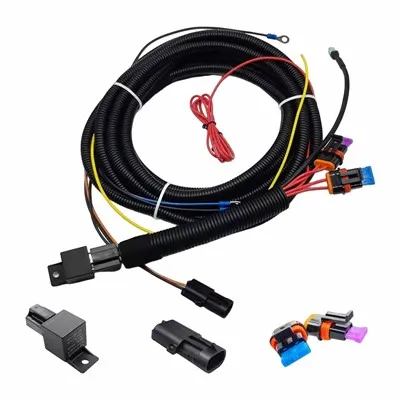
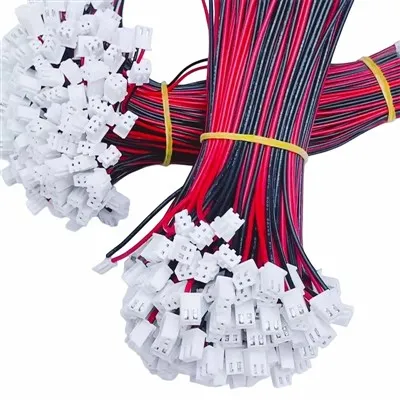
Communication Cable Harness is a cable assembly designed to connect electronic devices, control units, communication modules and network equipment for reliable data transmission. It can carry digital signals, control information and communication data between different system components. Depending on the transmission protocol, distance and operating environment, the assembly may use twisted-pair cables, shielded conductors, coaxial structures or multi-core configurations.

Communication Requirements Define the Cable Structure
The cable should be selected according to the communication system rather than simply by conductor size or external appearance.
Different communication applications place different requirements on the harness. A short internal connection between electronic modules may require a compact multi-core assembly, while equipment installed in an electrically noisy environment may require twisted-pair conductors and additional shielding.
Important design parameters normally include:
- Communication protocol
- Transmission distance
- Signal frequency
- Data rate
- Number of circuits
- Cable length
- Installation space
- Operating environment
These parameters influence conductor construction, insulation material, shielding method and connector selection.
A communication cable harness should therefore be defined together with the electrical architecture of the equipment. Changing the cable structure after system testing may affect signal performance and mechanical installation.

Matching Cable Construction to Data Transmission
Different cable structures provide different transmission characteristics.
Twisted-Pair Construction
Twisted-pair conductors are commonly used for communication circuits because the balanced structure can help reduce the influence of external electromagnetic noise.
The twisting specification, conductor arrangement and cable geometry should remain consistent with the intended application.
Shielded Construction
Shielding can be added when the harness operates near motors, power converters, switching devices or other potential sources of electromagnetic interference.
Foil, braid or combined shielding structures can be selected according to the required protection level.
Coaxial Construction
Coaxial cables provide a controlled conductor arrangement that can be suitable for certain high-frequency communication and signal transmission applications.
Multi-Core Construction
Multi-core cables are useful when one harness needs to combine several communication, control or auxiliary circuits.
The final configuration should consider both electrical performance and installation requirements.
Connector Matching During Development
Connector selection is often underestimated during communication harness development.
The connector must match the electrical interface as well as the mechanical requirements of the equipment.
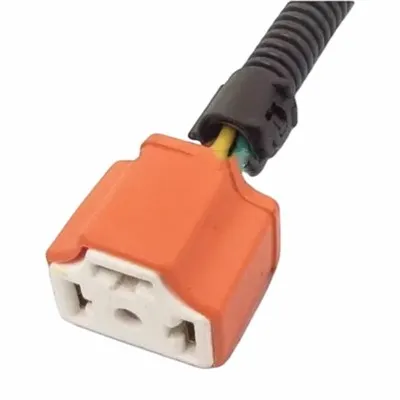
Important factors include contact arrangement, terminal specification, mating structure, locking mechanism and available installation space.
For communication systems exposed to vibration or movement, the connector should provide stable mechanical retention. For outdoor or industrial equipment, sealing and environmental protection may also be required.
Shielded communication systems require additional attention to the connection between the cable shield and connector. A discontinuity in the shielding structure can reduce the effectiveness of the overall protection system.
During prototype development, connector fit should be checked together with cable routing rather than being evaluated as an independent component.
Signal Integrity During Prototype Validation
A communication harness may look acceptable while still creating transmission problems in the finished system.
Prototype validation should therefore consider the complete cable path.
Potential factors include:
Cable Length
Longer cable runs can introduce additional electrical effects and may influence communication performance depending on the system.
01
Crosstalk
Closely routed circuits can interact with one another, particularly when multiple communication channels share the same harness.
02
Electromagnetic Interference
External electrical noise can interfere with communication signals when the cable structure or shielding arrangement is insufficient.
03
Impedance Characteristics
Some communication interfaces require controlled electrical characteristics throughout the transmission path.
04
Grounding and Shield Termination
Incorrect grounding or shield termination can create unexpected interference or reduce noise protection.
These factors should be reviewed during engineering validation before the design is released for volume production.
05
Harness Routing and Mechanical Design
Communication performance is only one part of a successful cable assembly.
The harness must also fit the physical structure of the equipment.
During development, engineers should verify:
- Minimum bending requirements
- Connector orientation
- Cable exit direction
- Branch positions
- Fixing points
- Strain relief
- Clearance from moving components
- Separation from high-power cables
Good routing reduces mechanical stress and makes installation more repeatable.
For equipment containing both power and communication circuits, physical separation can also help reduce the risk of electromagnetic interference.
A well-defined drawing or wiring diagram should identify cable lengths, connector positions and branch dimensions before production begins.

Testing Before Production Release
Communication cable harnesses should be validated before large-scale production whenever the application has strict transmission requirements.
A typical inspection process can include visual inspection, dimensional verification and electrical testing.
Continuity Testing
Continuity testing confirms that each circuit follows the approved wiring configuration.
Short-Circuit Testing
Short-circuit detection helps identify unwanted electrical connections between conductors.
Insulation Testing
Insulation testing may be applied when required by the electrical design or customer specification.
Connector Inspection
Terminal position, locking condition and connector assembly should be checked to reduce the risk of installation failures.
Communication Verification
For more demanding applications, the completed harness can be evaluated together with the target equipment to confirm communication stability under representative operating conditions.
The exact validation method should be defined according to the communication system rather than applying the same test procedure to every harness.
From Engineering Sample to Production
Communication harness projects often require several development stages.
The first sample is normally used to confirm basic dimensions, connector compatibility and wiring configuration. Engineering evaluation can then identify changes to cable length, shielding, connector orientation or protective materials.
Once the design is approved, production documentation should be released with controlled specifications.
Important manufacturing information may include:
- Wire and cable part numbers
- Connector specifications
- Terminal requirements
- Cable lengths
- Branch dimensions
- Shielding configuration
- Crimp parameters
- Testing requirements
- Drawing revision
Maintaining revision control is particularly important when communication equipment is updated during development. Producing a harness according to an outdated drawing can result in connector mismatches or incorrect cable configurations.

Quality Controls for Communication Harnesses
Production consistency depends on controlling the details that affect both electrical and mechanical performance.
Wire preparation should maintain stable cutting and stripping dimensions. Terminal crimping should follow approved parameters. Connector assembly should verify terminal positions and locking conditions.
For shielded assemblies, the shielding structure should also be inspected to ensure that the intended configuration is maintained.
Final testing provides another opportunity to identify wiring errors before shipment.
Traceability can include material batches, production records, inspection results and electrical test data. This information is useful when a communication harness is integrated into equipment that requires controlled quality documentation.
Where Communication Cable Harnesses Are Used
Communication cable harnesses are used across multiple equipment categories.
Industrial Automation
They can connect controllers, sensors, drives, operator interfaces and communication modules within automated equipment.
Automotive Electronics
They support connections between electronic control units, sensors, communication modules and other vehicle systems.
Telecommunications Equipment
They can provide internal connections between communication modules, network equipment and supporting electronic assemblies.
Medical Equipment
Communication harnesses can connect control boards, monitoring modules, displays and other electronic subsystems.
Robotics
Robotic equipment may require flexible communication cables that can tolerate repeated movement while maintaining stable transmission.
Each application has different requirements for cable construction, connector selection and mechanical protection.
Evaluating a Communication Harness Supplier
Supplier evaluation should go beyond unit price.
A suitable supplier should be able to interpret drawings and wiring diagrams, manage cable and connector materials, control terminal processing and perform the required electrical inspections.
For engineering projects, prototype flexibility is also important. The supplier should be able to accommodate reasonable design changes without losing control of revisions.
For production purchasing, buyers should review consistency between samples and production batches, lead-time stability, material traceability and inspection records.
Clear communication between the equipment designer, purchasing team and harness manufacturer can reduce the risk of incorrect specifications entering production.
Cost Considerations
The cost of a Communication Cable Harness depends on more than cable length.
Major cost drivers can include cable construction, conductor count, shielding, connector type, terminal quantity, assembly complexity and testing requirements.
A simple short harness with standard connectors may have a relatively low assembly cost. A shielded multi-branch harness using specialized connectors and additional testing can require significantly more processing time and material.
For procurement, comparing suppliers based only on the cable unit price may produce an incomplete cost evaluation.
A more useful comparison considers the complete assembly, including connectors, processing, testing, packaging and expected quality performance.
FAQ
What is a Communication Cable Harness?
A Communication Cable Harness is an assembled cable solution used to transmit data, communication signals and control information between electronic devices and system components.
What cable types are used in communication harnesses?
Common structures include twisted-pair, shielded, coaxial and multi-core cables. The appropriate structure depends on the communication system and operating environment.
Why is shielding used in communication harnesses?
Shielding helps reduce the impact of electromagnetic interference and can support more stable communication performance in electrically noisy environments.
What should be checked during prototype development?
Cable length, connector compatibility, routing, shielding, signal performance, mechanical clearance and electrical continuity should be verified according to the application requirements.
Hot Tags: communication cable harness, China communication cable harness manufacturers, suppliers, factory, cable & harness, cable assembly wiring harness, engine bay wiring harness, harness cable connector, robotics control cable assembly, the wire harness