
Product Details
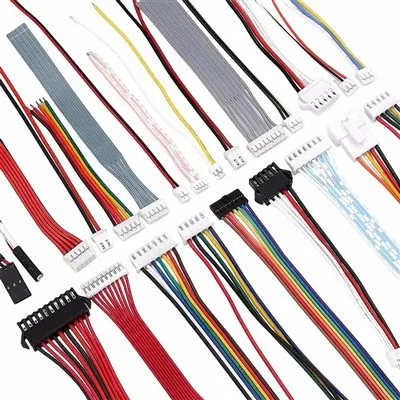
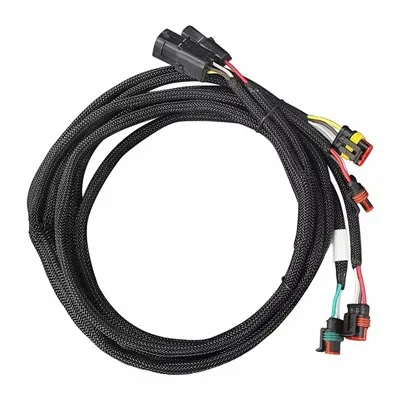
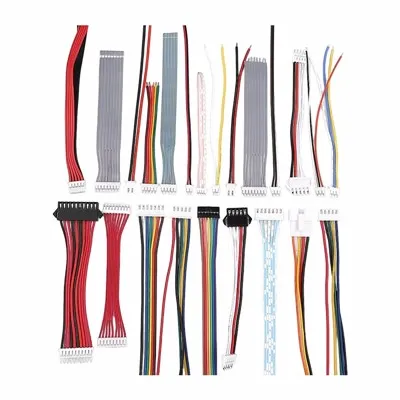
Automotive motor wiring harness delivers high-power current between traction motors and motor controllers. It uses large-cross-section cables, high-voltage insulation and anti-vibration connectors. It must withstand continuous high temperature, mechanical vibration and oil contamination. Shielding design suppresses EMI. Hipot, partial discharge and thermal cycling tests are mandatory to guarantee driving safety.

Manufacturing Structure of Motor Wiring Harnesses
A typical motor wiring harness consists of several key elements working together to ensure safe and efficient power delivery.
Common components include:
- Power cables
- Signal wires
- High-current terminals
- Motor connectors
- Protective sleeving
- Cable clamps
- Sealing components
Each component must meet automotive performance requirements while maintaining compatibility with the motor system.
Proper assembly helps ensure stable electrical performance throughout the product lifecycle.

High-Current Cable Processing Capability
Motor harnesses often carry significantly higher currents than standard vehicle wiring systems.
Manufacturing processes must therefore support large conductor sizes and precise termination methods.
Precision Cable Cutting
Accurate cable lengths improve installation consistency and routing efficiency.
01
Heavy-Duty Wire Stripping
Controlled stripping prevents conductor damage and maintains electrical performance.
02
Terminal Crimping
Specialized crimping equipment is used to achieve stable electrical connections.
03
Ultrasonic Welding
Some motor applications utilize ultrasonic welding to reduce electrical resistance and improve conductivity.
04
Multi-Core Cable Processing
Complex motor systems may require both power and signal circuits within the same harness assembly.
Proper cable processing helps improve current carrying performance and reduce energy loss.
05
Connector Assembly Capability
Motor systems often operate under vibration and temperature fluctuations.
Reliable connector assembly is therefore critical.
Key manufacturing controls include:
Terminal Position Verification
Accurate terminal insertion helps prevent electrical faults.
Connector Locking Inspection
Secure locking structures improve vibration resistance.
Seal Installation
Proper sealing protects against moisture and contaminants.
Contact Resistance Control
Low-resistance connections support efficient motor operation.
These manufacturing capabilities help improve system reliability and reduce maintenance requirements.
Protective Material Integration
Motor harnesses frequently operate in demanding vehicle environments.
Protective materials are used to enhance durability and service life.
Common protection methods include:
High-Temperature Sleeving
Suitable for areas near motors and power electronics.
Corrugated Tubing
Provides mechanical protection against abrasion.
Braided Protection
Improves flexibility while enhancing wear resistance.
Heat-Shrink Components
Support insulation and strain relief functions.
Material selection should match the environmental conditions of the intended application.
Quality Control During Production
Automotive motor harnesses require comprehensive quality management throughout production.
Typical inspection activities include:
√ Incoming Material Inspection
Verification of cables, connectors and terminals before manufacturing begins.
√ Crimp Cross-Section Analysis
Evaluation of internal crimp structure and compression quality.
√ Pull Force Testing
Measurement of terminal retention strength.
√ Continuity Testing
Electrical paths are verified to ensure correct circuit connections.
√ Final Visual Inspection
Completed harnesses are inspected for workmanship and assembly accuracy.
Consistent quality control helps reduce defects and improve manufacturing consistency.
Production Equipment Requirements
Advanced manufacturing equipment plays an important role in harness quality.
Common production resources include:
√ Automated Wire Processing Equipment
Supporting accurate cutting, stripping and termination.
√ High-Force Crimping Machines
Suitable for large-gauge conductors.
√ Ultrasonic Welding Systems
Providing reliable electrical connections in selected applications.
√ Electrical Test Equipment
Verifying circuit integrity before shipment.
√ Harness Assembly Fixtures
Ensuring dimensional consistency and repeatability.
Well-controlled equipment helps improve both productivity and product quality.
Production Capacity and Scalability
Motor harness programs often progress through multiple production stages.
Manufacturers should be capable of supporting:
√ Prototype Production
For engineering verification and system testing.
√ Pilot Production
To validate manufacturing processes before volume production.
√ Medium-Volume Manufacturing
Suitable for specialized vehicle platforms.
√ High-Volume Production
Supporting large-scale automotive programs.
Scalable manufacturing capability allows customers to transition efficiently from development to mass production.
Applications of Automotive Motor Wiring Harnesses
Motor harnesses are used across a wide range of automotive systems.
Typical applications include:
√ Electric Drive Motors
Supporting vehicle propulsion systems.
√ Electric Power Steering Motors
Providing electrical connections for steering assistance.
√ Cooling Fan Motors
Supplying power to thermal management systems.
√ Seat Adjustment Motors
Supporting comfort and positioning functions.
√ Window Lift Motors
Providing reliable operation for body control systems.
√ Electric Pump Motors
Used in cooling, lubrication and fluid management systems.
The increasing number of electric motor applications continues to drive demand for reliable harness solutions.
Selecting the Right Manufacturing Partner
Choosing a qualified supplier requires evaluating technical capability, quality systems and production resources.
Important factors include:
- Automotive manufacturing experience
- High-current harness expertise
- Connector assembly capability
- Traceability systems
- Testing resources
- Production scalability
A supplier with strong manufacturing capabilities can help improve product reliability, reduce quality risks and support long-term vehicle programs.
As electric vehicle adoption continues to grow, automotive motor wiring harnesses will remain a key component in modern vehicle electrical systems.

FAQ
What is an Automotive Motor Wiring Harness?
It is a wiring assembly used to connect electric motors with controllers, sensors, power systems and vehicle electronics.
What makes motor harnesses different from standard automotive harnesses?
Motor harnesses often handle higher currents, require stronger mechanical protection and operate under more demanding thermal conditions.
What tests are commonly performed on motor harnesses?
Common tests include continuity testing, pull force testing, crimp analysis, contact resistance measurement and visual inspection.
Which automotive systems use motor wiring harnesses?
Electric drive systems, steering motors, cooling fans, seat adjustment systems, window motors and electric pumps commonly use motor harnesses.
Hot Tags: automotive motor wiring harness, China automotive motor wiring harness manufacturers, suppliers, factory, Automotive Power Cable Harness, automotive wire harness, automotive wiring harness assembly kit, electrical wire harnesses, motorcycle wiring harness kit, wire harness