
Product Details
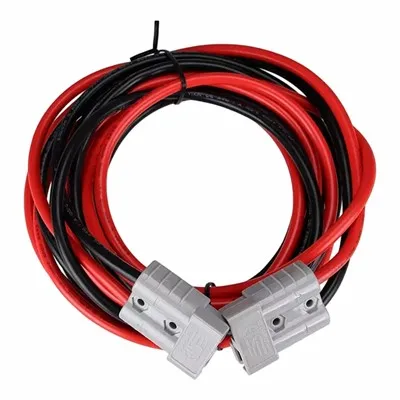
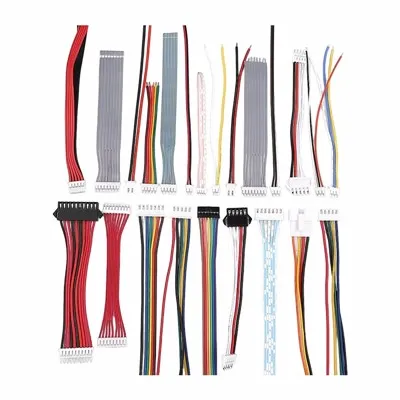
Automotive battery wiring harness transfers high current between battery packs, inverters and power distribution units. It uses heavy-gauge cables, high-voltage insulation and secure locking connectors. It must resist heat, abrasion and chemical corrosion. Strict hipot and continuity tests are required to prevent short circuits and thermal runaway, complying with automotive high-voltage safety standards.

Manufacturing Structure of Automotive Battery Wiring Harness
Battery harness assemblies typically consist of multiple components working together to ensure safe and reliable power delivery.
Common elements include:
- High-current cables
- Power terminals
- Battery connectors
- Fuse assemblies
- Protective tubing
- Mounting accessories
- Protective coverings
Unlike low-current wiring systems, battery harnesses require stronger mechanical structures and enhanced insulation protection.
The design must support both electrical performance and long-term durability.

High-Current Cable Processing Capability
One of the most important manufacturing capabilities is the processing of large-gauge conductors.
Battery harnesses often use thicker cables than standard vehicle wiring.
Manufacturing processes may include:
Precision Wire Cutting
Accurate cable lengths help ensure proper vehicle installation.
01
Heavy-Duty Stripping
Insulation removal must protect conductor integrity.
02
High-Force Crimping
Large terminals require specialized crimping equipment.
03
Ultrasonic Welding
Certain battery systems use ultrasonic welding to create low-resistance electrical connections.
04
Terminal Forming
Customized terminal structures may be required for specific vehicle platforms.
Proper processing helps minimize resistance and improve electrical efficiency.
05
Insulation and Protection Systems
Battery wiring harnesses operate in environments that may include heat, vibration, moisture and chemical exposure.
Protective materials play a critical role in reliability.
Common protection solutions include:
High-Temperature Insulation
Suitable for battery compartments and power electronics environments.
Corrugated Conduit
Provides mechanical protection against abrasion.
Braided Sleeving
Improves wear resistance and flexibility.
Heat-Shrink Tubing
Supports insulation and strain relief.
Protective Taping
Enhances bundle integrity and environmental protection.
Material selection should align with the intended operating conditions.
Terminal and Connector Manufacturing
Battery harness performance depends heavily on connection quality.
Manufacturers must control:
Terminal Crimp Quality
Reliable crimping reduces contact resistance.
Connector Assembly Accuracy
Proper assembly helps prevent connection failures.
Retention Force Verification
Mechanical stability supports long-term durability.
Contact Resistance Control
Low resistance improves power transmission efficiency.
These manufacturing controls contribute to consistent electrical performance.
Quality Control During Production
Battery harnesses are safety-related components that require comprehensive quality management.
Common quality procedures include:
√ Incoming Material Inspection
Verification of wire, terminals and connectors before production.
√ Crimp Cross-Section Analysis
Evaluation of internal crimp structure and compression quality.
√ Pull Force Testing
Measurement of terminal retention strength.
√ Continuity Verification
Electrical paths are checked for accuracy.
√ Visual Inspection
Finished assemblies are examined for workmanship and compliance.
Consistent quality control helps reduce defects and improve product reliability.
Manufacturing Challenges
Battery harness production presents several technical challenges.
√ Large Cable Handling
Heavy-gauge conductors require specialized processing equipment.
√ High Current Requirements
Electrical connections must support significant power loads.
√ Complex Routing Configurations
Vehicle packaging constraints often require customized harness layouts.
√ Thermal Management Considerations
Heat generated by high-current operation must be considered during design and manufacturing.
√ Production Consistency
Repeatable manufacturing processes are essential for large-volume automotive programs.
Addressing these challenges helps improve both quality and production efficiency.
Production Capacity and Scalability
Automotive programs often require flexible production support.
Manufacturers may provide:
√ Prototype Harness Production
Supporting vehicle development and testing programs.
√ Pilot Production Runs
Validating manufacturing processes before mass production.
√ Medium-Volume Manufacturing
Supporting specialty vehicle programs.
√ High-Volume Production
Serving large-scale automotive platforms.
Scalable production capability helps customers transition smoothly from development to commercial production.
Applications in Electric and Hybrid Vehicles
The growth of electric mobility has significantly increased demand for battery wiring harnesses.
Typical applications include:
√ Battery Pack Connections
Providing power transfer within battery systems.
√ Battery Management Systems
Supporting monitoring and control functions.
√ Charging Systems
Connecting charging equipment and vehicle power electronics.
√ Power Distribution Units
Delivering electrical power throughout the vehicle.
√ Energy Storage Modules
Supporting advanced battery architectures.
These applications require high levels of electrical and mechanical reliability.
Selecting a Manufacturing Partner
Supplier selection should focus on manufacturing capability rather than price alone.
Important evaluation criteria include:
- High-current harness experience
- Crimping technology
- Material traceability
- Testing capability
- Automotive quality systems
- Production scalability
An experienced manufacturing partner can help improve product reliability, support production growth and reduce quality risks throughout the project lifecycle.
FAQ
Q: What is an Automotive Battery Wiring Harness?
A: It is a high-current wiring assembly used to connect vehicle batteries with electrical systems, power distribution units and control modules.
Q: What makes battery harnesses different from standard automotive harnesses?
A: Battery harnesses handle higher currents, require larger conductors and must meet stricter safety and reliability requirements.
Q: What tests are commonly performed on battery harnesses?
A: Common tests include continuity testing, pull force testing, crimp analysis, contact resistance measurement and visual inspection.
Q: Which vehicles commonly use battery wiring harnesses?
A: Electric vehicles, hybrid vehicles, commercial vehicles and advanced passenger vehicles frequently use battery harness systems.
Hot Tags: automotive battery wiring harness, China automotive battery wiring harness manufacturers, suppliers, factory, Automotive Audio Wiring Harness, car wiring kit, custom car wiring, Metra Car Audio Harness, motorcycle wiring harness kit, Vehicle Wiring Harness