
Product Details
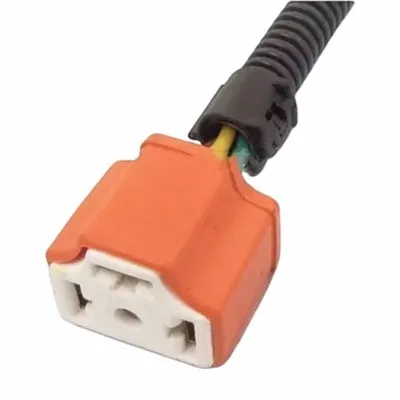
Signal Cable Harness is a cable assembly specifically designed for transmitting control signals, communication data and low-current electrical information between electronic devices, sensors, controllers and processing units. Unlike power cable harnesses that focus on high-current transmission, signal harnesses prioritize signal accuracy, transmission stability and resistance to electromagnetic interference. They are widely used in industrial automation, telecommunications equipment, medical devices, automotive electronics, security systems and consumer electronics.

Understanding Signal Transmission Requirements
Before selecting a signal cable harness, it is important to evaluate the communication requirements of the application.
Different systems may transmit:
- Analog signals
- Digital signals
- Sensor data
- Communication protocols
- Control instructions
- Monitoring information
Each signal type may require different cable structures, conductor specifications and shielding solutions.
A signal harness designed for industrial sensors may differ significantly from one used in communication equipment or medical electronics.

Choosing the Right Cable Structure
Cable structure has a major influence on transmission quality.
Several options are commonly used depending on the application.
Twisted Pair Cables
Twisted pair conductors help reduce electromagnetic interference and improve signal integrity.
Shielded Cables
Shielding layers protect signals from external electrical noise.
Multi-Core Cables
Multiple conductors support complex control and communication functions.
Coaxial Cables
Suitable for applications requiring stable high-frequency signal transmission.
Selecting the correct cable structure helps improve communication reliability while reducing interference risks.
Shielding Selection Considerations
Electromagnetic interference is one of the most common causes of signal degradation.
Proper shielding can significantly improve system performance.
Common shielding options include:
Aluminum Foil Shielding
Provides effective protection against high-frequency interference.
Braided Shielding
Offers strong mechanical durability and EMI protection.
Combination Shielding
Combines foil and braid structures for enhanced performance.
Individual Pair Shielding
Protects critical signal circuits within multi-core assemblies.
The appropriate shielding method depends on the operating environment and communication requirements.
Connector Selection for Signal Harnesses
Connectors play a critical role in maintaining signal quality.
Several factors should be evaluated during procurement.
Contact Stability
Reliable contacts help maintain uninterrupted signal transmission.
01
Signal Density
Compact connectors support higher circuit counts in limited spaces.
02
Shielding Compatibility
Connectors should maintain shielding continuity throughout the assembly.
03
Environmental Protection
Industrial and outdoor applications may require sealed connector systems.
Proper connector selection contributes to both performance and reliability.
04
Cost Factors During Procurement
Purchasing decisions should balance performance requirements and project budgets.
Several factors influence overall cost.
√ Cable Construction
Advanced shielding and specialized conductor designs increase material costs.
√ Connector Complexity
High-density or high-performance connectors generally cost more than standard alternatives.
√ Assembly Complexity
Additional branches, labels and protective materials increase manufacturing effort.
√ Testing Requirements
More comprehensive testing may increase production costs while reducing field failures.
Evaluating total lifecycle value often provides a better purchasing perspective than focusing solely on initial price.
Signal Integrity Considerations
Signal integrity is one of the most important performance indicators for communication systems.
Several factors can affect transmission quality.
√ Electromagnetic Interference
Nearby electrical equipment may generate unwanted noise.
√ Voltage Drop
Long cable runs can affect signal levels.
√ Crosstalk
Signals from adjacent conductors may interfere with each other.
√ Connector Resistance
Poor connections can introduce signal instability.
Addressing these factors during selection helps improve system performance.
Applications Across Industries
Signal cable harnesses are used in many industries that depend on reliable data transmission.
√ Industrial Automation
Connecting sensors, PLCs and control systems.
√ Medical Equipment
Supporting monitoring devices and diagnostic systems.
√ Telecommunications
Providing communication links within networking equipment.
√ Automotive Electronics
Supporting control modules, sensors and vehicle communication networks.
√ Security Systems
Connecting cameras, monitoring devices and access control equipment.
Different applications require different signal performance characteristics and environmental protections.
Supplier Evaluation Criteria
Selecting the right supplier is an important part of the procurement process.
Important considerations include:
- Signal transmission expertise
- Shielding technology capability
- Connector sourcing resources
- Quality management systems
- Testing capability
- Production flexibility
A qualified supplier can help optimize performance while reducing quality risks and development delays.
Long-Term Value of Proper Harness Selection
The lowest-cost solution is not always the most economical choice over the product lifecycle.
A properly selected signal cable harness can provide:
- Improved communication stability
- Reduced maintenance costs
- Better system reliability
- Longer service life
- Simplified installation
- Lower operational risk
For many applications, long-term performance and reliability create greater value than initial purchase savings.
FAQ
What is a Signal Cable Harness?
A Signal Cable Harness is a cable assembly designed to transmit control signals, communication data and low-current electrical information between electronic devices and systems.
What is the difference between a signal harness and a power harness?
Signal harnesses focus on data and control transmission, while power harnesses are designed for high-current electrical power delivery.
Why is shielding important?
Shielding helps reduce electromagnetic interference and improves signal transmission stability.
Which industries commonly use Signal Cable Harnesses?
Industrial automation, telecommunications, medical equipment, automotive electronics and security systems frequently use signal harness solutions.
Hot Tags: signal cable harness, China signal cable harness manufacturers, suppliers, factory, custom cable and wire, engine electrical harness, Engine Wiring Harness, robotics control cable assembly, wire harness fabrication, wire harness terminal