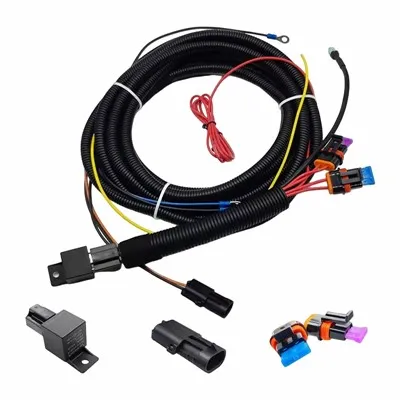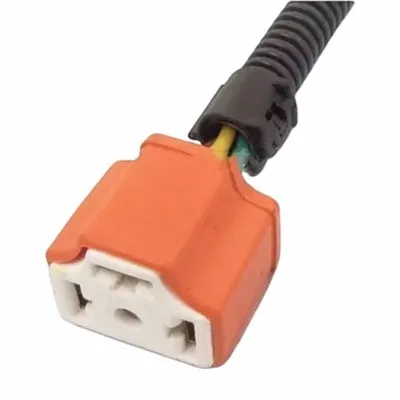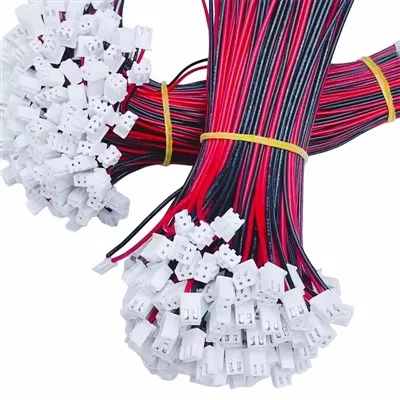

Product Details
Sensor cable harness transmits weak analog or digital signals from sensors to control units. It often adopts shielded twisted-pair wires to reduce external interference and maintain signal accuracy. The harness requires stable electrical performance and flexible structure. It is widely used in automotive, industrial, medical equipment and needs strict environmental and continuity tests.

Sensor Cable Construction
A typical sensor cable harness consists of several integrated components.
The basic structure may include:
- Conductors
- Insulation
- Shielding layers
- Terminals
- Sensor connectors
- Protective sleeves
- Strain relief components
- Identification labels
The exact configuration depends on the sensor type and installation environment.
For compact electronic equipment, small-diameter cables can help reduce installation space. For industrial or automotive applications, additional mechanical and environmental protection may be required.

Wire Processing for Sensor Applications
Manufacturing accuracy starts with wire preparation.
Sensor cables often contain relatively small conductors, making precise processing important.
Automatic Cutting
Accurate cutting maintains consistent cable length across production batches.
01
Controlled Stripping
Insulation must be removed without damaging the conductor.
02
Terminal Crimping
Crimping parameters need to remain within the approved range to provide stable electrical and mechanical connections.
03
Cable Marking
Identification marks help operators and customers distinguish circuits during installation.
04
End Preparation
Some sensor applications require specialized terminal treatment or customized conductor preparation.
Consistent wire processing reduces variation between assemblies and improves production repeatability.
05
Connector Assembly
Sensor systems frequently use compact connectors with multiple terminals.
Correct connector assembly is therefore essential.
Manufacturing controls may include:
Terminal Position Check
Each contact must be inserted into the correct cavity.
Terminal Lock Verification
Primary and secondary locking structures are checked to prevent terminal movement.
Seal Installation
For exposed applications, seals help protect electrical contacts from moisture and contamination.
Connector Housing Inspection
Housing damage, deformation or incomplete assembly must be identified before shipment.
Accurate connector assembly helps prevent intermittent connections and installation problems.
Shielding and Noise Protection
Many sensors generate low-level electrical signals that can be affected by surrounding electromagnetic noise.
A sensor cable harness may use different protection structures according to application requirements.
Common solutions include:
Twisted Conductors
Twisting helps reduce the influence of external electromagnetic interference.
Foil Shielding
A foil layer can provide additional protection against electrical noise.
Braided Shielding
Braided structures can combine EMI protection with mechanical durability.
Drain Wire
A drain wire may be incorporated to support shield grounding.
Shielding must be designed together with the connector and grounding structure. An isolated shield or poorly terminated shielding layer may not provide the expected protection.
Mechanical Protection
Sensor harnesses are often routed close to moving equipment, engines, machinery or vehicle components.
Mechanical protection helps prevent premature cable damage.
Typical solutions include:
- Corrugated tubing
- Braided sleeving
- Protective tape
- Heat-shrink tubing
- Flexible conduit
- Strain relief structures
The selected protection should match the bending radius, movement frequency and installation environment.
For moving sensor assemblies, excessive bending stress can eventually damage conductors or insulation. Appropriate routing and strain relief are therefore important during both design and manufacturing.

Environmental Protection
Sensor cable harnesses may be exposed to demanding operating conditions.
Automotive and industrial applications can involve temperature variation, humidity, vibration, oil, dust and chemical exposure.
Material selection should therefore consider:
√ Temperature Resistance
Cable insulation and connector materials should remain stable within the expected operating temperature range.
√ Moisture Protection
Sealed connectors and appropriate cable jackets help reduce moisture-related failures.
√ Chemical Resistance
Applications near engines or industrial equipment may require resistance to oils, fuels or cleaning agents.
√ Vibration Resistance
Terminals, connectors and cable protection must remain secure during continuous mechanical movement.
Environmental requirements should be defined before production so that suitable materials and protection structures can be selected.
Electrical Testing
Testing is an important part of sensor harness manufacturing.
Because sensor systems depend on accurate electrical connections, manufacturing defects must be identified before shipment.
Typical tests include:
√ Continuity Testing
Confirms that each circuit is connected according to the approved wiring configuration.
√ Short-Circuit Detection
Identifies unwanted connections between circuits.
√ Insulation Testing
Evaluates electrical isolation where required by the application.
√ Contact Resistance Verification
Helps identify poor terminal connections or abnormal electrical resistance.
√ Shielding Verification
Checks shield continuity when shielding is part of the design.
Testing requirements should be defined according to the sensor system and customer specifications.
Crimp Quality Control
Crimping is one of the most important manufacturing operations for sensor cable harnesses.
A visually acceptable terminal does not always guarantee a reliable electrical connection.
Production quality control may include:
- Crimp height measurement
- Crimp width inspection
- Pull force testing
- Terminal positioning checks
- Cross-section analysis
- First-piece approval
Crimp parameters should be controlled according to the selected terminal and conductor combination.
Stable crimping conditions improve connection consistency and reduce the risk of intermittent electrical faults.

Application in Automotive Electronics
Automotive systems contain a large number of sensors that continuously provide information to electronic control units.
Sensor cable harnesses are commonly used with:
Temperature Sensors
Supporting measurement of engine, battery or thermal system conditions.
Pressure Sensors
Connecting pressure monitoring devices with control systems.
Position Sensors
Transmitting position information from mechanical components.
Speed Sensors
Supporting wheel, motor and rotating equipment monitoring.
Battery Sensors
Connecting measurement devices used in vehicle electrical systems.
Automotive sensor harnesses must withstand vibration, temperature changes and limited installation space while maintaining reliable signal transmission.
Industrial Automation and Robotics
Industrial equipment relies on sensors to monitor machine conditions and control automated processes.
Sensor harnesses may connect:
- Proximity sensors
- Photoelectric sensors
- Encoders
- Pressure sensors
- Temperature sensors
- Position sensors
- Vibration sensors
Robotic systems create additional mechanical requirements because cables may repeatedly bend during operation.
Flexible cable construction, suitable bending protection and effective strain relief can help extend harness service life.
Quality Management for Sensor Harness Production
Consistent production quality requires control at several stages.
A structured inspection process may include incoming material verification, first-piece inspection, in-process checks and final electrical testing.
Important quality records can cover:
- Wire and terminal specifications
- Connector part numbers
- Crimp parameters
- Electrical test results
- Production batch information
- Final inspection results
Traceable production records make it easier to identify and address quality issues when required.
From Prototype to Volume Production
Sensor harness projects often begin with prototype samples before moving into regular production.
Prototype builds allow engineers to verify connector fit, cable length, routing, terminal configuration and installation performance.
After the design is approved, production processes can be standardized for larger quantities.
A controlled transition from prototype to mass production helps maintain the same electrical and mechanical characteristics across different production stages.
FAQ
What is a Sensor Cable Harness?
A Sensor Cable Harness is a cable assembly used to connect sensors with controllers, monitoring devices and electronic systems for power and signal transmission.
What types of sensors can use a Sensor Cable Harness?
Temperature, pressure, position, speed, vibration, proximity and current sensors can use customized sensor cable assemblies.
Why is shielding important for sensor cables?
Shielding can help reduce electromagnetic interference that may affect low-level sensor signals.
What manufacturing tests are commonly performed?
Continuity testing, short-circuit detection, insulation testing, contact verification and crimp inspection are commonly used according to application requirements.
Hot Tags: sensor cable harness, China sensor cable harness manufacturers, suppliers, factory, cable assembly wiring harness, industrial wire harness assembly, power cable harness, power harness, the wire harness, vehicle battery cable