
Product Details
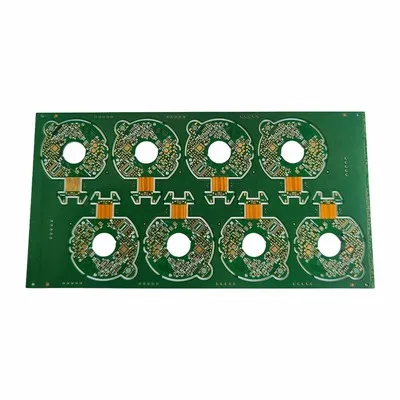
High-Speed Rigid-Flex PCB combines rigid FR-4 sections and flexible polyimide layers, specially optimized for high-speed signal transmission. It delivers mechanical stability for component mounting on rigid zones while allowing 3-dimensional bending and assembly via flexible segments. This type of PCB places strict requirements on dielectric material consistency, Dk/Df stability, impedance control, stack-up accuracy and trace routing across rigid-flex transition zones. High-speed rigid-flex PCBs are widely used in high-performance cameras, high-speed data transmission modules, portable test instruments and compact industrial electronic systems.

Selection Considerations for High-Speed Applications
Selecting the correct PCB technology is often one of the earliest decisions in product development.
For high-speed electronic systems, PCB selection directly affects:
- Signal quality
- Product reliability
- System stability
- Future scalability
- Manufacturing complexity
- Total project cost
Many purchasing teams initially focus on board pricing. However, for high-speed products, electrical performance and long-term reliability frequently have a greater impact on overall project success.
A properly selected High Speed Rigid-Flex PCB can help reduce engineering risks and simplify future product upgrades.

Comparing High Speed Rigid-Flex PCB with Conventional Solutions
Different interconnection technologies offer different advantages depending on the application.
|
Technology |
Signal Performance |
Space Utilization |
Reliability |
Assembly Complexity |
|
Cable Assemblies |
Moderate |
Low |
Moderate |
High |
|
Standard Multilayer PCB |
Good |
Moderate |
Good |
Moderate |
|
Traditional Rigid-Flex PCB |
Good |
High |
High |
Moderate |
|
High Speed Rigid-Flex PCB |
Excellent |
High |
High |
Low |
The comparison highlights why many advanced electronic systems increasingly adopt high-speed rigid-flex architectures.
The ability to reduce connectors and shorten signal paths often results in improved electrical performance and system reliability.
Industries Driving Demand
Several industries have accelerated the adoption of high-speed rigid-flex technology.
Data Communication Equipment
Network switches, routers and transmission equipment require stable high-speed signal performance.
01
Medical Imaging Systems
Imaging devices process large amounts of data and depend on reliable signal transmission.
02
Aerospace Electronics
Weight reduction and system reliability remain critical priorities.
03
Industrial Automation
Real-time control systems increasingly utilize high-speed communication protocols.
04
Advanced Computing Platforms
Artificial intelligence hardware and edge computing devices require efficient data transmission structures.
The combination of compact design and high-speed performance makes rigid-flex technology attractive across these industries.
05
Key Electrical Performance Factors
Purchasing decisions for high-speed PCBs should include evaluation of electrical characteristics rather than focusing solely on physical specifications.
Several factors directly influence signal performance.
√ Controlled Impedance
Maintaining consistent impedance throughout the signal path helps preserve signal quality.
√ Insertion Loss
Lower insertion loss contributes to improved data transmission efficiency.
√ Return Loss
Optimized structures reduce signal reflections and improve system stability.
√ Crosstalk Control
Proper routing strategies help minimize interference between adjacent signals.
√ Signal Path Continuity
Reducing unnecessary transitions improves overall performance.
Products operating at higher data rates generally require stricter control of these parameters.

Material Selection and Performance
Material choice has a significant influence on high-speed PCB performance.
Important material characteristics include:
- Dielectric constant stability
- Low loss properties
- Thermal performance
- Mechanical reliability
- Moisture resistance
The most suitable material depends on operating frequency, environmental conditions and product requirements.
Selecting materials based solely on cost may lead to performance limitations later in the project lifecycle.
Balancing electrical performance and manufacturing practicality often provides the best overall value.
Reliability Considerations
High-speed products frequently operate in mission-critical environments where downtime can result in substantial costs.
Reliability evaluation therefore becomes an important part of supplier qualification.
Areas commonly reviewed include:
√ Thermal Stability
Products must maintain performance across operating temperature ranges.
√ Mechanical Durability
Flexible sections should withstand installation and operational stresses.
√ Environmental Resistance
Exposure to humidity and vibration should not compromise long-term performance.
√ Interconnection Integrity
Signal pathways must remain stable throughout the product lifecycle.
A comprehensive reliability program helps reduce field failures and improve customer satisfaction.
Cost Evaluation Beyond Unit Price
Although High Speed Rigid-Flex PCB solutions often carry higher fabrication costs than standard boards, total project economics may tell a different story.
Potential savings may result from:
- Reduced connector usage
- Lower assembly labor
- Smaller product enclosures
- Improved reliability
- Simplified inventory management
- Lower maintenance requirements
Organizations that evaluate complete system costs rather than PCB pricing alone often identify additional value from rigid-flex solutions.
Long-term reliability improvements can generate substantial savings over the life of a product.
Supplier Assessment Criteria
Choosing the right manufacturing partner is a critical procurement decision.
Several evaluation factors should be considered.
√ High-Speed Design Experience
Manufacturers with experience in high-speed projects often provide more valuable engineering support.
√ Material Expertise
Understanding advanced materials helps ensure project success.
√ Quality Management Systems
Consistent process control supports stable production performance.
√ Testing Resources
Verification capabilities help confirm product quality before shipment.
√ Prototype Support
Rapid prototype services accelerate product development schedules.
Supplier capability frequently has a direct impact on product quality and time-to-market performance.
Future Market Trends
Several technology developments continue driving demand for High Speed Rigid-Flex PCB solutions.
These trends include:
- Artificial intelligence infrastructure
- Data center expansion
- Autonomous systems
- 5G and future communication technologies
- Advanced medical equipment
- High-performance industrial automation
As data transmission requirements continue increasing, high-speed rigid-flex architectures are expected to play an increasingly important role in next-generation electronic systems.
Organizations that adopt advanced interconnection technologies early often gain advantages in product performance, reliability and system integration.
FAQ
What is a High Speed Rigid-Flex PCB?
A High Speed Rigid-Flex PCB combines rigid and flexible circuit sections while supporting high-speed signal transmission through optimized routing structures and material selection.
What are the main advantages of High Speed Rigid-Flex PCB technology?
Key benefits include improved signal integrity, reduced connector usage, better space utilization and enhanced reliability.
Which industries commonly use High Speed Rigid-Flex PCBs?
Data communication, aerospace, medical imaging, industrial automation and advanced computing industries frequently use this technology.
What factors influence high-speed PCB performance?
Controlled impedance, insertion loss, return loss, crosstalk management and material properties all affect signal quality.
Hot Tags: high speed rigid-flex pcb, China high speed rigid-flex pcb manufacturers, suppliers, factory, multilayer flex pcb, multilayer flexible pcb fabrication, pcb flex board