
Product Details
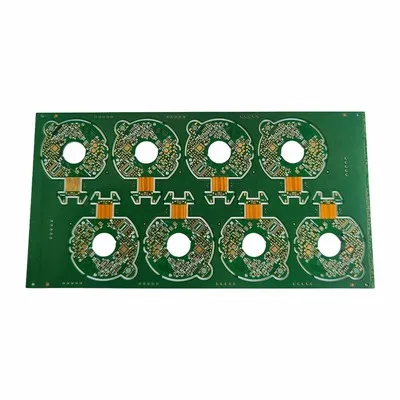
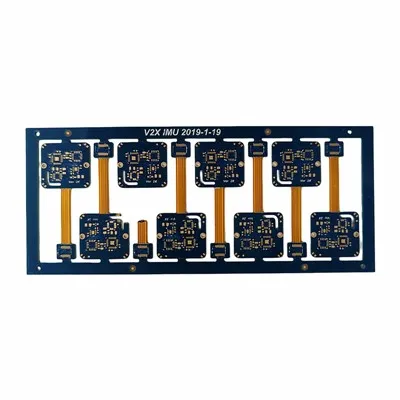
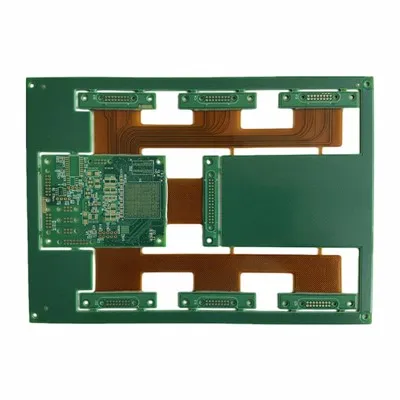
Rigid-Flex PCBs for wearable devices combine rigid regions for component soldering and flexible sections for bending and conforming to human-body contours. This PCB type supports compact mechanical integration, lightweight structure and repeated flexing during daily wear. Wearable-grade rigid-flex PCBs must achieve controlled bending radii, long flex-cycle life, thin-profile construction and stable electrical performance under mechanical deformation. They are widely implemented in smart watches, fitness trackers, wearable medical monitors and compact smart sensor hardware. Material selection, flexible-zone stack-up, coverlay design and stress-relief structures directly impact product reliability.

Design Challenges in Wearable Electronics
Wearable products present a unique set of design requirements compared with conventional electronic devices.
Most wearable devices must simultaneously achieve:
- Compact dimensions
- Lightweight construction
- High functionality
- Long battery life
- Comfortable user experience
- Reliable daily operation
The available internal space is often extremely limited. Designers must fit processors, sensors, batteries, wireless modules and display systems into enclosures that may only be a few millimeters thick.
Rigid-flex technology helps address these challenges by eliminating unnecessary connectors and reducing assembly complexity.

Typical Wearable Device Applications
Rigid-flex circuit technology is now widely adopted across multiple wearable product categories.
Smart Watches
Modern smart watches integrate communication modules, health monitoring sensors, displays and batteries within compact enclosures.
Rigid-flex structures help optimize space utilization while maintaining mechanical reliability.
01
Fitness Trackers
Fitness bands require lightweight construction and flexible internal layouts.
Rigid-flex PCBs support compact packaging while reducing overall product weight.
02
Smart Glasses
Wearable optical devices often distribute electronic components across multiple sections of the product.
Flexible interconnections allow signals to pass between different structural areas without bulky wiring.
03
Medical Wearables
Portable health monitoring products require reliable performance during continuous use.
Integrated rigid-flex structures can improve durability and reduce potential failure points.
04
Industrial Wearable Devices
Smart helmets, wearable scanners and industrial monitoring equipment increasingly utilize rigid-flex architectures to support advanced functionality.
05
Advantages Compared with Traditional PCB Solutions
Wearable product manufacturers often evaluate multiple interconnection technologies during development.
Rigid-flex designs provide several advantages over traditional board-and-cable assemblies.
Reduced Product Thickness
Integrated flexible sections eliminate the need for many connectors and cables.
This helps engineers create thinner product designs.
Improved Reliability
Reducing connector count can decrease the number of potential mechanical failure points.
Enhanced Product Comfort
Smaller and lighter electronic assemblies contribute directly to user comfort.
Better Space Utilization
Flexible circuits can route signals through areas where rigid boards cannot be installed.
Simplified Assembly
Integrated structures often reduce assembly operations and improve production efficiency.
These advantages make rigid-flex technology particularly attractive for wearable electronics.
Reliability Requirements for Daily Use
Unlike many industrial products, wearable devices are exposed to constant human interaction.
Products may experience:
- Frequent movement
- Repeated bending
- Temperature variation
- Sweat exposure
- Accidental impacts
- Long operating hours
These conditions create additional reliability requirements.
The rigid-flex structure must maintain stable electrical performance throughout the product lifecycle while withstanding everyday use.
Material selection, structural design and manufacturing quality all influence long-term durability.
Sensor Integration Trends
One of the fastest-growing segments of the wearable market is health and activity monitoring.
Modern wearable devices increasingly incorporate:
- Heart rate sensors
- Blood oxygen sensors
- Motion tracking modules
- Temperature sensors
- Sleep monitoring systems
- Biometric measurement technologies
As sensor counts increase, internal circuit complexity also rises.
Rigid-flex PCB technology helps accommodate these additional functions without significantly increasing device size.
This capability has become an important factor in next-generation wearable product development.
Manufacturing Considerations
Producing rigid-flex boards for wearable devices requires attention to both electrical and mechanical performance.
Important manufacturing factors include:
√ Flexible Area Reliability
Repeated movement places continuous stress on flexible regions.
√ Miniaturized Structures
Wearable products often require compact circuit layouts and small component packages.
√ Assembly Accuracy
Dense component placement demands precise assembly processes.
√ Material Consistency
Stable materials help maintain performance throughout product use.
√ Dimensional Control
Tight mechanical tolerances support successful integration within compact enclosures.
Manufacturing capability directly influences product reliability and production yield.
Market Trends Driving Growth
Several trends continue accelerating demand for wearable electronics.
√ Digital Health Monitoring
Consumers increasingly use wearable products to track health data and physical activity.
√ Remote Healthcare Solutions
Medical wearables support continuous monitoring outside traditional healthcare facilities.
√ Smart Consumer Electronics
Wearable devices continue expanding beyond fitness applications into communication and entertainment functions.
√ Industrial Digitalization
Wearable equipment is becoming more common in manufacturing, logistics and field service operations.
√ Artificial Intelligence Integration
Advanced wearable products increasingly process larger amounts of user data in real time.
These developments continue driving innovation in wearable device design and electronic integration.
Selecting the Right Supplier
Purchasing teams sourcing rigid-flex boards for wearable products should evaluate suppliers based on several criteria.
Important factors include:
- Wearable project experience
- Miniaturization capability
- Flexible circuit expertise
- Reliability testing resources
- Prototype support
- Volume production capacity
Suppliers familiar with wearable applications often provide valuable recommendations regarding material selection, structural optimization and manufacturability improvements.
Early collaboration frequently helps shorten development cycles and reduce production risks.

FAQ
What is a Rigid-Flex PCB for Wearable Devices?
A Rigid-Flex PCB for Wearable Devices is a hybrid circuit board that combines rigid and flexible sections to support compact, lightweight and reliable wearable electronic products.
Which wearable products commonly use rigid-flex technology?
Smart watches, fitness trackers, smart glasses, medical wearables and industrial wearable devices frequently utilize rigid-flex PCBs.
Why is rigid-flex technology suitable for wearable electronics?
It helps reduce product size, lower weight, improve reliability and optimize internal space utilization.
What reliability challenges do wearable devices face?
Wearable products must withstand repeated movement, bending, temperature changes, sweat exposure and long-term daily use.
Hot Tags: rigid-flex pcb for wearable devices, China rigid-flex pcb for wearable devices manufacturers, suppliers, factory, multilayer flex pcb, multilayer flexible pcb fabrication, pcb flex board