
Product Details
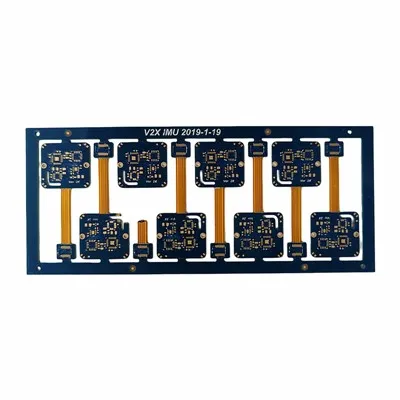
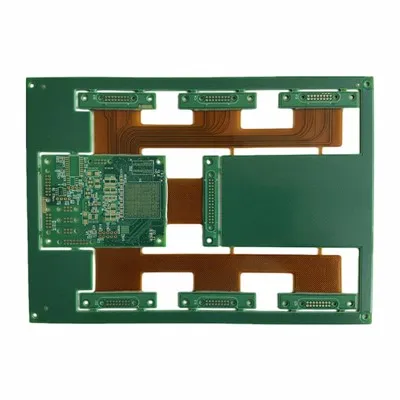
High Frequency Rigid-Flex PCB is a hybrid circuit board that combines rigid PCB sections and flexible circuit sections while supporting radio frequency (RF), microwave and high-frequency signal transmission. These boards are typically manufactured using low-loss materials and carefully controlled impedance structures to maintain signal stability across rigid and flexible areas. High Frequency Rigid-Flex PCBs are widely used in radar systems, wireless communication equipment, satellite electronics, aerospace devices, advanced medical systems and industrial RF applications where signal accuracy and mechanical flexibility are equally important.

Role of High Frequency Rigid-Flex PCB in Modern Wireless Systems
Wireless communication equipment relies on stable signal transmission throughout the entire signal path.
Every connector, cable and interconnection introduces potential losses that can affect overall system performance. Integrating rigid and flexible sections into a single PCB structure helps reduce unnecessary interconnections and creates a more compact signal path.
Common benefits include:
- Reduced signal loss
- Improved mechanical integration
- Lower assembly complexity
- Better space utilization
- Reduced connector count
- Enhanced system reliability
These advantages make high-frequency rigid-flex technology attractive for applications where performance and reliability are critical.

Applications Across Multiple Industries
High Frequency Rigid-Flex PCB technology supports a wide range of advanced electronic products.
Wireless Communication Equipment
Base stations, antenna systems and communication modules often require stable RF signal transmission.
Aerospace Electronics
Aircraft communication systems and navigation equipment frequently operate at high frequencies while facing strict space and weight limitations.
Satellite Systems
Satellite electronics require compact interconnection structures capable of maintaining signal integrity in demanding environments.
Radar Equipment
Radar systems process high-frequency signals and require precise impedance control throughout the circuit.
Medical Electronics
Advanced imaging systems and wireless medical devices often utilize high-frequency PCB technology to support data transmission requirements.
Industrial RF Equipment
Industrial monitoring and sensing systems increasingly depend on wireless communication technologies.
These applications share a common requirement for reliable signal performance under demanding operating conditions.
Material Requirements for High-Frequency Operation
Material selection plays a major role in RF circuit performance.
At higher frequencies, dielectric characteristics directly influence signal quality and transmission efficiency.
Important material properties include:
Low Dissipation Factor
Lower signal loss helps maintain transmission efficiency over longer distances.
01
Stable Dielectric Constant
Consistent electrical characteristics improve impedance control and signal predictability.
02
Thermal Stability
Material properties should remain consistent across operating temperature ranges.
03
Moisture Resistance
Environmental exposure should not significantly alter electrical performance.
04
Mechanical Flexibility
Flexible sections must maintain durability while supporting high-frequency operation.
Selecting materials that balance electrical and mechanical requirements is essential for successful rigid-flex designs.
05
Design Considerations for RF Performance
High-frequency circuits require more attention to layout design than standard electronic products.
Several factors directly influence RF performance.
√ Controlled Impedance Routing
Consistent impedance helps minimize reflections and signal degradation.
√ Ground Plane Design
Effective grounding structures support signal stability and reduce noise.
√ Signal Path Optimization
Shorter signal paths often improve overall transmission performance.
√ Transition Zone Management
Rigid-to-flex transitions should be carefully designed to minimize impedance discontinuities.
√ Electromagnetic Compatibility
Proper layout techniques help reduce interference and improve system stability.
Well-planned RF design practices contribute significantly to overall product performance.

Environmental Challenges in High-Frequency Applications
Many high-frequency products operate in demanding environments.
Applications such as aerospace, defense and industrial communications often expose electronics to:
- Vibration
- Temperature variation
- Humidity
- Mechanical stress
- Electromagnetic noise
- Long operational cycles
Maintaining stable RF performance under these conditions requires careful design and manufacturing control.
Reliability considerations often become as important as electrical performance specifications.
Validation and Qualification Processes
Before entering production, high-frequency rigid-flex products typically undergo extensive verification.
Common qualification activities include:
√ Impedance Measurement
Testing confirms compliance with design requirements.
√ Signal Performance Evaluation
Transmission quality is verified under operating conditions.
√ Environmental Testing
Products are evaluated under temperature and humidity exposure.
√Mechanical Reliability Assessment
Flexible sections are tested for long-term durability.
√ Electrical Inspection
Circuit continuity and isolation performance are verified.
Qualification programs help ensure consistent field performance and reduce deployment risks.
Procurement Considerations
When sourcing High Frequency Rigid-Flex PCB products, purchasing teams should evaluate several factors beyond manufacturing price.
Important considerations include:
√ RF Experience
Suppliers with RF project experience often provide stronger technical support.
√ Material Availability
Reliable material sourcing helps avoid production delays.
√ Quality Control Systems
Consistent manufacturing processes improve product repeatability.
√ Engineering Support
Design review capabilities help identify potential performance risks.
√ Long-Term Supply Stability
Stable manufacturing partners support future production growth.
These factors often have a greater impact on project success than initial pricing differences.
Future Industry Development
Several emerging technologies continue to increase demand for high-frequency rigid-flex solutions.
Growth drivers include:
- 5G infrastructure deployment
- Satellite communication networks
- Autonomous transportation systems
- Aerospace modernization programs
- Industrial wireless automation
- Advanced sensing technologies
As wireless communication systems operate at increasingly higher frequencies, the need for compact and reliable RF interconnection platforms will continue to expand.
High Frequency Rigid-Flex PCB technology provides a practical solution for balancing signal performance, mechanical flexibility and system integration requirements.
FAQ
Q: What is a High Frequency Rigid-Flex PCB?
A: A High Frequency Rigid-Flex PCB is a hybrid circuit board that combines rigid and flexible sections while supporting RF and microwave signal transmission through low-loss materials and controlled impedance structures.
Q: Which industries commonly use High Frequency Rigid-Flex PCBs?
A: Wireless communication, aerospace, satellite systems, radar equipment, medical electronics and industrial RF applications frequently use this technology.
Q: Why are special materials required for high-frequency circuits?
A: Low-loss materials help reduce signal attenuation and maintain transmission efficiency at higher frequencies.
Q: What factors affect RF performance?
A: Material properties, impedance control, grounding design, signal path length and transition zone design all influence RF performance.
Hot Tags: high frequency rigid-flex pcb, China high frequency rigid-flex pcb manufacturers, suppliers, factory, multilayer flex pcb, multilayer flexible pcb fabrication, pcb flex board