
Product Details
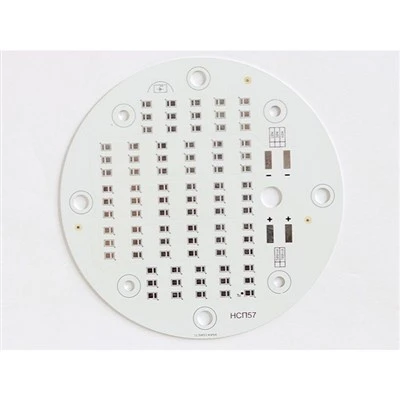
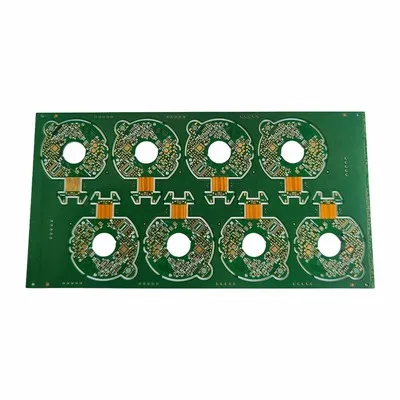
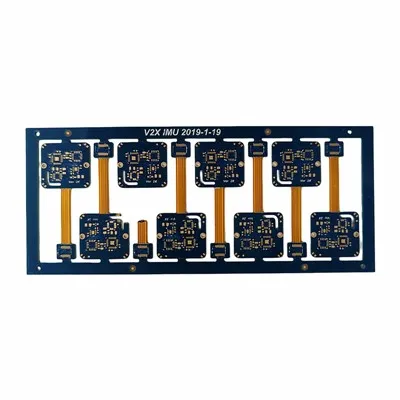
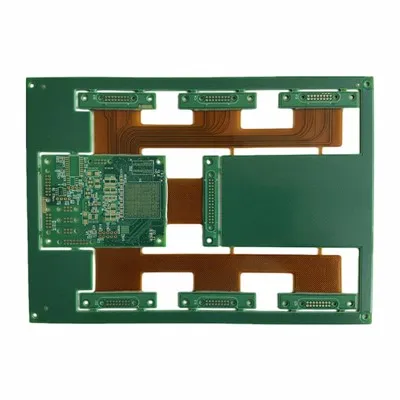
Custom Rigid-Flex PCB is tailor-made according to unique mechanical, electrical and spatial requirements of end-products, with customizable rigid-flex boundary layout, layer count, stack-up structure, bending zones, impedance targets and special material specifications. Unlike standard off-the-shelf circuit boards, custom rigid-flex PCBs address complex mechanical-electrical integration demands for compact, irregular-shape electronic assemblies. They are widely applied in specialized medical equipment, aerospace modules, special automotive components and customized industrial devices.

Conditions Requiring Custom Rigid‑Flex PCBs
Many electronic products can be manufactured using standard multilayer PCBs. However, certain applications introduce challenges that make customized solutions more practical.
Common situations include:
- Irregular product shapes
- Limited installation space
- Dynamic bending requirements
- Multiple board-to-board connections
- Weight reduction targets
- Harsh operating environments
In these situations, standard PCB structures may require additional connectors, cables or assembly operations. A custom rigid-flex design can consolidate these functions into a single integrated assembly.
This approach often simplifies manufacturing while improving overall reliability.

Comparing Standard and Custom Rigid-Flex Solutions
Selecting between a standard design and a custom design depends largely on product objectives.
|
Factor |
Standard Rigid-Flex PCB |
Custom Rigid-Flex PCB |
|
Design Flexibility |
Limited |
High |
|
Mechanical Adaptability |
Moderate |
Excellent |
|
Space Optimization |
Good |
Excellent |
|
Development Time |
Shorter |
Longer |
|
Engineering Involvement |
Low |
High |
|
Product Integration |
Moderate |
Excellent |
For highly specialized products, the additional engineering effort associated with customization often produces significant long-term benefits.
Key Areas of Customization
Custom rigid-flex projects typically involve multiple design variables.
Board Shape Optimization
Custom outlines allow the PCB to fit precisely within the available enclosure space.
Complex mechanical structures often benefit from non-standard geometries.
01
Layer Stack-Up Design
Layer count and stack-up configuration can be optimized according to electrical and mechanical requirements.
Proper stack-up planning supports both manufacturability and reliability.
02
Flexible Region Design
The location, length and bending characteristics of flexible sections can be tailored to the application.
This helps improve assembly efficiency and product durability.
03
Material Selection
Different materials offer different balances of cost, flexibility, thermal performance and reliability.
Material selection should align with operating conditions and product objectives.
04
Interconnection Architecture
Custom designs can reduce connector usage and simplify system integration.
This often contributes to improved reliability and reduced assembly costs.
05
Selection Factors for Purchasing Teams
Purchasing decisions for custom PCB projects involve more than unit pricing.
Several additional factors influence overall project success.
√ Engineering Support Capability
Custom projects frequently require collaboration between design engineers and manufacturers.
Strong engineering support can reduce development risks.
√ Manufacturing Experience
Suppliers with rigid-flex expertise are better equipped to address complex design challenges.
√ Prototype Resources
Prototype capability helps validate design concepts before volume production.
√ Production Scalability
A supplier should support both low-volume and high-volume manufacturing requirements.
√ Quality Management Systems
Consistent production control helps maintain product performance throughout the lifecycle.
Evaluating these factors early often results in smoother project execution.

Cost Considerations in Custom Projects
Custom designs generally require higher initial engineering investment compared with standard PCB products.
Typical cost drivers include:
- Engineering review
- Custom tooling
- Specialized materials
- Prototype verification
- Additional testing
- Complex manufacturing processes
- However, total system costs may decrease through:
- Reduced connector count
- Simplified assembly
- Smaller product dimensions
- Lower maintenance requirements
- Improved reliability
Organizations often discover that lifecycle savings outweigh the initial development costs.
Prototype Development and Validation
Custom rigid-flex projects usually involve one or more prototype stages before production release.
Prototype development helps verify:
√ Mechanical Fit
Board dimensions and flexible regions are evaluated within the product enclosure.
√ Electrical Performance
Circuit functionality is validated against design requirements.
√ Assembly Compatibility
Production processes are reviewed and optimized.
√ Reliability Performance
Products are tested under expected operating conditions.
√ Design Improvements
Prototype feedback frequently identifies opportunities for further optimization.
This process helps reduce production risks and supports successful product launches.
Typical Industries Using Custom Rigid-Flex PCB
Customized rigid-flex solutions are commonly found in applications where performance requirements exceed the capabilities of standard PCB products.
√ Medical Electronics
Portable devices and diagnostic systems often require specialized circuit architectures.
√ Aerospace Equipment
Weight reduction and reliability remain critical priorities.
√ Defense Systems
Complex electronic assemblies frequently utilize customized interconnection structures.
√ Industrial Automation
Space-constrained control systems benefit from integrated rigid-flex designs.
√ Wearable Technology
Compact consumer products often require unique mechanical configurations.
These industries frequently prioritize performance and reliability over standardization.
Future Trends Driving Customization
Several technology trends continue increasing demand for customized PCB solutions.
- Key drivers include:
- Product miniaturization
- Smart connected devices
- Artificial intelligence hardware
- Portable medical equipment
- Advanced industrial electronics
- High-density electronic packaging
As products become more specialized, standardized PCB structures may no longer provide optimal performance.
Custom rigid-flex solutions allow manufacturers to develop products that better align with application-specific requirements.
Choosing the Right Manufacturing Partner
A successful custom project depends heavily on supplier capability.
The most effective manufacturing partners typically provide:
- Design review support
- DFM analysis
- Material recommendations
- Prototype assistance
- Quality assurance programs
- Long-term production support
Collaboration between customer engineering teams and manufacturing specialists often leads to better product outcomes and reduced development timelines.
For many advanced electronic products, supplier expertise becomes as important as the PCB technology itself.
FAQ
Q: What is a Custom Rigid-Flex PCB?
A: A Custom Rigid-Flex PCB is a rigid-flex circuit board specifically designed to meet unique mechanical, electrical and environmental requirements.
Q: What are the advantages of a custom design?
A: Custom designs improve space utilization, product integration, reliability and overall system optimization.
Q: Which industries commonly use Custom Rigid-Flex PCBs?
A: Medical, aerospace, defense, industrial automation and wearable technology industries frequently utilize custom rigid-flex solutions.
Q: Does customization increase project cost?
A: Initial engineering costs are generally higher, but overall system costs may decrease through improved integration and reduced assembly complexity.
Hot Tags: custom rigid-flex pcb, China custom rigid-flex pcb manufacturers, suppliers, factory, multilayer flex pcb, multilayer flexible pcb fabrication, pcb flex board