
Product Details
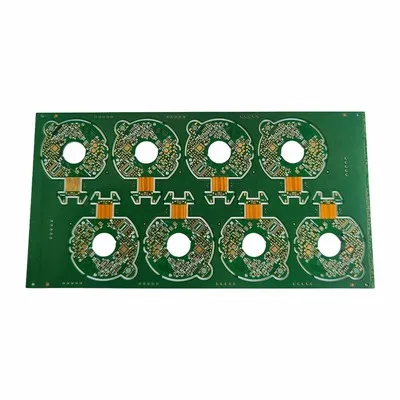
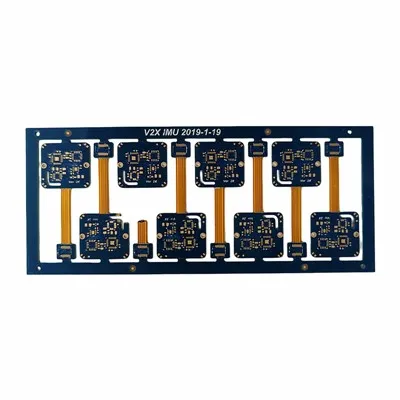
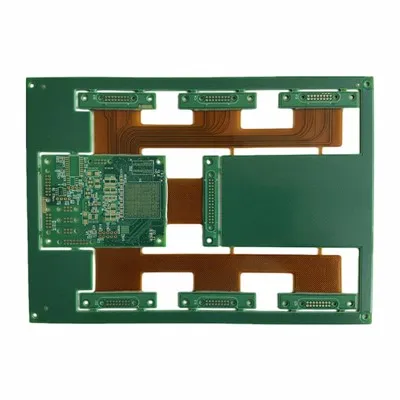
Fine-Pitch Rigid-Flex PCB integrates rigid FR-4 sections and flexible polyimide regions, featuring ultra-fine pad spacing, narrow traces and compact pad layouts to mate with high-density connectors and miniaturized components. It combines the mechanical stability of rigid sections for component soldering with the bending capability of flexible segments for 3D assembly. Fine-pitch rigid-flex PCBs are widely used in compact camera assemblies, portable medical equipment, wearable devices and miniaturized automotive electronic modules. Manufacturing complexity rises significantly due to combined rigid-flex lamination, precise coverlay opening and tight fine-pitch tolerances. Engineers and procurement teams must confirm supplier process capability, minimum pad pitch limits, stack-up feasibility and yield risks during specification definition, to avoid manufacturability issues and unexpected cost increases.

Design Requirements for Fine Pitch Applications
Products utilizing fine-pitch components require significantly greater design accuracy than conventional PCB assemblies.
The reduction in component spacing increases routing complexity and decreases manufacturing tolerances. Design teams must carefully balance electrical performance, mechanical reliability and manufacturability during development.
Several design objectives are commonly encountered:
- Increased circuit integration
- Reduced product dimensions
- Higher component density
- Improved signal routing efficiency
- Enhanced assembly precision
- Greater system reliability
These objectives often influence stack-up design, component placement strategy and routing architecture throughout the development process.

Component Packaging Trends Driving Fine Pitch Adoption
Electronic component manufacturers continue to reduce package dimensions while increasing functionality.
Modern designs frequently incorporate:
Fine Pitch BGA Devices
High pin-count processors and communication chipsets often require dense interconnection structures.
CSP Components
Chip Scale Packages help reduce product size while maintaining performance.
Miniature Sensors
Compact sensors are widely used in medical devices, wearable electronics and industrial monitoring systems.
High-Speed Memory Devices
Advanced memory packages frequently require tightly controlled routing and precise impedance management.
The adoption of these components has accelerated demand for fine-pitch rigid-flex solutions across many industries.
DFM Evaluation During Product Development
Design for Manufacturability plays an important role in successful Fine Pitch Rigid-Flex PCB projects.
Many production challenges originate during the design phase rather than the manufacturing stage.
Engineering teams typically evaluate:
Trace and Space Capability
Routing density must remain within realistic manufacturing limits.
01
Pad Geometry
Proper pad design supports assembly yield and solder joint reliability.
02
Via Placement
Via locations influence routing efficiency and mechanical performance.
03
Flex Region Protection
Flexible areas require careful planning to prevent excessive stress during operation.
04
Assembly Accessibility
Component placement should support inspection and assembly processes.
Early DFM reviews often reduce development delays and improve first-pass production success rates.
05
Prototype Verification and Design Validation
Prototype evaluation is particularly important for fine-pitch designs because tolerances are significantly tighter than standard PCB assemblies.
Several verification activities are commonly performed during development.
√ Dimensional Inspection
Critical features are measured to verify manufacturing accuracy.
√ Assembly Trials
Prototype assemblies help evaluate solderability and placement performance.
√ Electrical Verification
Signal transmission and circuit functionality are confirmed before production release.
√ Mechanical Evaluation
Flexible regions are assessed under expected operating conditions.
√ Design Optimization
Prototype feedback often identifies opportunities to improve manufacturability and reliability.
The prototype stage provides valuable information that supports successful volume production.
Signal Integrity Considerations
Fine-pitch designs often incorporate high-speed electronic components.
As conductor spacing decreases and routing density increases, signal behavior becomes more sensitive to layout decisions.
Important factors include:
Controlled impedance
Return path continuity
Crosstalk reduction
Trace length matching
Layer transition management
Proper signal integrity planning helps maintain stable performance throughout the product lifecycle.
Design decisions made during early development stages can significantly influence final system performance.
Assembly Process Verification
Assembly capability becomes increasingly important as component pitch decreases.
Several manufacturing processes require additional attention.
√ Solder Paste Control
Accurate deposition helps reduce assembly defects.
√ Placement Accuracy
Modern fine-pitch components require highly precise positioning.
√ Reflow Optimization
Temperature profiles must be carefully controlled to ensure consistent solder joint formation.
√ Inspection Procedures
Advanced optical inspection systems help verify assembly quality.
√ Process Repeatability
Stable production processes support long-term manufacturing consistency.
Assembly verification often contributes directly to overall product reliability.
Reliability Assessment Prior to Production
Fine Pitch Rigid-Flex PCB products are frequently used in applications where long-term reliability is essential.
Validation programs may include:
√ Thermal Cycling
Temperature variation testing helps identify material and interconnection weaknesses.
√ Flex Endurance Evaluation
Repeated movement testing verifies mechanical durability.
√ Environmental Exposure Testing
Products are assessed under humidity and storage conditions.
√ Electrical Stability Verification
Circuit performance is monitored throughout testing.
√ Solder Joint Reliability Analysis
Assembly durability is evaluated under simulated operating conditions.
These activities provide confidence before production release.
Risk Reduction Through Engineering Collaboration
Successful projects often involve close collaboration between design teams and manufacturing engineers.
Benefits include:
- Earlier issue identification
- Faster development cycles
- Improved manufacturability
- Higher production yields
- Reduced redesign costs
- Better long-term reliability
Rather than addressing challenges after fabrication begins, engineering collaboration allows potential concerns to be resolved during product development.
This approach frequently shortens project timelines and reduces overall development expenses.
Future Opportunities for Fine Pitch Rigid-Flex Technology
Several market trends continue to increase demand for advanced fine-pitch rigid-flex solutions:
- Wearable electronics
- Miniaturized medical equipment
- Artificial intelligence hardware
- Industrial sensing systems
- Optical imaging products
- Advanced communication devices
As electronic products continue becoming smaller and more sophisticated, precision interconnection technology will play an increasingly important role in product design.
Fine Pitch Rigid-Flex PCB technology provides manufacturers with a practical platform for achieving compact form factors while maintaining performance and reliability.
FAQ
What is a Fine Pitch Rigid-Flex PCB?
A Fine Pitch Rigid-Flex PCB combines rigid and flexible circuit sections while supporting high-density component packages and narrow conductor spacing.
What industries commonly use Fine Pitch Rigid-Flex PCBs?
Medical electronics, aerospace systems, communication equipment, industrial automation and advanced consumer electronics frequently utilize this technology.
Why is prototype verification important for fine-pitch designs?
Prototype testing helps validate manufacturability, assembly performance and long-term reliability before production begins.
What factors influence assembly quality?
Solder paste control, placement accuracy, reflow optimization and inspection capability all affect assembly performance.
Hot Tags: fine pitch rigid-flex pcb, China fine pitch rigid-flex pcb manufacturers, suppliers, factory, multilayer flex pcb, multilayer flexible pcb fabrication, pcb flex board