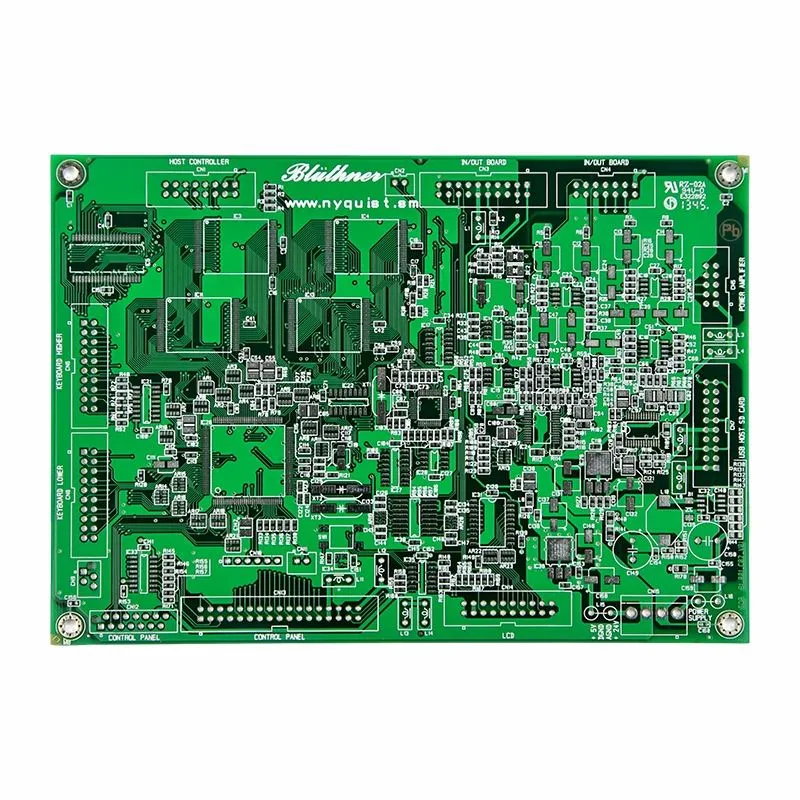
Robotics control systems are widely used in robotic arms, AGV, AMR, warehouse robots, inspection robots, automation equipment, industrial manipulators, motor control units, and sensor control modules. These systems often need to process multiple signals at the same time, including motor drive signals, encoder feedback, sensor data, communication interfaces, safety inputs, and power management signals. If the control board is unstable, the robot may experience movement delay, positioning errors, communication interruption, unexpected shutdown, or unreliable operation.
Our Robotics Industrial Control PCBA service is designed for customers who need reliable assembly support for robot control boards and industrial automation electronics. For these projects, customers usually care about more than whether components can be mounted on the PCB. They want to know whether the assembled board can support long-time operation, whether connectors can remain stable under vibration, whether communication interfaces can work reliably, whether power components can handle the load, and whether the same quality can be repeated in future production batches.
Robotics PCBA projects often involve complex BOMs, fine-pitch ICs, motor driver components, connectors, terminal blocks, sensors, communication modules, relays, and power management parts. These components require careful sourcing, accurate placement, reliable soldering, and suitable inspection. A small assembly issue may cause control failure, unstable signal transmission, or field maintenance problems. That is why our manufacturing process focuses on engineering review, process control, functional testing, and repeatable production quality.
Solving Control Stability, Sourcing, and Assembly Risks
One of the biggest customer concerns in robot control board projects is system stability. Industrial robots usually work for long hours and may operate in environments with vibration, electrical noise, temperature changes, dust, and frequent start-stop cycles. The control board must maintain stable communication between sensors, motors, controllers, and external systems.
If a connector is not soldered firmly, the robot may lose signal during operation. If a motor driver section is not assembled properly, the robot may show unstable motion or power-related failures. If fine-pitch ICs have hidden soldering defects, the board may pass initial inspection but fail during real operation. These risks make PCBA assembly quality very important.
Component sourcing is also a major concern. Robotics control boards may use specific MCUs, communication chips, motor driver ICs, connectors, power modules, and sensor interface components. If some parts are unavailable or replaced without confirmation, the control performance may be affected. Before production, BOM review can help check part numbers, package types, availability, lead time, and replacement risks. This helps customers avoid wrong components, sourcing delays, and unexpected performance changes.
DFM and DFA review are also valuable before production. A design may work electrically, but still create manufacturing or testing problems. Common issues include mismatched footprints, unclear polarity, insufficient test points, connector interference, unsuitable hole sizes for through-hole parts, high-current routing concerns, or difficult soldering areas. Early engineering review helps customers reduce prototype failure, improve assembly yield, and prepare the design for future mass production.
|
Project Area |
Customer Pain Point |
Manufacturing Focus |
|
BOM Review |
Wrong parts, long lead time, or unavailable components |
Check part number, package, stock, and alternative risks |
|
SMT Assembly |
Fine-pitch ICs may shift or solder poorly |
Control solder paste, placement accuracy, and reflow profile |
|
Through-Hole Assembly |
Connectors and terminals may loosen under vibration |
Use suitable soldering methods and inspect joint strength |
|
Motor Control Area |
Power components may generate heat or current stress |
Review power components, soldering quality, and layout concerns |
|
Signal Interfaces |
Communication or sensor signals may become unstable |
Control component placement, connector quality, and testing |
|
Test Points |
Functional testing may be difficult |
Review testing accessibility before production |
|
Batch Production |
Future orders may vary from approved samples |
Maintain BOM, process, and inspection records |
A reliable robotics PCBA supplier should not only assemble boards according to files. It should help customers identify risks before production and support stable results during prototype, small-batch, and mass production stages.
Improving Signal Reliability, Testing, and Batch Consistency
Robot control boards often include different communication and control interfaces, such as CAN, RS485, RS232, Ethernet, UART, SPI, I2C, PWM, encoder inputs, sensor interfaces, and motor control outputs. These interfaces must work reliably because they affect robot response, positioning, motion control, and safety-related functions.
Our Industrial Robotics Control PCBA support focuses on stable assembly quality for these control and communication sections. The manufacturing process must ensure correct component placement, good soldering quality, reliable connector assembly, and proper inspection. Poor solder joints, wrong component orientation, contamination, or weak terminals can create intermittent failures that are difficult to identify after the robot is installed.
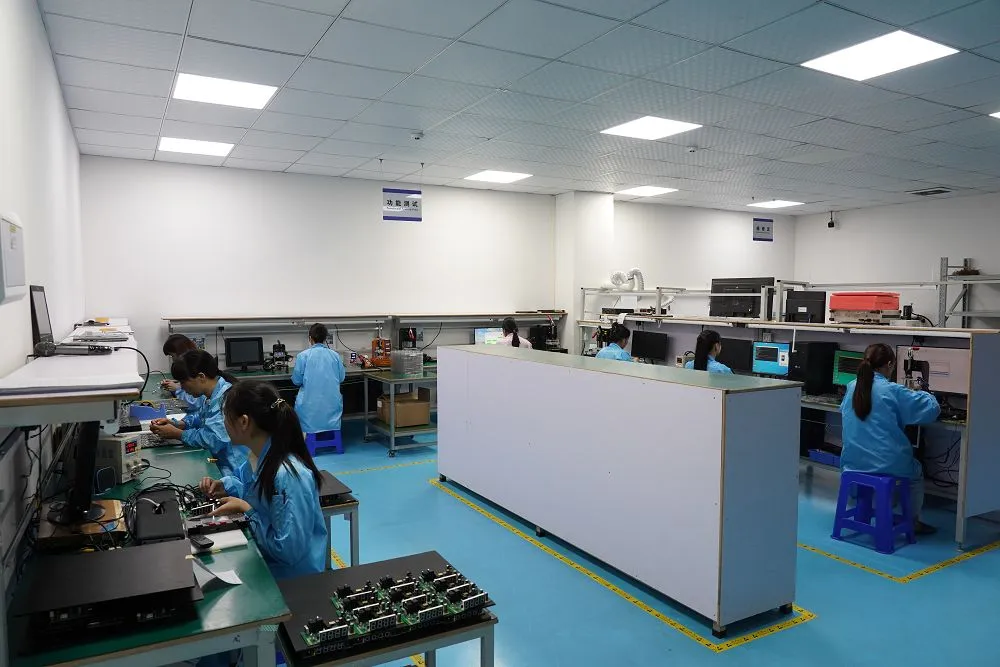
Testing is especially important for robotics control boards. AOI can detect visible assembly defects, but it cannot confirm whether the board controls motors correctly or communicates with sensors properly. X-ray may be needed for BGA, QFN, or hidden solder joints. ICT can help detect circuit-level defects, while functional testing can verify real control behavior, communication, firmware loading, or basic operation according to customer requirements.
|
Testing / Inspection Item |
Purpose |
Customer Benefit |
|
Incoming Inspection |
Checks PCB and component condition before assembly |
Reduces material-related defects |
|
SPI |
Inspects solder paste quality before placement |
Prevents solder volume problems early |
|
AOI Inspection |
Detects missing parts, wrong parts, polarity errors, and solder defects |
Improves assembly accuracy |
|
X-ray Inspection |
Checks BGA, QFN, and hidden solder joints if required |
Reduces hidden soldering risks |
|
ICT Testing |
Detects open circuits, short circuits, and component-level issues |
Improves electrical defect detection |
|
Programming |
Loads firmware or control software if required |
Supports ready-to-test board delivery |
|
Functional Testing |
Checks communication, control output, sensor response, or basic operation |
Confirms real application performance |
|
Final Inspection |
Checks soldering, connectors, labels, and packaging |
Reduces shipment and handling risks |
For robotics applications, functional testing should be planned based on the real use of the board. A robotic arm control board may require output and motion-related checks. An AGV or AMR control board may need communication and sensor interface testing. A motor control PCBA may need power section review and output verification. A sensor board may need signal response testing. Clear testing requirements help reduce customer-side debugging time and improve confidence before installation.
Application Areas
Our PCB Assembly for Industrial Robotics Control service can support many robotics and automation applications, including robotic arm controllers, AGV control boards, AMR control modules, industrial robot control units, automation equipment control boards, motor control PCBA, sensor interface modules, warehouse robot electronics, and inspection robot systems.
Different robotics applications have different priorities. Robotic arms often require motion accuracy, stable communication, and strong connector reliability. AGV and AMR systems usually require continuous operation, sensor communication, navigation control, and vibration-resistant assembly. Motor control boards need attention to current load, power components, solder joint strength, and thermal stress. Sensor control boards require clean assembly and stable signal transmission.
A good PCBA solution should match the final use environment. For example, a robot working in a warehouse may require stable connectors and communication interfaces. A production-line robot may need long-time operation stability and repeatable batch quality. A high-power motor control module may need stronger soldering and closer review of power-related areas.
Prototype to Mass Production Support

Many robotics projects start with prototypes for design verification, firmware debugging, communication testing, and mechanical integration. After the prototype is approved, the project may move to small-batch production, pilot production, and mass production. Customers often worry that a supplier can make several samples but cannot maintain the same quality during larger production.
To reduce this risk, production records should be managed from the beginning. Approved BOM versions, alternative component records, assembly notes, programming requirements, testing methods, inspection standards, and packaging requirements should be clearly maintained. If an issue is found during prototype assembly, the feedback can help improve the next design revision or production process.
For mass production, batch consistency becomes critical. Stable component sourcing, repeatable soldering processes, clear testing requirements, and final inspection standards help keep future orders consistent with approved samples. This is especially important for robotics customers because control boards may be used in equipment that must operate continuously and reliably.
Quality Control and Final Delivery
Quality control should cover the whole process, not only final inspection. It starts with file review, BOM checking, component verification, and PCB inspection. During assembly, solder paste printing, placement accuracy, reflow control, through-hole soldering, connector assembly, and inspection should be carefully managed. After assembly, testing, visual inspection, labeling, cleaning, and packaging help reduce shipment risks.
For robotics control PCBA, connector quality deserves special attention because connectors link the board to motors, sensors, power supplies, and communication modules. If a connector fails, the robot may stop working or behave unpredictably. Strong soldering, proper inspection, and mechanical consideration help reduce this risk.
The final goal is to deliver assembled boards that are ready for real robotics testing and production use. By focusing on engineering support, reliable assembly, functional testing, and batch consistency, we help customers reduce development delays, field failures, and production uncertainty.
FAQ
Q1: What files are needed for a robotics control PCBA quotation?
Customers usually need to provide Gerber files, BOM, pick-and-place files, assembly drawings, quantity, testing requirements, and programming notes if required. If functional testing, conformal coating, special connectors, or packaging requirements are needed, these details should also be included. Complete files help improve quotation accuracy and allow early risk review.
Q2: Can you support robot control boards with motor driver components?
Yes. Motor control-related boards can be supported, but the design should be reviewed carefully. Power components, current paths, connector areas, and soldering requirements may need special attention. Functional testing or output verification can also be discussed according to the customer's test method.
Q3: Why is functional testing important for robotics PCBA?
Robotics control boards must do more than pass visual inspection. They may need to communicate with sensors, process control signals, drive motors, or respond to firmware commands. Functional testing helps confirm whether the board can perform basic operation before shipment, reducing debugging pressure for the customer.
Q4: Can prototypes move into mass production later?
Yes. Prototype builds can move into small-batch or mass production after validation. To support this transition, approved BOMs, component alternatives, testing methods, programming requirements, and assembly notes should be recorded clearly. This helps future production remain consistent with the approved prototype.
Q5: How do you reduce batch quality variation?
Batch variation can be reduced through BOM control, reliable component sourcing, stable SMT and through-hole processes, defined inspection standards, functional testing, and clear production documentation. For robotics projects, connector inspection and testing records are especially useful for maintaining long-term consistency.
Hot Tags: industrial control PCBA for robotics, China industrial control PCBA for robotics manufacturers, suppliers, factory