An IoT gateway is often the central communication node in an Internet of Things system. It collects data from sensors or terminal devices, processes or forwards information, and connects local equipment to cloud platforms or industrial networks. Because of this role, the circuit board inside the gateway must support stable communication, reliable interface performance, continuous operation, and good compatibility with different modules.
Our IoT Communication Gateway PCBA service is designed for customers who need reliable manufacturing support for smart gateway devices, industrial gateways, wireless communication gateways, embedded gateway systems, and edge computing terminals. These products may include WiFi, Bluetooth, Zigbee, LoRa, LTE, 5G, Ethernet, RS485, CAN, USB, SIM card slots, antenna connectors, memory, MCU, power management circuits, and sensor interfaces.
For customers, the main concern is not only whether the board can be assembled. They want to know whether the gateway can remain online for long periods, whether wireless modules are soldered correctly, whether antennas and connectors are reliable, whether firmware can be loaded before shipment, whether communication interfaces can be tested, and whether future production batches can match the approved sample. Our service focuses on these real concerns and helps customers reduce technical and production risks from prototype to mass production.
Solving Communication, Interface, and Power Stability Risks
The most important function of a gateway device is communication. If the board has unstable wireless performance, poor soldering on the RF module, weak antenna connector contact, or unreliable Ethernet and industrial interfaces, the final product may suffer from dropped connections, delayed data transmission, device offline issues, or incomplete data uploads.
Many gateway boards include several communication methods on one PCBA. This increases assembly complexity. WiFi or Bluetooth modules may require accurate placement and clean soldering. LoRa or LTE modules may require careful connector assembly and antenna interface reliability. Ethernet ports, SIM card slots, RS485 terminals, CAN interfaces, and USB connectors may experience mechanical stress during use. If these components are not assembled and inspected properly, customers may face communication failure after product installation.
Power stability is another major concern. Gateways often operate continuously in smart buildings, factories, energy monitoring systems, agriculture, security systems, logistics equipment, and remote control applications. If the power section is unstable, the gateway may restart unexpectedly, lose data, drop network connections, or fail during long-time operation. Boards with LTE, 5G, or multiple communication modules may also have higher power demand, so power components, soldering quality, thermal behavior, and component sourcing should be reviewed carefully.
Before production, BOM review helps reduce many risks. Gateway products often depend on specific modules, communication chips, connectors, memory devices, power ICs, and antenna components. Some modules may have long lead times or require approved alternatives. If an unconfirmed substitute is used, it may affect firmware compatibility, communication performance, certification, or product stability. That is why part number checking, package verification, module availability review, and alternative confirmation are important before assembly.
|
Project Area |
Customer Pain Point |
Manufacturing Focus |
|
Communication Modules |
Wireless signal may be unstable or module soldering may fail |
Control SMT accuracy, soldering quality, and inspection |
|
Antenna Connectors |
Poor contact may reduce signal strength |
Inspect connector soldering and mechanical reliability |
|
Ethernet / RS485 / CAN / USB |
Interface failure may affect data transmission |
Check connector quality and solder joint strength |
|
SIM Card Slot |
Poor soldering may cause network access failure |
Control placement, soldering, and final inspection |
|
Power Section |
Restart, overheating, or unstable supply may occur |
Review power components, soldering, and testing needs |
|
BOM Review |
Modules may be unavailable or difficult to replace |
Check stock, footprint, lead time, and approved alternatives |
|
Batch Production |
Future production may differ from prototype |
Maintain BOM records, assembly notes, and test standards |
A reliable gateway assembly process should not only mount components on the PCB. It should help customers control communication-related risks, power stability risks, and future production consistency.
DFM / DFA Engineering Support
Gateway boards are often compact and interface-rich. A design may include RF modules, antennas, SIM holders, Ethernet connectors, industrial terminals, buttons, LEDs, power input ports, and enclosure-related structures. If these areas are not reviewed before production, assembly or testing problems may appear later.
DFM and DFA review can include Gerber checking, BOM-to-footprint comparison, polarity and orientation review, module placement review, connector clearance checking, test point accessibility, power section review, panelization suggestions, and enclosure fit considerations. For boards with QFN, BGA, or fine-pitch ICs, soldering and inspection feasibility can also be reviewed.
This engineering support is valuable because many gateway problems are easier to prevent before production than to fix after assembly. For example, if a test point is missing, functional testing may become difficult. If a connector position does not match the enclosure, the finished device may not assemble properly. If a module footprint does not match the BOM, the project may be delayed. Early review helps reduce these risks.
Improving Assembly Quality, Testing, and Production Consistency
Gateway hardware may be used in environments where long-term online operation is required. Some products are installed in industrial cabinets, energy systems, smart buildings, farms, warehouses, security systems, or outdoor-related equipment. The PCBA must support stable operation under real use conditions, not only pass visual inspection.
Our IoT Network Gateway PCB Assembly support focuses on stable soldering, reliable connector assembly, clean handling, and practical testing. For SMT assembly, solder paste printing, stencil design, placement accuracy, and reflow control affect the quality of ICs, modules, memory, sensors, and passive components. For through-hole or mechanical components, Ethernet ports, terminals, antenna connectors, and power input connectors need strong solder joints because they may experience cable pulling, vibration, or repeated plugging.
Testing is especially important for gateway boards. AOI can detect missing parts, wrong parts, polarity errors, and visible soldering defects. X-ray may be required for QFN, BGA, or hidden solder joints. Electrical checks can help find open or short circuits. Firmware programming prepares the board for functional verification. Communication testing can help confirm whether wireless or wired interfaces work according to project requirements.
|
Testing / Inspection Item |
Purpose |
Customer Benefit |
|
Incoming Inspection |
Checks PCB and component condition before assembly |
Reduces material-related defects |
|
AOI Inspection |
Detects missing parts, wrong parts, polarity errors, and solder defects |
Improves assembly accuracy |
|
X-ray Inspection |
Checks QFN, BGA, and hidden solder joints if required |
Reduces hidden soldering risks |
|
Electrical Check |
Detects open circuits, short circuits, and basic connection issues |
Helps avoid obvious failures |
|
Firmware Programming |
Loads gateway firmware or test software |
Supports ready-to-test delivery |
|
Communication Testing |
Checks WiFi, Bluetooth, LoRa, Zigbee, LTE, Ethernet, or other interfaces if required |
Confirms data connection performance |
|
Functional Testing |
Verifies power input, ports, LEDs, buttons, and basic operation |
Reduces customer-side debugging time |
|
Final Inspection |
Checks soldering, labels, connectors, cleanliness, and packaging |
Reduces shipment and handling risks |
Functional testing should match the final application. A smart home gateway may need wireless pairing and Ethernet checks. An industrial gateway may need RS485, CAN, or terminal interface testing. A LoRa gateway may require RF module and antenna connector verification. An edge device may require power, memory, firmware, and communication interface checks.
Application Areas
Our IoT Edge Gateway PCBA service can support many connected device applications, including industrial gateway systems, smart home gateways, LoRa gateway devices, energy monitoring terminals, smart agriculture equipment, building automation gateways, security gateways, edge computing controllers, logistics tracking gateways, and embedded communication devices.
Different applications have different priorities. Industrial gateway products usually require stable power, strong connectors, and reliable wired communication. Smart home devices may focus on compact layout, wireless module assembly, and cost control. Energy monitoring products require data transmission reliability and long-time operation. Smart agriculture or semi-outdoor products may need better protection against humidity, dust, or unstable power conditions.
A good assembly solution should match the real use environment. If the device must stay online for months or years, power management and functional testing become important. If the device uses multiple wireless modules, module placement, antenna interface reliability, and communication checks should be considered. If the product will move into mass production, BOM records, approved alternatives, and testing methods should be maintained clearly.

Prototype to Mass Production Support
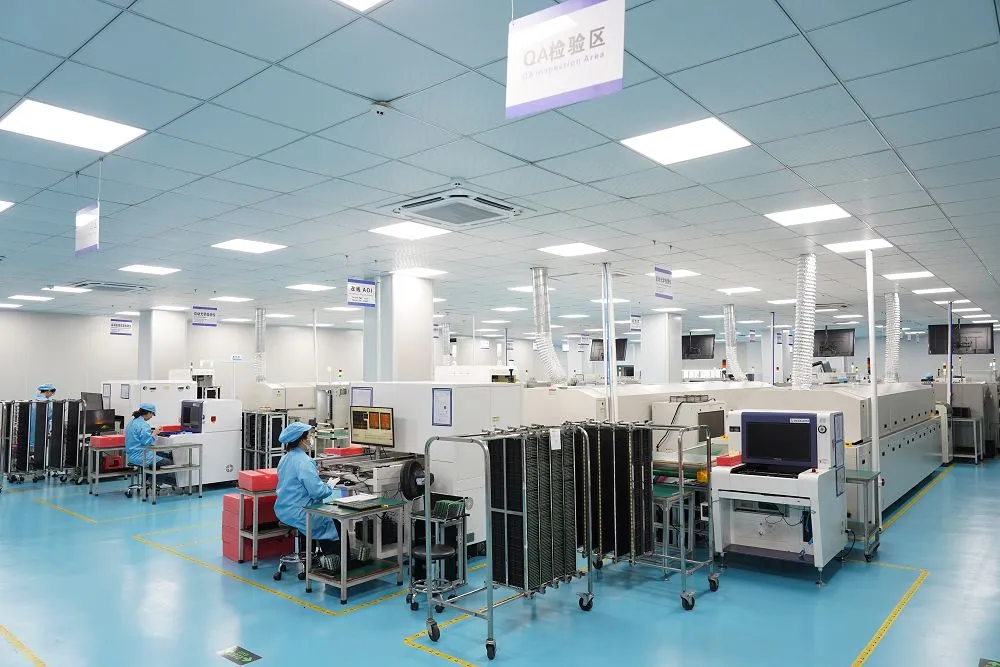
Many gateway projects start with prototypes for firmware debugging, communication testing, module verification, enclosure fitting, and cloud platform integration. During this stage, customers usually need fast feedback and practical assembly support. After the prototype is approved, the project may move to small-batch production, pilot runs, and mass production.
To support this transition, production records should be controlled from the beginning. Approved BOM versions, module alternatives, firmware programming requirements, test procedures, connector specifications, and inspection standards should be recorded clearly. If a wireless module is replaced during the prototype stage, the change should be documented for future review. If a test process is confirmed, it can become part of the production standard.
This helps reduce the common problem where a prototype works well once, but later batches show communication instability or inconsistent performance. Clear documentation and repeatable assembly processes help customers reduce long-term production risk.
Quality Control and Final Delivery
Quality control should cover the whole process, including file review, BOM checking, component verification, PCB inspection, solder paste control, placement accuracy, reflow monitoring, through-hole soldering, connector inspection, programming, testing, final visual inspection, labeling, and packaging.
For gateway boards, connectors and communication modules deserve special attention. These components directly affect device connectivity and field reliability. Strong soldering, accurate placement, clean handling, and suitable packaging help reduce failures during installation and use.
The final goal is to deliver assembled boards that are ready for real communication testing and product integration. By focusing on engineering support, reliable assembly, firmware preparation, functional testing, and batch consistency, we help customers reduce development delays, field failures, and production uncertainty.
FAQ
Q1: What files are needed for a gateway board assembly quotation?
Customers usually need to provide Gerber files, BOM, pick-and-place files, assembly drawings, quantity, firmware programming requirements, and testing notes. If the project needs communication testing, conformal coating, enclosure assembly, or special packaging, these requirements should also be included.
Q2: Can you support wireless module assembly?
Yes. Wireless module assembly can be supported according to the customer's design and BOM. Modules such as WiFi, Bluetooth, Zigbee, LoRa, LTE, or other communication components require accurate placement, proper soldering, and suitable inspection. Antenna connectors and SIM card slots should also be checked carefully.
Q3: Why is firmware programming important?
Firmware programming helps prepare the board for communication and functional testing. For gateway products, software and hardware must work together. Loading firmware before shipment can help customers reduce debugging time and verify basic operation earlier.
Q4: Can communication interfaces be tested before delivery?
Yes, testing can be arranged if the customer provides testing requirements, tools, firmware, or procedures. Depending on the project, wireless interfaces, Ethernet, RS485, CAN, USB, SIM card slots, LEDs, buttons, and power input can be checked before shipment.
Q5: Can prototypes move into mass production later?
Yes. Prototype builds can move into small-batch or mass production after validation. To make the transition smoother, approved BOMs, module alternatives, firmware requirements, testing methods, and inspection standards should be recorded clearly. This helps future batches stay consistent with the approved prototype.
Hot Tags: iot gateway PCBA, China iot gateway PCBA manufacturers, suppliers, factory