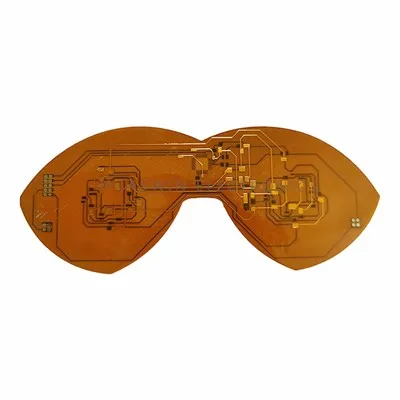
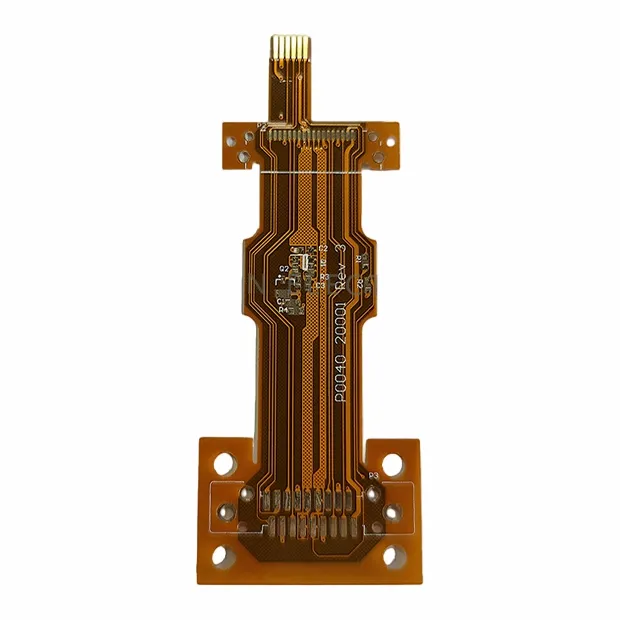
Consumer electronics keep moving toward thinner housings, lighter structures, and more integrated functions. A rigid PCB or traditional wire connection may take up too much room, add extra connectors, or make final assembly more complicated. Flexible PCB offers a cleaner option: it can bend around mechanical structures, connect separate modules, and fit into narrow product spaces while keeping the circuit organized.
We provide custom flexible PCB manufacturing for consumer products that require accurate dimensions, stable signal paths, suitable materials, and smooth assembly. For time-sensitive development projects, Quick Turn FPC for Electronics can support faster sample verification while still keeping reliability details such as bend radius, copper type, stiffener position, and surface finish under review.
In many projects, the customer is not simply asking whether the FPC can be produced. The more important question is whether it will work after bending, soldering, connector insertion, product installation, and repeated production. That is why our work focuses on both electrical performance and mechanical use conditions from the early stage.
Main Customer Concerns and Our Focus
|
Customer Concern |
Why It Matters |
Our Focus |
|
Limited internal space |
Compact products leave little room for wires or extra connectors. |
Support thin, foldable circuit structures and clean module connection. |
|
Bending failure |
Poor bend design may cause copper cracks, open circuits, or intermittent failure. |
Review bend radius, copper type, stack-up, trace routing, and bend area layout. |
|
Connector deformation |
Soft FPC areas may move during insertion or assembly. |
Add suitable PI, FR4, or metal stiffeners where needed. |
|
Unstable assembly |
Thin boards can shift during SMT or handling. |
Consider panelization, tooling, fixture support, and process control. |
|
Material confusion |
Overdesign increases cost; underdesign increases reliability risk. |
Recommend materials based on real product use and budget. |
|
Batch variation |
A sample may work, but mass production must stay consistent. |
Keep clear production requirements, inspection standards, and batch records. |
Space Saving for Compact Product Design
Space saving is one of the main reasons flexible PCBs are used in consumer electronics. In products such as wireless earphones, smartwatches, compact sensors, small camera modules, and handheld devices, there is often not enough room for bulky wires or several separate connectors. A flexible circuit can follow the product shape, turn around corners, and connect different functional modules in a more efficient way.
This gives designers more freedom when arranging batteries, cameras, displays, sensors, antennas, buttons, and charging areas. It also helps reduce manual wiring work during assembly. When the layout, bend direction, and reinforcement areas are planned correctly, the product can remain compact while keeping a stable electrical connection.
Thin and Lightweight Structure
Thin and lightweight design is another key requirement for consumer electronics. Wearable devices need to feel comfortable. Earphones need to stay light. Display and camera modules need to fit into slim structures. Flexible PCBs support these goals because they use a much thinner circuit structure than many traditional connection methods.
However, a thin design should not be made blindly. If the FPC is too thin for the actual handling, bending, or assembly process, it may become difficult to mount, solder, or install. A practical design should balance thickness, copper weight, coverlay protection, bending performance, and local support. We help customers choose a structure that fits both the product appearance and the manufacturing process.
Bend Reliability
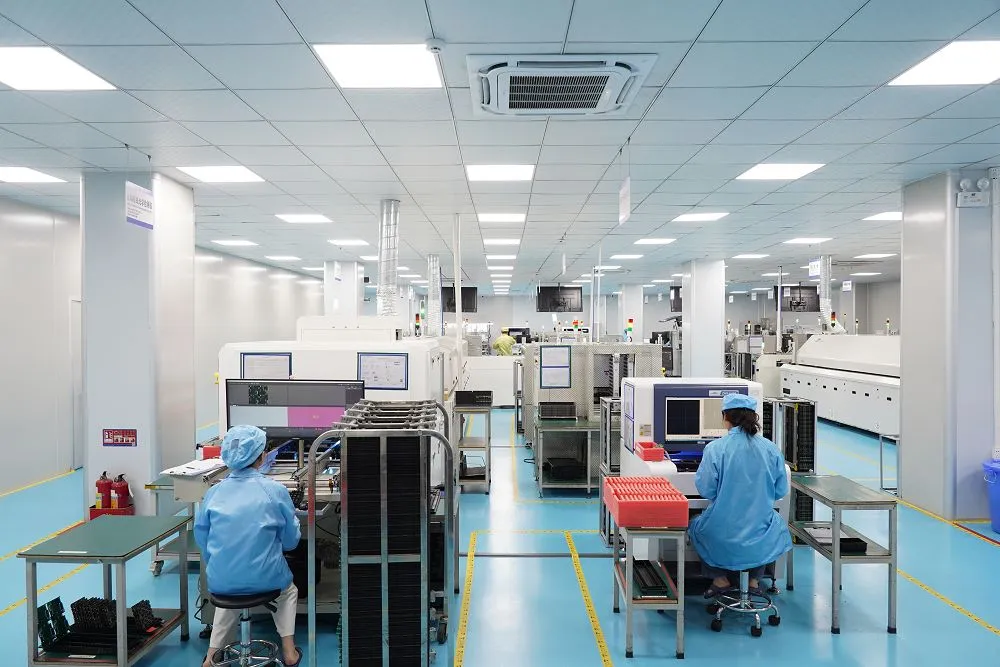
Bend reliability is often the first serious question customers ask about flexible PCBs. Some FPCs are bent once during installation and then stay fixed. Others move repeatedly during daily use, such as in foldable structures, wearable products, hinges, or movable modules. These two use conditions should not be treated the same.
For better bend performance, the bend area should avoid sharp trace corners, unnecessary vias, sudden thickness changes, and component placement whenever possible. Solder joints and connectors should normally stay away from active bending zones. Trace routing should be smooth, and the bend radius should match the material and copper structure.
If the product needs repeated movement, RA copper and a suitable stack-up may be more appropriate. If the FPC only bends during installation, a simpler and more cost-effective structure may be enough. Reviewing this early helps reduce hidden failures after product assembly.
Material Selection
Material choice affects flexibility, solderability, thermal resistance, signal performance, cost, and product life. Many customers ask whether they should use PI, PET, LCP, RA copper, ED copper, ENIG, or another surface finish. There is no single best choice for every project. The right material depends on the final product structure, bending requirement, assembly method, working environment, and cost target.
|
Material / Structure |
Main Feature |
Typical Consumer Electronics Use |
|
PI Material |
Good flexibility and heat resistance |
Wearables, smartphones, cameras, display modules, sensors |
|
PET Material |
Cost-effective for simple circuits |
Low-cost devices and simple static connections |
|
LCP Material |
Low moisture absorption and better high-frequency performance |
Antennas, RF modules, and compact communication products |
|
RA Copper |
Better flex performance |
Dynamic bending, folding areas, and movable structures |
|
ED Copper |
Cost-effective for fixed applications |
Static bending and low-movement products |
|
PI Coverlay |
Protects flexible traces while keeping flexibility |
Standard FPC insulation and bend protection |
|
ENIG Finish |
Flat surface with good solderability |
Fine-pitch components and higher-reliability assembly |
The most suitable material is not always the most expensive one. A static connection inside a remote control or simple module may not need the same copper structure as a wearable product with repeated movement. The goal is to avoid both overdesign and underdesign, so the circuit meets the real product requirement without unnecessary cost.
Stiffener Support for Connectors and Assembly Areas
Although flexible PCBs are designed to bend, not every area should remain soft. Connector pads, gold fingers, soldering areas, and component mounting positions often need stiffeners. Without proper reinforcement, the FPC may deform during connector insertion, soldering, testing, or final product assembly.
PI stiffeners are useful when the product needs thin and lightweight support. FR4 stiffeners are commonly used around connectors or soldering areas. Stainless steel or other stronger materials can be considered when the structure needs higher mechanical strength. The stiffener should be placed only where support is needed, because unnecessary reinforcement may reduce flexibility and increase cost.
Assembly Stability
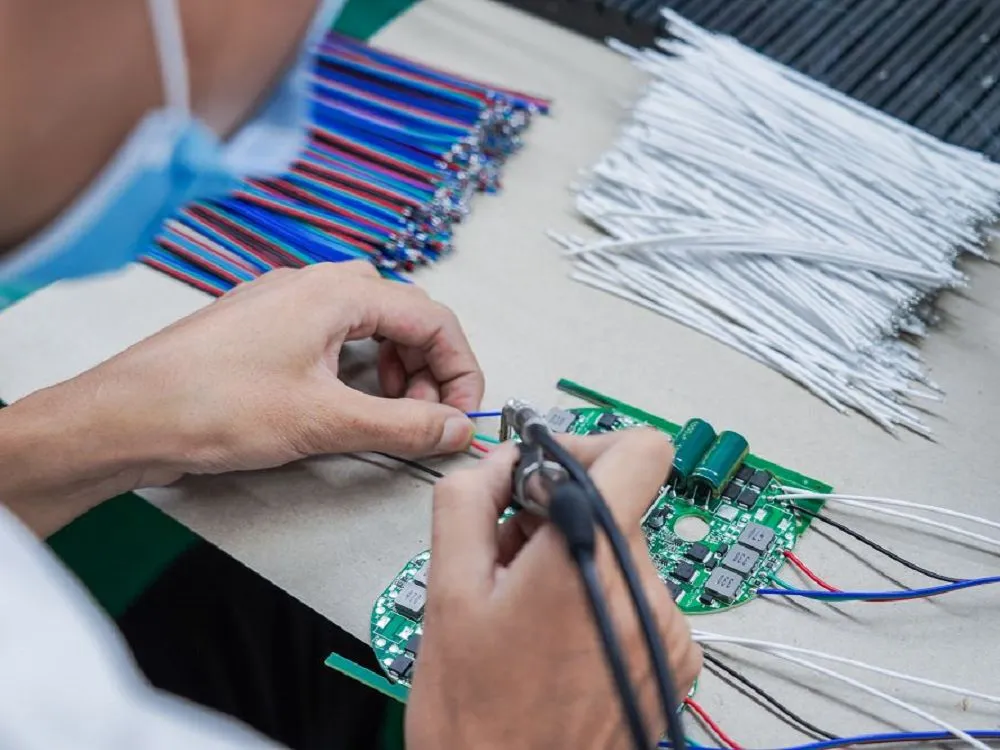
Flexible PCBs are thin and soft, so the assembly process needs more preparation than standard rigid PCB production. During solder paste printing, component placement, reflow soldering, or handling, the board may move or deform if it is not properly supported. This can lead to component shift, poor solder joints, connector misalignment, or low assembly yield.
For projects that require FPC Assembly for Consumer Devices, we review panel design, fixture support, stiffener location, pad design, surface finish, and component position. Good preparation helps the FPC stay stable during SMT and reduces unnecessary rework. This is especially important for fine-pitch connectors, small sensors, compact modules, and products that need repeatable production quality.
From Prototype to Mass Production
Consumer electronics projects usually move quickly. A team may need samples for mechanical fit testing, electrical validation, bending checks, and assembly trials before moving into pilot production or mass production. If the early sample is built without reviewing bending and assembly risks, problems may appear only after the product has already moved forward.
We support the full process from prototype to volume production. During the sample stage, we help customers check whether the FPC fits the product structure and whether the material, bend area, connector support, and surface finish are suitable. During small-batch production, the focus shifts to process stability. During mass production, customers need stable quality, cost control, delivery support, and repeatable batch performance.
Cost and Yield Optimization
Cost control matters in consumer electronics, especially when the project is moving toward higher volume. Still, choosing the lowest-cost structure without considering reliability may lead to rework, assembly loss, product failure, or customer complaints. A better approach is to optimize cost based on actual use.
|
Cost Factor |
Practical Optimization Direction |
|
Material Choice |
Match PI, PET, LCP, RA copper, or ED copper to the real bending and signal requirement. |
|
Layer Structure |
Avoid multilayer design unless the product needs it for routing or performance. |
|
Stiffener Design |
Add reinforcement only in connector, soldering, gold finger, or component areas. |
|
Surface Finish |
Choose a finish that fits solderability, storage time, component type, and budget. |
|
Panelization |
Improve material use and process efficiency through practical panel design. |
|
Tolerance Control |
Use tight tolerances only where the product structure truly requires them. |
For products such as Flex PCB for Smart Devices, the best solution should balance compact design, bending reliability, assembly stability, and scalable production cost. The lowest unit price is not always the lowest total project cost if it creates yield loss or reliability issues later.
Quality Control Before Delivery
Quality control should cover more than open and short circuit testing. Flexible PCBs also need attention to material condition, coverlay alignment, dimensional accuracy, surface finish, bend area quality, stiffener bonding, solderability, and final appearance. For assembled FPCs, connector alignment, solder joints, component placement, and handling protection also need to be checked.
Before delivery, inspection can include visual inspection, AOI, electrical testing, dimensional checking, solderability review, and packaging protection according to project requirements. Clear production records also help customers keep future batches consistent with the approved sample.
FAQ
Q1: Why are flexible PCBs commonly used in consumer electronics?
They save space, reduce weight, simplify internal connections, and support thin product structures. This makes them suitable for smartphones, smartwatches, Bluetooth earphones, camera modules, display modules, battery packs, sensors, and smart home devices.
Q2: How should I choose the right material?
The material should match the bending requirement, product size, signal performance, operating temperature, assembly process, and budget. PI is widely used for reliable flexible circuits, PET can work for simple cost-sensitive connections, LCP is useful for high-frequency applications, RA copper is better for dynamic bending, and ED copper is often suitable for static bending.
Q3: Can flexible PCBs support repeated bending?
Yes, but repeated bending needs a more careful design. Material selection, bend radius, copper type, trace routing, and stack-up structure should be reviewed before production. Dynamic bending applications usually require stronger reliability control than fixed installation designs.
Q4: When does a flexible PCB need a stiffener?
Stiffeners are usually used around connectors, soldering pads, gold fingers, and component mounting areas. They help prevent deformation, improve connector stability, and reduce stress during assembly or installation.
Q5: What information is needed for quotation?
Customers can provide Gerber files, quantity, layer count, material requirements, copper thickness, surface finish, coverlay design, stiffener requirements, bending requirements, tolerance requirements, and final application details. Complete information helps us quote more accurately and review possible risks earlier.
Q6: Can you support both prototypes and mass production?
Yes. We support prototypes, small-batch validation, pilot production, and mass production. This allows customers to verify design and assembly details first, then move into stable volume manufacturing with clearer production records and better batch consistency.
Hot Tags: flexible PCB for consumer electronics, China flexible PCB for consumer electronics manufacturers, suppliers, factory