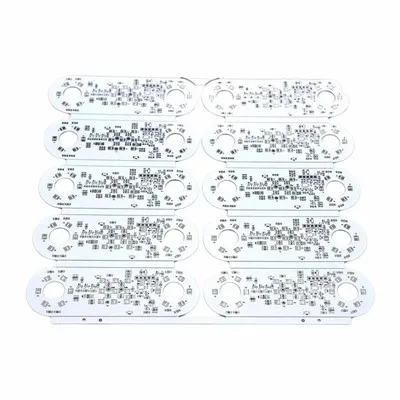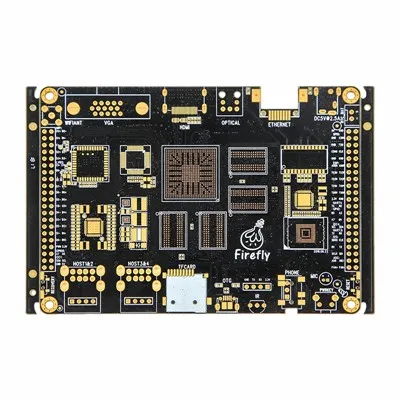
Power supply products require stable thermal performance, reliable current transmission, strong insulation safety, and long-term durability. In applications such as LED drivers, AC/DC power supplies, DC/DC converters, inverters, charger modules, industrial power units, and power control boards, the PCB must handle continuous heat, electrical load, and operating stress. If the board cannot dissipate heat efficiently or support the required current and voltage, the final product may suffer from overheating, voltage drop, unstable output, solder joint fatigue, insulation failure, or shortened service life.
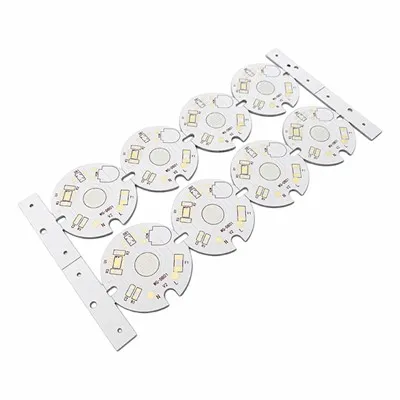
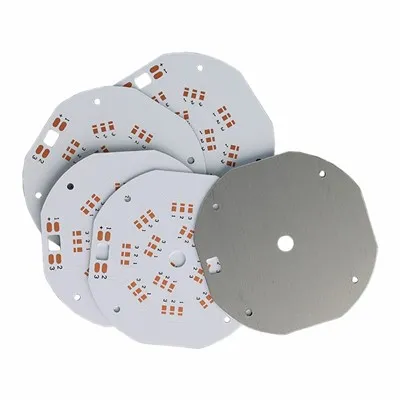
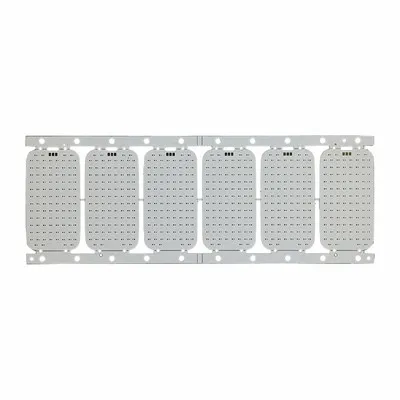
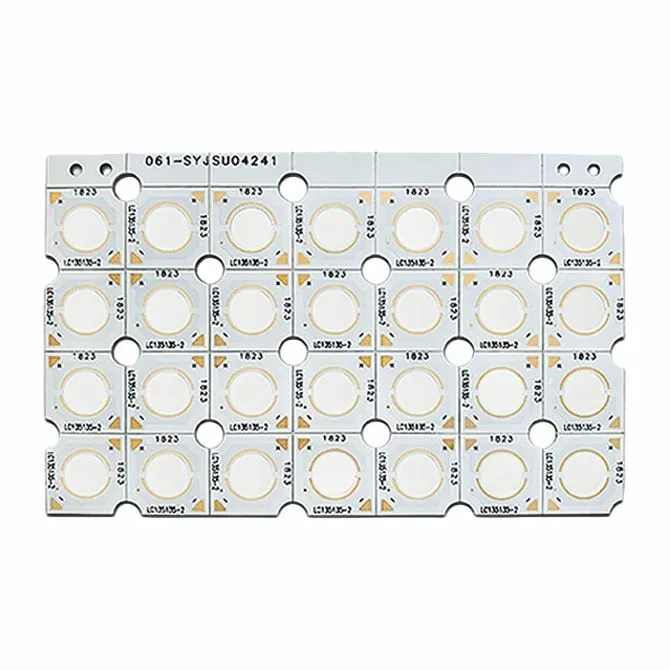
Our Metal Core PCB for Power Supply solutions are designed for power electronics that need better heat dissipation and stronger mechanical support than standard FR4 boards. By using an aluminum base, thermal dielectric layer, and suitable copper circuit design, we help customers reduce thermal stress, improve power stability, and support safer long-term operation.
Many customers worry about whether the board can handle high current, whether the dielectric layer is safe, whether the copper thickness is enough, and whether the sample quality can be repeated in mass production. Our power supply aluminum base boards are developed around these real concerns, providing material recommendations, copper thickness options, surface finish selection, strict inspection, and support from prototype testing to production.
Heat Dissipation
Heat dissipation is one of the most important requirements for power supply aluminum base boards. Power components such as MOSFETs, diodes, rectifiers, transformers, ICs, and power resistors can generate continuous heat during operation. If this heat is not transferred away efficiently, the power supply may lose efficiency, become unstable, or fail prematurely.
Aluminum base boards help transfer heat from the component area through the copper layer and thermal dielectric layer to the aluminum substrate. This structure creates a more effective thermal path compared with many standard circuit board materials. For compact or enclosed power supply products, this thermal advantage is especially important because there may be limited space for airflow or external heat sinks.
For customers, the main concern is whether the PCB can reduce temperature rise under real working conditions. We can help evaluate power level, working current, copper thickness, board thickness, component layout, and installation structure to recommend a suitable aluminum PCB solution.
Thermal Conductivity
Thermal conductivity affects how quickly heat moves through the board structure. In an aluminum base board, the thermal dielectric layer plays a critical role because it must transfer heat while also providing electrical insulation between the copper circuit and aluminum base.
Different power supply applications require different thermal performance. A low-power adapter board may only need a standard thermal structure, while a high-current converter or inverter may require better thermal conductivity and thicker copper. Selecting the right material helps customers avoid both over-design and under-design.
|
Structure / Material |
Main Function |
Customer Benefit |
|
Copper Circuit Layer |
Conducts current and forms component pads |
Supports stable power transmission |
|
Thermal Dielectric Layer |
Transfers heat and provides insulation |
Balances thermal performance and electrical safety |
|
Aluminum Base |
Spreads heat and provides mechanical support |
Reduces temperature rise and improves durability |
|
Thick Copper Option |
Supports higher current flow |
Reduces voltage drop and local overheating |
|
High Thermal Conductivity Material |
Improves heat transfer efficiency |
Suitable for demanding power applications |
|
Surface Finish |
Supports solderability and assembly |
Improves production yield and reliability |
A suitable thermal structure helps customers improve product lifetime, reduce overheating risk, and maintain stable performance during long operating hours.
Current Carrying Capacity
Current carrying capacity is a key concern in power supply PCB design. If the copper thickness is too low or the trace width is too narrow, the circuit may generate excessive heat, cause voltage drop, or reduce power efficiency. In severe cases, the board may fail under continuous load.
For high-current areas, customers may need thicker copper, wider traces, better copper distribution, and optimized component placement. Copper thickness should be selected according to working current, peak current, temperature rise limits, and board size.
For customers developing a High Power Aluminum PCB, current carrying capacity must be reviewed together with heat dissipation and insulation safety. A board that only has good thermal conductivity but insufficient copper design may still experience electrical stress or unstable output.
Power Stability
Power stability directly affects the performance of the final product. A power supply board must support stable voltage, current, and thermal behavior under different operating conditions. Poor PCB design or material selection may cause power fluctuation, local overheating, noise, or unstable output.
For LED drivers, unstable power may affect brightness and product lifetime. For converters and inverters, poor current distribution may increase heat and reduce efficiency. For industrial power units, long-term stability is essential because downtime can create high maintenance costs.
We help customers consider copper thickness, trace design, thermal path, insulation layer, solderability, and production consistency. A reliable aluminum base board should support both electrical performance and mechanical durability.
Insulation Safety
Insulation safety is critical because aluminum is conductive. The thermal dielectric layer must isolate the copper circuit from the aluminum base while still transferring heat efficiently. If insulation is poor, customers may face leakage current, breakdown, short circuit, or safety failure.
Power supply applications often involve higher voltage than general low-power electronics. Therefore, dielectric strength, insulation resistance, creepage distance, clearance, and board edge spacing should be carefully reviewed. This is especially important for AC/DC power supplies, inverters, chargers, and industrial power modules.
A safe aluminum base board must balance thermal conductivity and electrical insulation. Choosing a material only for heat transfer without considering voltage resistance can create hidden risks.
Voltage Resistance
Voltage resistance is another important concern for power supply aluminum base boards. Customers often ask whether the board can withstand high input voltage, surge conditions, or long-term electrical stress. The dielectric layer, spacing design, copper layout, and manufacturing control all affect voltage resistance.
For high-voltage power applications, the PCB should be reviewed before production to ensure that electrical spacing, dielectric material, and layout are suitable. Insufficient clearance or poor insulation design may lead to safety problems during testing or end use.
We support project review based on voltage requirements, insulation expectations, and application environment. This helps customers reduce risks before production instead of discovering problems during final product validation.
Solderability
Solderability affects assembly yield and long-term reliability. Power supply aluminum base boards often need to mount power components, connectors, resistors, capacitors, inductors, rectifiers, and control ICs. Poor solderability may cause weak solder joints, poor wetting, component shifting, rework, or early failure.
Surface finish selection should match the product and assembly process. Lead-free HASL is commonly used for standard applications because it is practical and cost-effective. ENIG provides a flatter surface and is suitable for fine-pitch components or higher-reliability requirements. OSP can be used for cost-sensitive projects when storage and assembly conditions are well controlled.
Stable solderability also depends on pad design, solder mask opening, board cleanliness, packaging protection, and process control.
Material Selection
Material selection should be based on power level, working current, voltage, heat requirement, assembly method, and cost target. Different power supply products need different board structures.
|
Application |
Main Requirement |
Recommended Focus |
|
LED driver power supply |
Heat control and stable output |
Thermal conductivity and copper thickness |
|
AC/DC power supply |
Voltage safety and reliability |
Insulation strength and spacing design |
|
DC/DC converter |
Compact layout and power density |
Thermal path and current capacity |
|
Inverter module |
High current and long operation |
Thick copper and dielectric reliability |
|
Charger module |
Stable current and solderability |
Surface finish and batch consistency |
|
Industrial power unit |
Continuous operation |
Thermal stability and strict testing |
For a Power Conversion Aluminum PCB, the material must support both electrical conversion efficiency and long-term thermal reliability. The best material is not always the most expensive one. The right choice should solve the actual application problem while keeping production cost reasonable.
Strict Quality Control
Strict quality control is essential for power supply aluminum base boards because failures may cause overheating, unstable output, insulation risk, or product return. Inspection should cover not only open and short circuits, but also copper thickness, dielectric quality, surface finish, solder mask, dimensions, insulation performance, and final appearance.
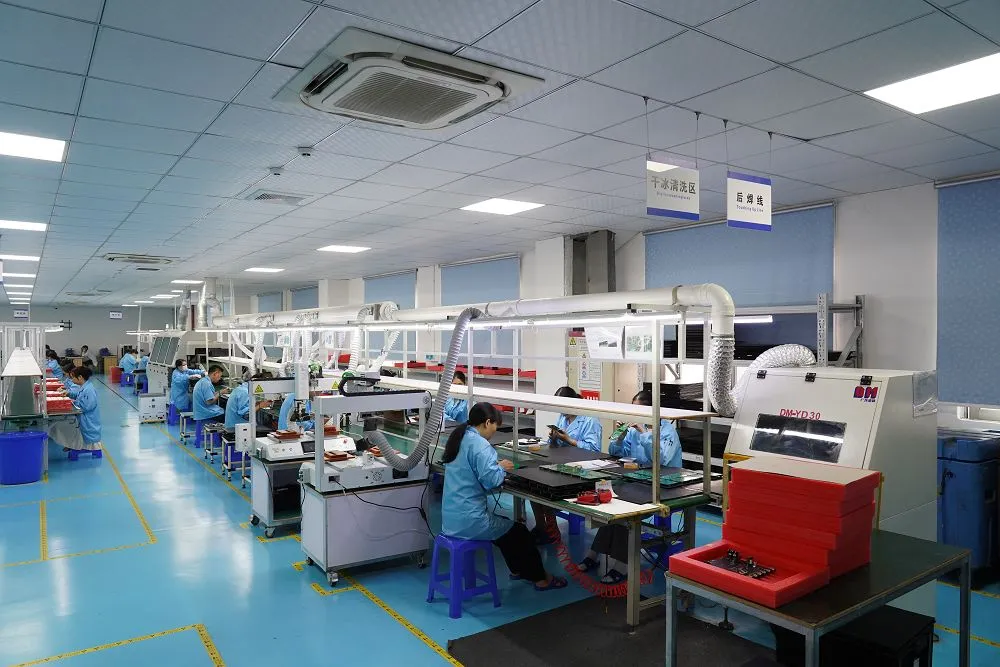
Our quality control process can include incoming material inspection, copper thickness control, thermal dielectric inspection, solder mask inspection, surface finish inspection, AOI inspection, electrical testing, dimensional inspection, insulation testing if required, visual inspection, and packaging protection.
For repeat orders, batch consistency is also important. Stable material control and clear production records help customers maintain the same quality from sample approval to mass production.
Prototype to Mass Production
Power supply projects usually start with prototypes for thermal testing, voltage testing, functional verification, and assembly confirmation. After the sample is approved, customers may move to small-batch testing, pilot production, and mass production.
During the prototype stage, customers need fast feedback and practical engineering suggestions. During mass production, they care more about batch consistency, delivery stability, production yield, and cost control. We support the full process by reviewing Gerber files, board size, copper thickness, board thickness, thermal conductivity requirements, surface finish, working current, voltage, insulation requirements, and final application details.
Clear specifications at the beginning help reduce sample revisions and improve production efficiency.

FAQ
Q1: Why use an aluminum base board for power supply products?
Aluminum base boards provide better heat dissipation and mechanical support, making them suitable for power supplies, converters, inverters, chargers, LED drivers, and industrial power modules.
Q2: What affects heat dissipation performance?
Heat dissipation is affected by copper thickness, dielectric thermal conductivity, dielectric thickness, aluminum base thickness, component layout, and the final housing or heat sink structure.
Q3: Can aluminum base boards support high current?
Yes. High-current designs can use suitable copper thickness, wider traces, optimized copper distribution, and proper layout to reduce voltage drop and local heating.
Q4: Why is insulation safety important?
Because aluminum is conductive, the dielectric layer must safely isolate the copper circuit from the metal base while still allowing heat transfer.
Q5: What surface finish is suitable for power supply boards?
Lead-free HASL is practical for standard applications, ENIG is suitable for flat and reliable soldering, and OSP can be used for cost-sensitive projects with controlled assembly conditions.
Hot Tags: power supply aluminum base board, China power supply aluminum base board manufacturers, suppliers, factory