
Product Details
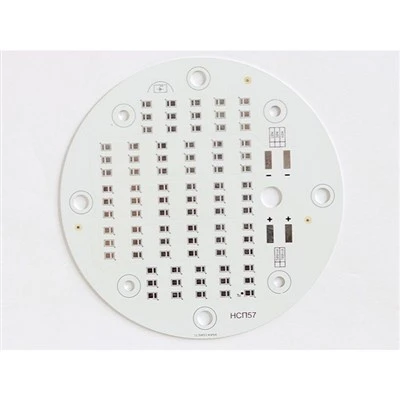
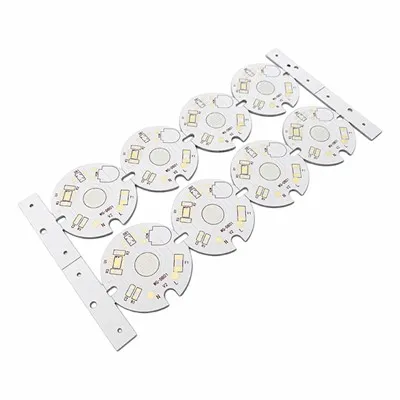
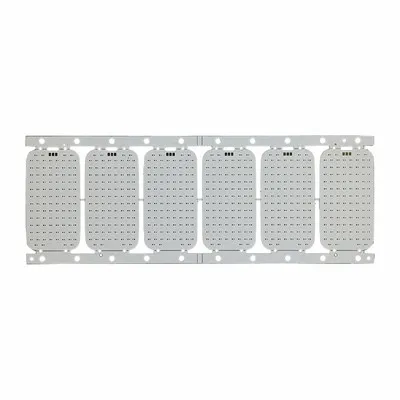
Metal-Core PCB (MCPCB) is a metal-based printed circuit board consisting of a solid metal core substrate, thermally conductive dielectric layer and etched copper foil circuit layer. Common core materials include aluminum, copper and iron-alloy. Its core advantage lies in superior heat dissipation performance, transferring heat away from high-power components efficiently to reduce junction temperature and extend component service life. Single-sided, double-sided and multilayer metal-core constructions are available.

Metal Core PCB Manufacturing Structure
The basic structure of a Metal Core PCB differs significantly from a conventional PCB.
A typical construction consists of:
Copper circuit layer
Thermally conductive dielectric layer
Metal core substrate
Surface finish layer
The dielectric layer serves two critical functions. It provides electrical insulation while simultaneously transferring heat from electronic components to the metal substrate.
The metal core then spreads and dissipates the generated heat across a larger surface area, improving thermal efficiency.
Different applications require different material combinations and structural configurations.
Available Metal Core Materials
Material selection directly influences thermal performance, manufacturing complexity and project cost.
Aluminum Core
Aluminum is the most commonly used metal core material.
Advantages include:
- Good thermal conductivity
- Lightweight structure
- Competitive cost
- Excellent machinability
- Wide material availability
Aluminum core PCBs are frequently used in LED lighting, power conversion and automotive electronics.
Copper Core
Copper provides significantly higher thermal conductivity than aluminum.
Benefits include:
- Superior heat transfer
- Excellent electrical performance
- Higher current carrying capability
- Improved thermal stability
Copper core solutions are commonly selected for demanding power applications.
Specialized Metal Alloys
Certain projects utilize customized metal substrates to achieve specific thermal or mechanical performance requirements.
These applications are typically found in aerospace, defense and specialized industrial equipment.
Manufacturing Capabilities
Successful Metal Core PCB production depends on several critical manufacturing processes.
Precision Material Processing
Metal substrates require specialized handling compared with standard PCB laminates.
Proper processing helps maintain dimensional accuracy throughout production.
01
Thermal Dielectric Control
The dielectric layer must achieve a balance between insulation and thermal conductivity.
Consistent material quality is essential for predictable thermal performance.
02
Mechanical Drilling and Routing
Metal substrates place additional demands on drilling and routing equipment.
Precision machining helps maintain board quality and assembly compatibility.
03
Surface Finish Processing
Appropriate surface finishes improve solderability and support reliable component assembly.
04
Final Inspection
Inspection procedures verify dimensional accuracy, electrical performance and manufacturing quality.
Each process contributes to overall product reliability.
05
Common Board Configurations
Metal Core PCB technology supports multiple board configurations depending on application requirements.
Single Layer Metal Core PCB
Suitable for many LED and power applications where thermal performance is the primary requirement.
Double Layer Metal Core PCB
Provides additional routing flexibility while maintaining effective heat dissipation.
Multilayer Metal Core PCB
Supports more complex electronic systems requiring advanced signal routing and power distribution.
Selecting the appropriate structure depends on both electrical requirements and thermal objectives.
Quality Control During Production
Consistent quality control is essential for maintaining reliable thermal performance.
Manufacturers commonly perform:
Incoming Material Inspection
Materials are verified before entering production.
Dimensional Verification
Critical dimensions are checked throughout manufacturing.
Electrical Testing
Circuit continuity and insulation performance are confirmed.
Thermal Performance Evaluation
Selected products may undergo thermal verification testing.
Visual Inspection
Surface quality and workmanship are assessed before shipment.
Comprehensive inspection programs help reduce production defects and improve consistency.
Manufacturing Challenges
Metal Core PCB production introduces several challenges that require specialized expertise.
Thermal Dielectric Uniformity
Variations in dielectric thickness may influence thermal performance.
Metal Expansion Characteristics
Different materials expand at different rates under temperature changes.
Machining Precision
Metal substrates require tighter process control during fabrication.
Layer Adhesion
Strong bonding between layers is essential for long-term reliability.
Assembly Compatibility
The PCB structure must support downstream assembly operations.
Addressing these challenges requires both process experience and appropriate manufacturing equipment.

Typical Industries Using Metal Core PCB Technology
Metal Core PCB solutions support a wide range of industries.
LED Lighting
High-power LED systems generate significant heat during operation.
Automotive Electronics
Lighting modules, power control systems and charging equipment frequently use metal core structures.
Renewable Energy Systems
Solar inverters and energy conversion equipment often require effective thermal management.
Industrial Equipment
Motor drives and power controllers benefit from improved heat dissipation.
Power Electronics
High-current applications frequently depend on metal core technology to maintain stable operating temperatures.
These industries prioritize both thermal performance and long-term reliability.
Why Manufacturing Experience Matters
Metal Core PCB production differs considerably from standard PCB fabrication.
Manufacturers with dedicated experience often provide advantages such as:
- Better process stability
- More consistent thermal performance
- Higher production yields
- Stronger engineering support
- Reduced manufacturing risk
Experienced suppliers are often able to identify potential issues early in the project lifecycle, helping customers avoid costly delays and redesigns.
For thermal-critical applications, manufacturing capability can be just as important as material selection.

FAQ
What is a Metal Core PCB?
A Metal Core PCB is a circuit board that uses a metal substrate, such as aluminum or copper, to improve heat dissipation and thermal management.
What are the advantages of Metal Core PCB technology?
Key advantages include improved thermal performance, enhanced reliability, better heat dissipation and support for high-power electronic applications.
Which industries commonly use Metal Core PCBs?
LED lighting, automotive electronics, industrial equipment, renewable energy systems and power electronics frequently use Metal Core PCBs.
What metal materials are commonly used?
Aluminum and copper are the most widely used materials, although specialized alloys may be used for specific applications.
Hot Tags: metal core pcb, China metal core pcb manufacturers, suppliers, factory, alu pcb, aluminum base pcb, aluminum pcb board, double sided aluminum pcb, led aluminum pcb, led aluminum plate pcb board