
Product Details
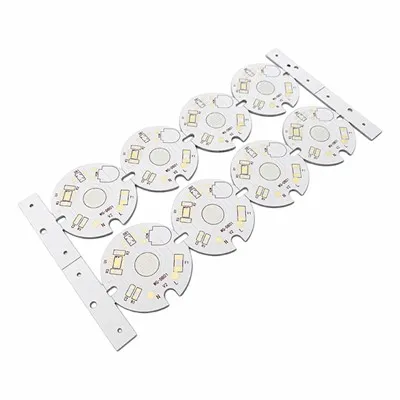
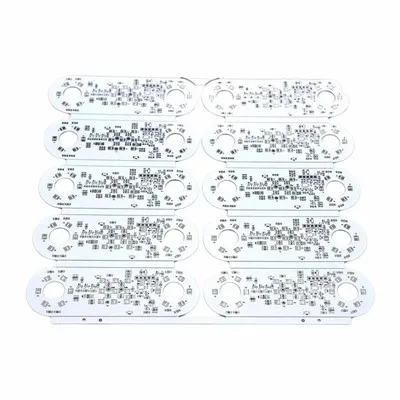
Multilayer Aluminum PCB is a type of metal-core PCB (MCPCB) built upon an aluminum alloy base core, stacked with multiple thermally-conductive dielectric layers and patterned copper conductive layers, with interlayer connections completed by specialized vias. It combines the excellent heat-dissipation capability of aluminum substrates with the high-density routing advantages of conventional multilayer PCBs, supporting signal layers, power planes and ground planes within one stack-up structure.

Thermal Challenges in Modern Electronics
Power density continues to increase across many electronic industries.
Components such as power MOSFETs, IGBTs, processors, communication modules and LED arrays generate substantial heat during operation. If heat cannot be removed efficiently, several problems may occur:
- Reduced component lifespan
- Performance degradation
- Thermal drift
- System instability
- Increased failure rates
- Higher maintenance costs
Traditional FR4-based multilayer boards often require additional heat sinks, thermal pads or cooling structures to manage thermal loads.
Multilayer Aluminum PCB technology provides an alternative approach by integrating thermal management directly into the PCB structure.

Performance Validation During Product Development
For high-power electronic products, thermal performance should be verified before volume production begins.
Engineering teams typically conduct multiple validation activities during development.
Thermal Simulation
Computer-based thermal analysis predicts heat distribution throughout the PCB structure.
Simulation helps identify potential hotspots before prototype fabrication.
Temperature Measurement
Prototype assemblies are tested under operating conditions to verify thermal performance.
Temperature monitoring often focuses on power devices and critical components.
Power Cycling Evaluation
Repeated power-on and power-off cycles help assess long-term thermal reliability.
Mechanical Stability Assessment
Thermal expansion behavior is evaluated to ensure structural integrity during operation.
These validation activities help engineers optimize the design before production release.
Comparing Multilayer Aluminum PCB and Standard FR4 PCB
Material selection often influences both thermal performance and product reliability.
The following comparison illustrates several key differences.
|
Feature |
Multilayer Aluminum PCB |
Standard FR4 PCB |
|
Thermal Conductivity |
High |
Low |
|
Heat Dissipation Efficiency |
Excellent |
Moderate |
|
Power Handling Capability |
High |
Moderate |
|
Mechanical Stability |
High |
Good |
|
Thermal Expansion Control |
Better |
Standard |
|
Cooling Requirements |
Reduced |
Higher |
For applications involving substantial heat generation, aluminum-based structures frequently provide measurable performance advantages.
Layer Structure Considerations
Multilayer Aluminum PCB designs can utilize different layer configurations depending on application requirements.
Common structures include:
Four-Layer Designs
Suitable for moderate routing density and thermal management requirements.
Six-Layer Designs
Provide additional routing flexibility and support more complex electronic systems.
High-Layer-Count Designs
Used in advanced power electronics and communication systems requiring extensive signal routing.
Layer count selection should balance electrical performance, thermal requirements and manufacturing cost.
The most complex design is not always the most efficient solution.
Thermal Reliability Verification
Reliability testing plays an important role in validating multilayer aluminum PCB performance.
Several common evaluations include:
Thermal Shock Testing
Products experience rapid temperature changes to assess structural stability.
01
High-Temperature Operation Testing
Performance is monitored during prolonged exposure to elevated temperatures.
02
Thermal Cycling
Repeated expansion and contraction help identify material weaknesses.
03
Solder Joint Reliability Analysis
Thermal stress effects on solder connections are evaluated.
04
Long-Term Aging Tests
Products are operated for extended periods to assess durability.
These procedures provide valuable data regarding expected field performance.
05
Design Risks During Development
Several common design issues can affect project success.
Uneven Heat Distribution
Localized hotspots may reduce reliability.
Insufficient Thermal Path Design
Poor heat transfer structures limit cooling effectiveness.
Incorrect Material Selection
Materials should match both electrical and thermal requirements.
Excessive Layer Complexity
Overly complicated stack-ups may increase cost without delivering significant benefits.
Inadequate Validation
Insufficient testing can allow thermal issues to remain undetected until production.
Addressing these risks during development often reduces future engineering changes.
Application Areas Requiring Multilayer Aluminum PCB
Many industries rely on aluminum-based PCB technology to improve thermal performance.
Power Supply Equipment
Power conversion systems generate significant thermal loads.
Automotive Electronics
Electric vehicles and advanced control systems require efficient heat management.
Industrial Automation
Motor drives and control equipment frequently operate under elevated temperatures.
Communication Infrastructure
High-performance communication systems often contain power-intensive components.
Medical Electronics
Certain imaging and monitoring systems benefit from enhanced thermal stability.
These applications require both electrical functionality and reliable thermal control.
Future Technology Trends
Several industry developments continue driving demand for multilayer aluminum PCB solutions.
Key trends include:
- Electric vehicle expansion
- Renewable energy systems
- High-power LED technology
- Advanced industrial automation
- Energy storage equipment
- Next-generation communication infrastructure
As electronic products become more powerful and compact, thermal management will remain a major design consideration.
Multilayer Aluminum PCB technology provides engineers with an effective platform for balancing performance, reliability and thermal efficiency.
Design Verification Before Production Release
Before entering volume manufacturing, successful projects typically complete a structured verification process.
Recommended verification steps include:
- Thermal simulation review
- Prototype evaluation
- Temperature monitoring
- Reliability testing
- Mechanical assessment
- Production trial validation
This approach helps reduce risk and improves confidence in long-term product performance.
Organizations that invest in thorough verification activities often experience fewer field failures and lower lifecycle costs.
FAQ
What is a Multilayer Aluminum PCB?
A Multilayer Aluminum PCB is a metal-core circuit board that combines multiple conductive layers with an aluminum base to provide both complex routing capability and efficient heat dissipation.
What are the advantages of a Multilayer Aluminum PCB?
Key benefits include improved thermal management, higher power handling capability, enhanced reliability and increased circuit density.
Which industries commonly use Multilayer Aluminum PCBs?
Automotive electronics, industrial automation, power supplies, communication equipment and medical devices frequently utilize this technology.
How does a Multilayer Aluminum PCB differ from a standard FR4 PCB?
Aluminum PCBs offer significantly better heat dissipation and thermal stability, making them suitable for high-power applications.
Hot Tags: multilayer aluminum pcb, China multilayer aluminum pcb manufacturers, suppliers, factory, aluminum base pcb, aluminum pcb board, double sided aluminum pcb, flexible aluminum pcb, led aluminum pcb, led aluminum plate pcb board