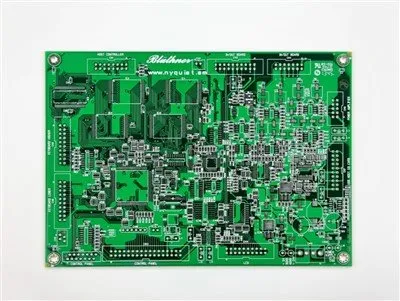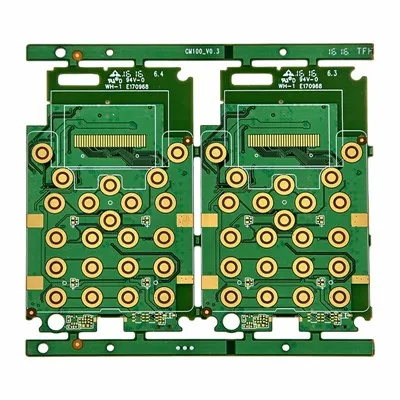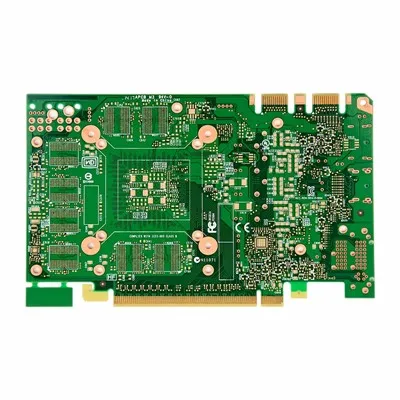
The technical parameters of a PCB mainly include basic indicators such as board type, board thickness, copper thickness, and number of layers. Board thickness is usually expressed in millimeters (mm), with common specifications including 0.8mm, 1.0mm, and 1.6mm. Different thicknesses affect the mechanical strength and mounting method of the PCB. Copper thickness determines the current carrying capacity and heat dissipation performance of the circuitry; the common unit is oz (ounce), for example, 1oz and 2oz copper thicknesses correspond to different copper layer thicknesses. The number of layers is an important parameter for measuring the complexity of a PCB. From single-layer and double-layer boards to 4-layer, 6-layer, or even higher multilayer boards, different structures directly affect routing capabilities, signal integrity, and product performance.
PCBs also involve key technical parameters such as heat resistance, electrical performance, and environmental reliability. The glass transition temperature (TG) is an important indicator of a PCB's high-temperature resistance; a higher TG value indicates better stability in high-temperature environments. Dielectric constant (Dk) and dielectric loss (Df) affect the quality of high-frequency signal transmission; therefore, high-frequency PCBs typically require the use of low-loss materials. In addition to these requirements, PCBs also need to meet requirements for moisture resistance, corrosion resistance, oxidation resistance, and EMC (electromagnetic compatibility) to adapt to different application scenarios such as industrial control, automotive electronics, medical equipment, and aerospace. As electronic products continue to develop towards higher speeds, smaller sizes, and higher reliability, PCB technical parameter standards are also continuously improving.