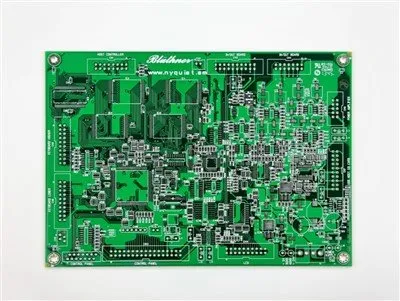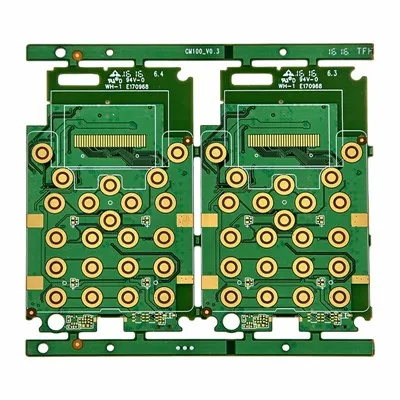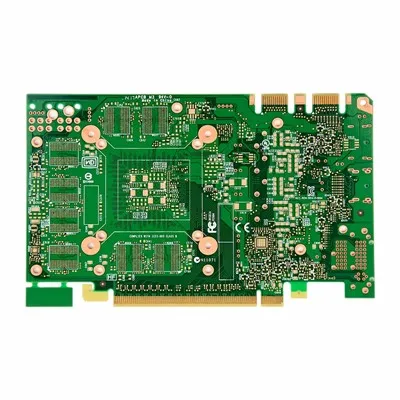
A PCB (Printed Circuit Board) is a core component in electronic devices used to connect and support electronic components.
Electronic Device Interconnection: PCBs use copper traces to electrically connect components such as resistors, capacitors, and integrated circuits, replacing traditional manual wiring and improving reliability and production efficiency. For example, mobile phone motherboards use multi-layer HDI PCBs, integrating hundreds of components.
Signal Transmission and Control: High-frequency PCBs (such as Rogers materials) are used in 5G base stations to stably transmit millimeter-wave signals; flexible PCBs (FPCs) enable dynamic bending wiring in foldable screen phones.
Power Distribution and Heat Dissipation: High-current devices (such as power modules) use thick copper PCBs (copper thickness up to 3 oz), combined with aluminum substrates (such as LED module substrates) to enhance heat dissipation. The thermal conductivity of copper substrates can reach 400 W/(m·K).
Miniaturized Integration: IC substrates (such as BGA packages) use micron-level lines to connect chips to the motherboard, with line width/spacing below 25 μm.
Special Environment Adaptation: Military-grade PCBs use high-temperature resistant PTFE vinyl; medical device PCBs must be ISO 13485 certified to ensure biocompatibility.
Emerging Technology Fields: IoT sensors use flexible PCBs bonded to curved surfaces; automotive radars use high-frequency PTFE sheets to reduce signal loss.