
Rigid PCB Solutions for Consumer Electronics
Consumer electronics products usually have strict requirements for size, performance, appearance, safety, and cost. A rigid PCB used in this field must provide stable electrical performance, reliable mechanical strength, good solderability, and compatibility with automated SMT assembly.
Many customers face similar problems when sourcing rigid PCBs. Some suppliers can make simple boards but cannot support compact layouts. Some samples look acceptable, but quality becomes unstable during batch production. Some projects are delayed because the PCB supplier does not provide timely engineering feedback. Other customers struggle with material selection, surface finish choices, impedance requirements, or production cost optimization.
Our rigid PCB solutions are developed around these real customer concerns. Before production, we can review Gerber files and check key design points such as line width, spacing, hole size, solder mask clearance, copper balance, panelization, board thickness, and surface finish suitability. This helps customers identify possible risks earlier and reduce unnecessary revisions.
Our solutions are suitable for consumer electronics projects that require:
- Compact structure and high component density
- Stable signal and power performance
- Reliable soldering during SMT assembly
- Good mechanical strength for daily use
- Cost-effective production for competitive markets
- Consistent quality from sample to mass production
- RoHS-compliant material options
- Fast prototype and flexible batch production support
For consumer electronics brands, the biggest concern is often not only whether the first sample works, but whether every batch after that can remain stable. That is why we focus on repeatable processes, documented requirements, inspection control, and clear communication from engineering review to final shipment.
Applications of Consumer Electronics Rigid Boards
Consumer electronics rigid boards are widely used in smart and connected products. Different applications have different technical requirements, so the PCB design and manufacturing process should be matched with the final product use.
Common application areas include smart home devices, Bluetooth audio products, chargers and adapters, remote controls, power banks, IoT sensors, wearable devices, LED consumer products, gaming accessories, personal care electronics, and small household appliance controllers.
For compact communication products, a Smartphone PCB often requires fine routing, accurate layer alignment, stable impedance, reliable surface finish, and excellent solderability. Even a small deviation in manufacturing may affect signal transmission, charging performance, component assembly, or long-term reliability.
For smart living and daily household products, a Home Electronics PCB usually needs stable power control, long operating life, safe electrical performance, and reliable function under repeated daily use. These products may not always require the most complex PCB structure, but they require stable quality, reasonable cost, and consistent mass production.
|
Application Area |
Main Customer Concern |
|
Smart home devices |
Stable wireless connection, long service life, reliable control function |
|
Audio and Bluetooth products |
Compact layout, low noise, stable signal transmission |
|
Chargers and power products |
Heat resistance, current capacity, safe electrical spacing |
|
Wearable devices |
Small size, lightweight structure, reliable assembly |
|
IoT sensors |
Stable communication, compact design, long-term reliability |
|
Household appliance controllers |
Power stability, durability, batch consistency |
By understanding the product application, we can provide more suitable PCB manufacturing suggestions instead of offering only a standard production service.
Manufacturing Capabilities
Customers usually want to know whether a PCB manufacturer can match their technical requirements before sending an inquiry. Clear manufacturing capability helps engineers and buyers evaluate whether the supplier can support both current and future projects.
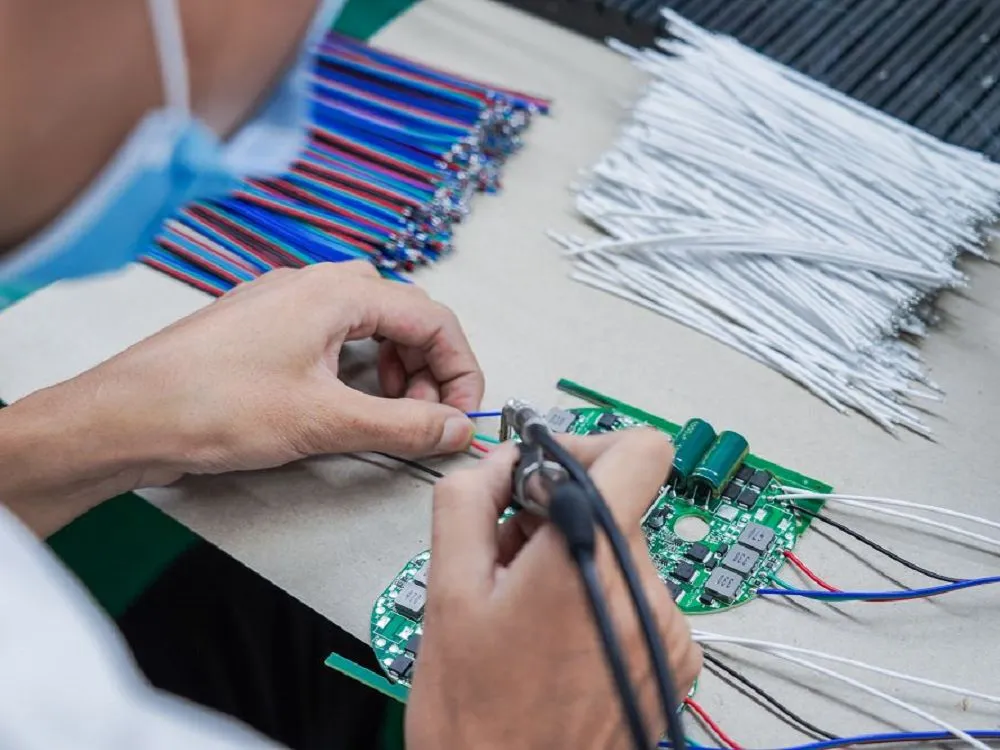
We support rigid PCB production for different consumer electronics applications, from basic control boards to more compact multilayer designs. Our manufacturing process focuses on circuit accuracy, drilling quality, plating stability, solder mask alignment, surface finish quality, and final inspection.
|
Item |
Capability |
|
PCB Type |
Rigid PCB, FR4 PCB, multilayer PCB, HDI PCB |
|
Layers |
Single-sided, double-sided, multilayer |
|
Material Options |
FR4, High-Tg FR4, halogen-free materials |
|
Copper Thickness |
Standard and customized copper options |
|
Surface Finish |
Lead-free HASL, ENIG, OSP, immersion silver |
|
Solder Mask |
Green, black, white, blue, red, matte options |
|
Testing |
AOI, electrical test, flying probe test, impedance test if required |
|
Production Volume |
Prototype, small batch, pilot run, mass production |
For compact electronic designs, small manufacturing details can directly affect assembly yield and product performance. For example, insufficient spacing may cause short circuits, poor solder mask control may affect SMT assembly, and unsuitable surface finish may reduce solderability. Our engineering review helps customers reduce these risks before production begins.
Materials and Surface Finishes
Material and surface finish selection directly affects PCB performance, cost, reliability, solderability, and shelf life. Many customers are unsure which option is most suitable for their product, especially during the early design stage. We can recommend practical choices based on product use, component type, operating environment, assembly process, and target budget.
|
Option |
Main Features |
Suitable Use |
|
Standard FR4 |
Cost-effective, stable, widely used |
General consumer electronics and control boards |
|
High-Tg FR4 |
Better heat resistance and dimensional stability |
Products with higher thermal stress |
|
Halogen-free material |
Environmentally friendly material option |
Export products and green electronics |
|
Lead-free HASL |
Good solderability and lower cost |
Standard consumer electronics |
|
ENIG |
Flat surface, good for fine-pitch components |
High-density boards and premium products |
|
OSP |
Cost-effective and flat surface |
High-volume products with controlled assembly |
The best choice is not always the most expensive one. For example, ENIG is often suitable for fine-pitch components, BGA, or high-reliability products, while lead-free HASL or OSP may be more practical for cost-sensitive products. Our goal is to help customers choose the right balance between cost, performance, and production stability.
Quality Control and Testing
Quality control is one of the most important parts of consumer electronics PCB manufacturing. A small PCB defect may cause assembly failure, unstable product function, customer complaints, or delayed delivery. For brands and OEM customers, these risks can lead to higher costs and damage to market reputation.
Our quality control process starts from material inspection and continues through each production stage. We focus on material traceability, circuit accuracy, hole quality, plating reliability, solder mask quality, surface finish condition, and final electrical performance.
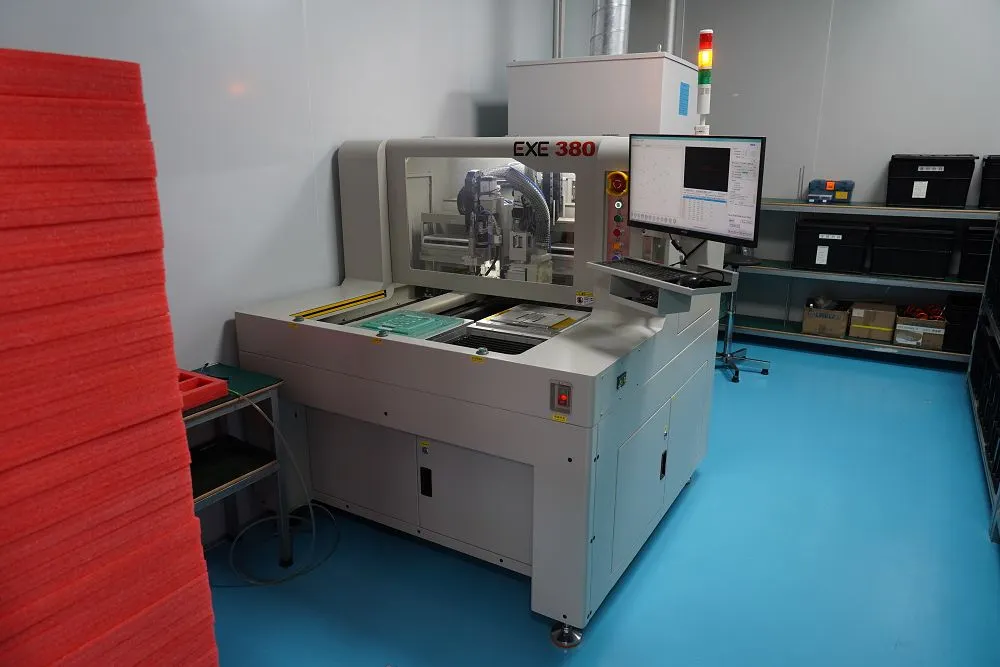
Key quality control steps include incoming material inspection, inner layer inspection for multilayer boards, AOI inspection, drilling and plating inspection, solder mask inspection, surface finish inspection, electrical testing, impedance testing when required, final visual inspection, and protective packaging before shipment.
For customers, the most important value of quality control is consistency. A successful prototype is only the first step. Stable mass production is what truly supports long-term cooperation. We help reduce common PCB risks such as open circuits, short circuits, poor solderability, warpage, delamination, inaccurate holes, surface contamination, and inconsistent appearance.

Prototype and Mass Production Support
Consumer electronics projects often move quickly from concept design to sample testing, pilot run, and mass production. During this process, customers need fast response, professional feedback, and reliable delivery. A slow or unresponsive supplier can delay product development and affect market launch.
We support customers at different project stages. For prototypes, we help customers verify electrical function, assembly performance, material suitability, and structural fit. For pilot production, we help confirm production stability before larger orders. For mass production, we focus on consistent quality, clear specifications, stable process control, and on-time delivery.
Our support includes DFM review, material recommendation, surface finish suggestion, panelization advice, prototype production, small-batch production, pilot run, and volume manufacturing. If customers have special requirements such as impedance control, specific material brands, tighter tolerances, or urgent delivery, these can be reviewed before production.
To receive a faster and more accurate quotation, customers are encouraged to provide Gerber files, drill files, quantity, board thickness, copper thickness, surface finish, solder mask color, silkscreen color, material requirements, testing requirements, and any special notes. Complete information helps reduce repeated communication and improves quotation accuracy.
FAQ
Q1: What types of rigid PCBs are commonly used in consumer electronics?
Common options include single-sided rigid PCB, double-sided rigid PCB, FR4 PCB, multilayer PCB, and HDI PCB. The right type depends on product size, circuit complexity, component density, signal requirements, and cost target.
Q2: How do I choose the right material for a consumer electronics rigid PCB?
Standard FR4 is suitable for many general consumer electronics products. High-Tg FR4 is recommended for products with higher heat resistance requirements. Halogen-free materials can be selected for projects with environmental requirements.
Q3: Which surface finish is suitable for my product?
It depends on the component type, assembly process, budget, and reliability requirements. ENIG is suitable for fine-pitch and high-reliability designs. Lead-free HASL is practical for standard products. OSP is often used for cost-sensitive high-volume production.
Q4: Can you support both prototype and mass production?
Yes. We support prototype, small batch, pilot production, and mass production. This helps customers verify the design first and then move smoothly into stable volume manufacturing.
Q5: Can you review my PCB design before production?
Yes. We can provide DFM review to check spacing, hole design, solder mask clearance, copper balance, surface finish suitability, panelization, and other manufacturability risks.
Q6: What are the common pain points when sourcing consumer electronics rigid PCBs?
Common pain points include unstable quality, slow delivery, poor solderability, unclear material selection, lack of engineering support, high defect rate, and inconsistent batch production. A reliable manufacturer should help identify and reduce these risks before and during production.
Q7: What information is needed for a quotation?
Please provide Gerber files, quantity, board thickness, copper thickness, surface finish, solder mask color, material requirements, testing requirements, and any special instructions. The more complete the information, the faster and more accurate the quotation will be.
Hot Tags: consumer electronics rigid board, China consumer electronics rigid board manufacturers, suppliers, factory