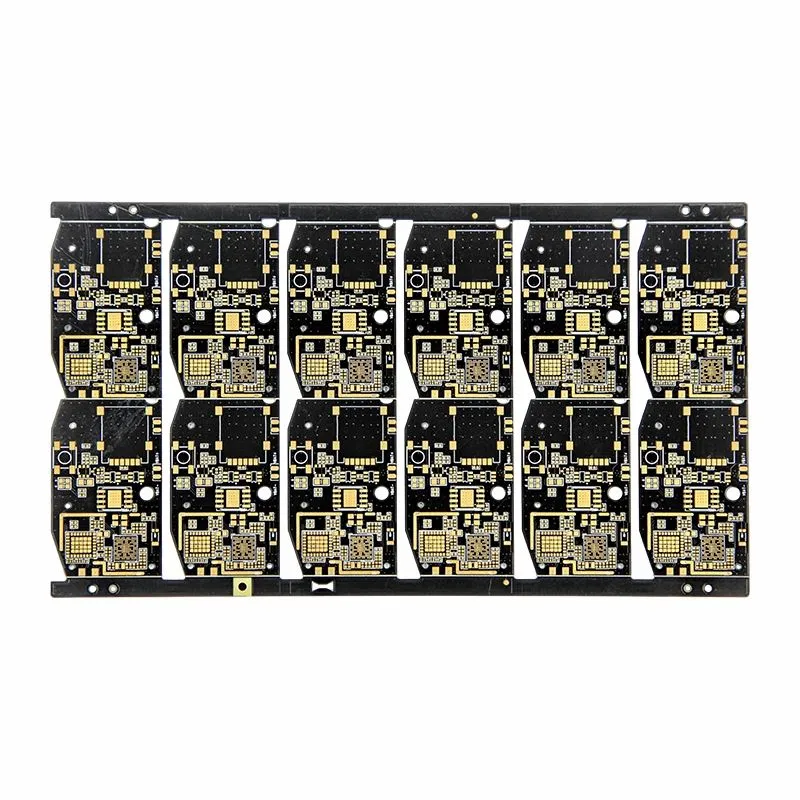
Medical electronic products require a higher level of reliability, stability, and production control than many standard electronic devices. Whether the final product is used in patient monitoring equipment, diagnostic instruments, wearable healthcare devices, medical sensors, portable testing devices, laboratory equipment, or control modules, the assembled circuit board must support accurate function, stable signal transmission, reliable soldering, and consistent quality from prototype to repeated production.
Our Medical Electronics Contract Assembly service is designed for customers who need dependable support from PCB fabrication and component sourcing to SMT mounting, through-hole soldering, inspection, testing, cleaning, packaging, and final delivery. For medical electronics customers, the main concern is not only whether the board can be assembled, but whether the finished PCBA can support real device validation, long-term operation, functional testing, and future production consistency.
Medical projects often face practical risks such as component shortage, material change, unstable soldering, poor signal performance, insufficient test coverage, connector failure, unclear production records, and batch inconsistency. These risks may delay product development, affect device testing, or create problems when the project moves from sample approval to mass production. That is why our service focuses on BOM review, traceable sourcing, DFM/DFA engineering support, process-controlled assembly, functional testing, clean handling, and clear production documentation.
Solving Sourcing, Engineering, and Assembly Risks
One of the biggest challenges in medical electronics manufacturing is controlling the full project process. If PCB fabrication, component purchasing, SMT assembly, testing, and packaging are handled by different suppliers, customers must spend more time managing communication, delivery schedules, technical questions, and quality responsibility. Once a problem appears, it may be difficult to identify whether the cause is the PCB, the component, the soldering process, the design file, or the testing method.
A coordinated production workflow helps reduce this risk. Customers can provide Gerber files, BOM, pick-and-place files, assembly drawings, testing requirements, and special process notes. The supplier can then review the files, prepare the PCB, source components, arrange assembly, perform inspection, and complete testing before shipment. This helps customers reduce supplier management pressure and makes the production process clearer.
|
Project Area |
Customer Pain Point |
Manufacturing Focus |
|
BOM Review |
Wrong package, obsolete part, or long lead time |
Check part number, footprint, availability, and replacement risk |
|
Component Sourcing |
Unstable supply or unapproved substitution |
Source from reliable channels and confirm alternatives |
|
PCB Fabrication |
Board quality may affect assembly and testing |
Control PCB specification, surface finish, and production tolerance |
|
SMT Assembly |
Small components may shift or solder poorly |
Control solder paste, placement accuracy, and reflow profile |
|
Through-Hole Assembly |
Connectors and terminals may become weak points |
Inspect solder joints and mechanical stability |
|
Engineering Review |
Design may work electrically but fail in production |
Check DFM/DFA risks before manufacturing |
|
Cleaning / Handling |
Contamination may affect sensitive electronics |
Control handling, cleaning, and packaging requirements |
|
Documentation |
Repeat orders may become inconsistent |
Maintain BOM, process, testing, and inspection records |
A professional Turnkey Medical PCB Assembly process should not only place components onto a board. It should help customers identify design and sourcing risks before production, reduce assembly uncertainty, and improve the chance that samples can be used for real medical device validation.
DFM and DFA review are also important because many problems begin at the design stage. Common issues include mismatched footprints, unclear polarity marks, insufficient test points, difficult soldering areas, unsuitable panelization, connector clearance problems, and limited space for assembly. For compact medical electronics, these risks can affect both production yield and final device reliability.
Early engineering review can help customers avoid unnecessary revisions, reduce prototype failure, and prepare the design for future production. This is especially valuable for medical products because validation schedules can be long, and a small design issue may delay the entire project.
Improving Reliability, Testing, and Batch Consistency
Medical electronics customers care deeply about reliability. A PCBA may look acceptable after assembly, but visual inspection alone cannot confirm whether the board will perform correctly in a real device. Medical equipment may require accurate signal collection, stable data transmission, reliable power control, consistent sensor response, battery charging stability, or long-term operation. Therefore, assembly quality and testing coverage must be planned carefully.
SMT assembly for medical electronics may involve fine-pitch ICs, sensors, communication modules, passive components, connectors, and small packages such as QFN or BGA. These components require accurate solder paste printing, stable placement, controlled reflow soldering, and proper inspection. If solder paste volume is unstable or components shift during placement, the board may have weak joints, bridging, open circuits, or intermittent failures.
Through-hole components also require attention. Connectors, terminals, switches, and larger components may experience mechanical stress during device assembly or use. Weak solder joints may pass initial testing but fail after handling, vibration, repeated connection, or long-term operation. For this reason, both SMT and through-hole processes should be controlled according to the product structure and final application.
Clean handling is also important for many medical electronics projects. Flux residue, dust, fingerprints, solder balls, or surface contamination may affect appearance, insulation, connector contact, or long-term device stability. Depending on the project requirements, cleaning and final handling procedures should be clearly defined before production. Packaging should also protect the assembled boards during transportation and storage.
Testing is another key concern. Customers often want to know whether the assembled boards can be checked before shipment and whether testing records can support future production. Depending on the project, inspection and testing may include incoming material inspection, SPI, AOI, X-ray, ICT, functional testing, programming, burn-in testing, and final visual inspection.
|
Testing / Inspection |
Purpose |
Customer Benefit |
|
Incoming Inspection |
Checks PCB and component condition before assembly |
Reduces material-related defects |
|
SPI |
Inspects solder paste printing quality |
Prevents solder volume problems early |
|
AOI |
Detects missing parts, wrong parts, polarity errors, and visible solder defects |
Improves assembly process control |
|
X-ray |
Checks BGA, QFN, and hidden solder joints |
Reduces hidden soldering risks |
|
ICT |
Detects open circuits, short circuits, and component-level issues |
Improves electrical defect detection |
|
Functional Testing |
Verifies actual board performance |
Confirms the PCBA works according to device requirements |
|
Programming |
Loads firmware or software if required |
Supports ready-to-use delivery |
|
Burn-In Test |
Checks long-time operation stability if required |
Helps identify early failures |
|
Final Inspection |
Confirms appearance, labels, connectors, cleaning, and packaging |
Reduces shipment risk |
Functional testing is especially important for medical electronics because it verifies real working performance. For example, a medical sensor board may need signal response testing, a portable healthcare device may require charging and power checks, and a monitoring device may need communication or display function verification. Without functional testing, a board may pass appearance inspection but still fail in actual use.
Our Turnkey Medical Electronics Assembly support is suitable for prototype builds, small-batch validation, pilot production, and mass production. During the prototype stage, customers usually focus on verifying design function, mechanical fit, component selection, and testing method. During small-batch production, process stability becomes more important. During mass production, customers care about repeatability, delivery schedule, cost control, documentation, and batch consistency.
Batch consistency is critical for medical products. A sample that works well is not enough if future batches use different materials, unclear alternatives, unstable soldering conditions, or inconsistent testing methods. To reduce this risk, approved BOM versions, production files, assembly notes, test procedures, inspection standards, and packaging requirements should be recorded clearly.
Medical Application Areas
Medical electronics include many different product types, and each application has different manufacturing concerns. A patient monitor may focus on stable signal transmission and long-term operation, while a wearable device may require compact SMT assembly and lightweight structure. Diagnostic instruments may need repeatable performance, and medical sensors may require clean assembly and stable soldering.
|
Application |
Main Customer Concern |
PCBA Manufacturing Focus |
|
Patient Monitoring Devices |
Stable signal and long-term operation |
Functional testing, solder reliability, batch consistency |
|
Diagnostic Instruments |
Accurate performance and repeatability |
Component quality, test records, process control |
|
Wearable Medical Devices |
Compact size and stable connection |
Fine-pitch SMT, connector reliability, lightweight structure |
|
Medical Sensors |
Signal accuracy and low failure risk |
Clean assembly, stable soldering, functional verification |
|
Portable Healthcare Devices |
Battery, charging, and compact layout |
DFM review, power testing, reliable assembly |
|
Laboratory Equipment |
Repeatable results and stable operation |
Testing, documentation, and production consistency |
|
Control Modules |
Reliable device control |
SMT/DIP quality, inspection, and final testing |
Prototype to Mass Production Support
Medical electronics projects usually move through several stages. During prototype production, customers often focus on checking whether the circuit design works, whether the components are suitable, whether the board fits into the enclosure, and whether the testing method is practical. At this stage, fast engineering feedback and clear risk communication are important.
During small-batch or pilot production, customers start paying more attention to process repeatability, assembly yield, component supply, and testing stability. This stage helps confirm whether the project can be produced consistently before entering larger volume production.
During mass production, customers care about stable quality, delivery schedule, cost control, documentation, and repeat order consistency. Approved material lists, BOM versions, test procedures, packaging requirements, and inspection records should be kept clear so that future batches can match the approved sample as closely as possible.
This full-stage support helps customers reduce the common problem where a prototype works well but later production becomes unstable. Clear production records and controlled processes make it easier to maintain long-term cooperation.

Cost and Risk Control
Medical electronics projects often require a balance between reliability and cost. Choosing the lowest-cost components or skipping necessary testing may reduce the initial price, but it can increase the risk of rework, validation delays, field failures, or repeat production problems. On the other hand, over-specifying every material or process may increase cost unnecessarily.
Cost and risk can be controlled through early BOM review, practical component sourcing, suitable testing methods, DFM/DFA review, clear documentation, and stable production planning. The goal is to choose the right process level for the product's actual application, reliability requirement, and production stage.
A reliable medical PCBA partner should help customers reduce total project risk, not only provide a low unit price. Better planning before production can save time, avoid repeated sample revisions, and improve the transition from development to stable production.

Quality Control and Final Delivery
Quality control should begin before production and continue through every stage. File review, BOM checking, component sourcing, PCB inspection, solder paste control, placement accuracy, reflow monitoring, solder joint inspection, functional testing, cleaning, final visual inspection, and packaging all affect the final product.
Medical electronics customers often worry that a supplier can produce samples but cannot maintain stable quality in repeat orders. To reduce this concern, process requirements, approved materials, testing methods, and inspection standards should be clearly documented. If alternative components are needed, they should be confirmed before use. If functional testing is required, the test method should be defined before production.
The goal is to deliver assembled boards that are not only manufactured correctly, but also suitable for real medical device testing and long-term production. Stable process control helps customers reduce validation risk, improve assembly confidence, and move more smoothly from prototype to mass production.
FAQ
Q1: What files are needed for quotation?
Customers usually need to provide Gerber files, BOM, pick-and-place files, assembly drawings, quantity, testing requirements, and any special process notes. If programming, functional testing, cleaning, coating, special packaging, or inspection reports are required, these details should also be provided. Complete files help improve quotation accuracy and allow early risk review.
Q2: Why is component traceability important for medical electronics?
Medical products often have long validation and production cycles. If materials change without approval, the final product may require additional testing or may show different performance. Traceable component sourcing and clear BOM control help customers maintain production consistency and reduce the risk of unexpected changes in repeat orders.
Q3: Can you support prototype and mass production?
Yes. Medical electronics projects can start with prototypes for design and function verification, then move to small-batch production, pilot runs, and mass production. To make this transition smooth, approved BOMs, test procedures, assembly notes, and quality standards should be maintained clearly.
Q4: What testing is recommended?
The testing plan depends on the product. AOI and visual inspection are common, while X-ray may be used for hidden solder joints. ICT can detect circuit-level defects, and functional testing is recommended when customers need to verify actual device performance. Burn-in testing may also be considered for products requiring long-time operation stability.
Q5: Why is DFM/DFA review useful before production?
DFM/DFA review helps identify risks such as mismatched footprints, unclear polarity, insufficient test points, difficult soldering areas, unsuitable panelization, connector clearance issues, or assembly problems. Finding these issues before production helps reduce rework, prototype failure, and mass production delays.
Q6: How can batch consistency be maintained?
Batch consistency can be maintained through approved BOM control, stable material sourcing, clear assembly notes, defined testing procedures, inspection records, and careful management of component alternatives. For medical projects, these records help future batches remain close to the approved sample and reduce unexpected variation.
Hot Tags: medical turnkey PCBA, China medical turnkey PCBA manufacturers, suppliers, factory