
Product Details
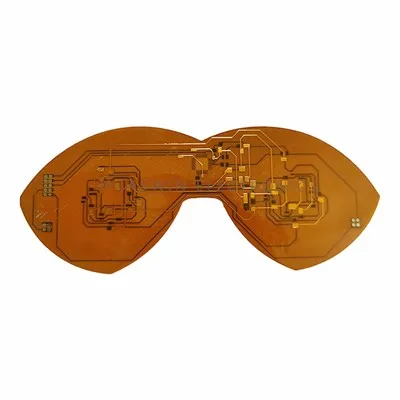
Flex PCB prototypes are pre-production samples built for design validation before mass manufacturing, available in single-sided, double-sided and multilayer configurations. Engineers rely on flex PCB prototypes to verify electrical performance, bending reliability, stack-up feasibility and DFM risks, catching design defects at an early stage to avoid costly revisions in volume production. Different from rigid PCB prototyping, flex prototype projects require special attention to bend radius, coverlay selection, material grade and dynamic flex cycles. Buyers should balance lead-time, prototype cost and manufacturer's processing capability when sourcing flex PCB samples.

Importance of Prototype Validation for Flexible Circuits
Unlike rigid PCBs, flexible circuits operate in environments where movement, bending and space constraints influence performance.
A design that appears correct in CAD software may reveal unexpected problems during physical testing.
Common issues discovered during prototype evaluation include:
- Incorrect bending areas
- Mechanical interference
- Connector alignment problems
- Assembly difficulties
- Signal integrity concerns
- Material selection issues
Finding these problems during the prototype stage is significantly less expensive than discovering them after production tooling and procurement activities have begun.
For many projects, prototype validation represents the lowest-cost opportunity to improve product reliability.

Typical Development Process for Flex PCB Prototypes
Successful prototype development is usually structured around several stages rather than a single fabrication activity.
Design Review
The process often begins with a manufacturability assessment.
Engineers review:
- Bend locations
- Layer structure
- Material selection
- Copper routing
- Component placement
Early feedback can prevent design choices that increase production risk.
01
Prototype Fabrication
Once the design is finalized, prototype boards are manufactured according to project specifications.
At this stage, the goal is not maximum production efficiency but design verification.
02
Assembly Evaluation
Prototype assemblies allow engineers to verify component placement, soldering quality and mechanical fit.
03
Functional Testing
Electrical performance is validated against product requirements.
04
Reliability Assessment
Where necessary, additional testing may be performed to evaluate long-term performance under expected operating conditions.
Each stage contributes valuable information that supports future production decisions.
05
Common Prototype Objectives
Different projects use prototype services for different reasons.
Some companies focus primarily on electrical verification, while others prioritize mechanical integration.
Typical objectives include:
Design Verification
Confirming that the circuit performs according to design specifications.
Mechanical Validation
Ensuring that the flexible circuit fits correctly within the product enclosure.
Assembly Optimization
Identifying opportunities to simplify manufacturing processes.
Material Evaluation
Comparing alternative materials before committing to volume production.
Customer Demonstration
Providing functional samples for market testing or customer approval.
Clearly defining project objectives helps ensure that prototype activities generate meaningful results.
DFM Review: The Most Overlooked Step
One of the most valuable aspects of a prototype project is Design for Manufacturability (DFM) analysis.
Many design issues are not electrical problems but manufacturing problems.
Examples include:
- Trace spacing too narrow
- Bend areas positioned incorrectly
- Excessive layer transitions
- Unsupported component locations
- Difficult assembly processes
Addressing these concerns before fabrication can improve yields and reduce future production costs.
A comprehensive DFM review often provides greater long-term value than the prototype boards themselves.
How Prototype Projects Reduce Future Costs
Prototype fabrication generally carries a higher unit price than mass production.
However, evaluating cost solely on a per-board basis can be misleading.
Prototype programs often generate savings through:
- Reduced redesign costs
- Faster product qualification
- Improved production yields
- Lower failure rates
- Shorter development cycles
- Reduced engineering changes
For complex electronic products, a successful prototype stage can save substantially more money than it costs.
This is especially true for products requiring regulatory approval or extensive field testing.
Reliability Testing Before Production Release
For products operating in demanding environments, prototype validation often includes reliability testing.
Common evaluations may include:
- Bend cycle testing
- Thermal cycling
- Vibration testing
- Environmental exposure testing
- Electrical performance monitoring
- Mechanical stress testing
The purpose is to identify weaknesses before products enter volume production.
Reliability testing becomes particularly important for medical, automotive and industrial applications.
Selecting a Flex PCB Prototype Supplier
Not all prototype suppliers provide the same level of engineering support.
When evaluating suppliers, buyers should consider:
- Prototype turnaround capability
- DFM review experience
- Flexible material expertise
- Assembly support
- Reliability testing resources
- Communication efficiency
A supplier that participates actively during development can help reduce project risks and improve overall product quality.
The goal of prototype manufacturing should not simply be obtaining sample boards, but generating information that supports successful production.
FAQ
What is a Flex PCB Prototype?
A Flex PCB Prototype is a pre-production flexible circuit used to verify design, functionality, manufacturability and reliability before mass production.
Why is prototype testing important?
Prototype testing helps identify design and manufacturing issues early, reducing development costs and minimizing production risks.
How many prototype boards should be ordered?
The required quantity depends on testing objectives, product complexity and validation requirements.
Can prototype designs be used directly for production?
Sometimes yes, but many projects require design adjustments after prototype evaluation.
Hot Tags: flex pcb prototype, China flex pcb prototype manufacturers, suppliers, factory, flex pcb fabrication, flex pcb prototype, flexible printed circuit, quick turn flex pcb, rigid flex circuit, rigid pcb board