
Product Details
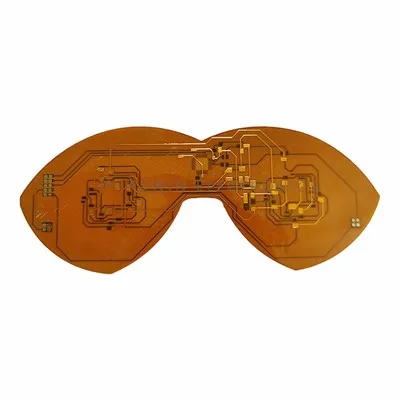
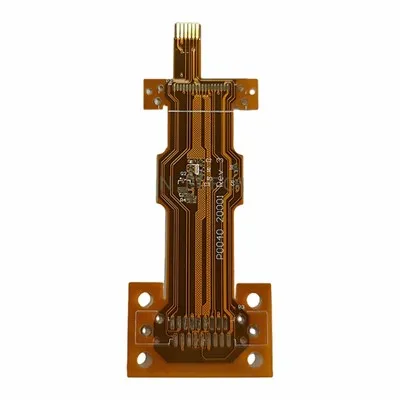
Fine-Pitch Flex PCB refers to flexible circuits designed for ultra-narrow pad spacing to mate with fine-pitch connectors and compact chip components. It demands precise copper trace, pad dimension and coverlay opening control on flexible substrates. Fine-pitch flex PCBs enable compact component placement and high-density interconnection, widely used in display modules, camera assemblies, wearable devices and miniaturized medical electronics. However, fine-pitch structures raise manufacturing difficulty. Engineers and procurement teams must check manufacturer's process capability, minimum pad spacing rules, material compatibility and yield risks during specification definition to avoid production issues and unexpected cost increases.

Growing Importance of Fine‑Pitch Design
Electronic products today are expected to be thinner, lighter and more powerful than previous generations.
Several trends are driving demand for fine pitch flexible circuits:
- Smaller semiconductor packages
- Increased component density
- Compact product dimensions
- Higher signal counts
- More complex electronic functions
- Reduced internal space for routing
In many cases, engineers cannot simply increase the board size to solve routing challenges. Mechanical design restrictions often require the circuit itself to become more efficient.
Fine Pitch Flex PCB technology allows designers to maximize available space while supporting advanced electronic architectures.

Definition and Metrics of Fine‑Pitch Flex PCBs
A Fine Pitch Flex PCB generally refers to a flexible circuit that incorporates narrower conductor widths and tighter spacing than conventional flex designs.
Key characteristics often include:
Fine Trace Widths
Smaller conductor geometries create additional routing channels within the same area.
01
Reduced Spacing
Tighter spacing between conductors increases circuit density.
02
High-Precision Pad Design
Advanced component packages require accurately defined pad structures.
03
Support for Miniaturized Components
Fine pitch circuits are commonly used with BGA, CSP and other high-density packages.
04
Enhanced Manufacturing Control
Production tolerances become increasingly critical as dimensions decrease.
The exact definition of "fine pitch" varies between applications, but the overall objective remains the same: supporting more circuitry within less space.
05
Industries Driving Demand for Fine Pitch Flex PCB
Several industries are accelerating the adoption of fine pitch flexible circuit technology.
Consumer Electronics
Smartphones, tablets and portable devices continue to push miniaturization requirements.
Medical Devices
Portable monitoring equipment and wearable healthcare products require compact electronic assemblies.
Industrial Automation
Modern industrial sensors often combine advanced functionality within limited installation spaces.
Optical Equipment
Camera modules and imaging systems frequently rely on high-density flexible circuits.
Communication Products
Wireless modules and data transmission devices require compact routing solutions for increasingly sophisticated electronics.
These applications place significant demands on both PCB fabrication and assembly accuracy.
Design Challenges Engineers Commonly Encounter
Fine pitch designs offer substantial benefits, but they also introduce additional design complexity.
√ Limited Routing Space
As component density increases, maintaining efficient routing becomes more difficult.
√ Signal Integrity Considerations
Closely spaced conductors may create signal interaction issues if not properly managed.
√ Mechanical Reliability
Flexible circuits must continue to perform reliably despite repeated bending or movement.
√ Assembly Constraints
Smaller component pitches reduce manufacturing tolerances during assembly.
√ Thermal Management
Compact layouts can concentrate heat within smaller areas.
Addressing these factors early in the design process helps reduce production risks and improve long-term reliability.
Manufacturing Capabilities That Matter
When sourcing Fine Pitch Flex PCB projects, buyers should evaluate more than basic fabrication capability.
Several manufacturing factors directly affect product quality.
√ Imaging Accuracy
Fine conductor patterns require highly controlled imaging processes.
√ Etching Precision
Small variations during etching can significantly affect circuit dimensions.
√ Registration Control
Accurate layer alignment becomes increasingly important as feature sizes decrease.
√ Surface Quality
Consistent surface preparation helps ensure reliable assembly performance.
√ Process Stability
Repeatability is essential for maintaining yield during volume production.
Manufacturers that specialize in fine pitch processing typically invest in advanced equipment and process monitoring systems to maintain these standards.
Assembly Challenges Beyond PCB Fabrication
Many sourcing decisions focus solely on PCB production, but assembly capability is equally important.
Fine pitch designs often require:
Precise solder paste deposition
Accurate component placement
Advanced inspection methods
Tight process control
Enhanced reflow management
Even a perfectly fabricated flexible circuit can experience yield issues if assembly processes are not optimized.
For this reason, many companies evaluate fabrication and assembly capability together when selecting suppliers.
Reliability Verification
Because fine pitch structures operate with reduced tolerances, validation becomes especially important.
Common reliability evaluations include:
√ Dimensional Verification
Ensures conductor widths and spacing meet design requirements.
√ Electrical Testing
Confirms circuit continuity and isolation performance.
√ Solderability Assessment
Verifies compatibility with assembly processes.
√ Environmental Testing
Evaluates performance under temperature and humidity exposure.
√ Mechanical Flex Testing
Measures durability under repeated bending conditions.
These tests help identify potential issues before products enter volume production.
Selecting the Right Supplier
A supplier suitable for standard flexible circuits may not necessarily be capable of supporting fine pitch projects.
When evaluating manufacturers, buyers should consider:
- Fine line processing experience
- Precision imaging capability
- Assembly expertise
- Yield performance history
- Quality management systems
- Engineering support resources
Early supplier involvement often helps identify manufacturability concerns and reduces development delays.
The best suppliers contribute not only manufacturing capacity but also practical guidance that improves project success.
Future Market Trends
The demand for Fine Pitch Flex PCB technology is expected to increase as electronic products continue to evolve.
Several trends are driving future growth:
- Wearable electronics expansion
- AI-powered portable devices
- Advanced medical equipment
- High-performance imaging systems
- Miniaturized industrial sensors
As component packages continue shrinking, fine pitch flexible circuits will play an increasingly important role in enabling next-generation electronic products.
Manufacturers capable of maintaining precision, reliability and production consistency will be positioned to support this growing market.
FAQ
What is a Fine Pitch Flex PCB?
A Fine Pitch Flex PCB is a flexible printed circuit designed with narrow conductor widths and tight spacing to support high-density electronic components.
Why are Fine Pitch Flex PCBs used?
They allow engineers to integrate more functionality into compact products while supporting modern miniaturized components.
Are Fine Pitch Flex PCBs more difficult to manufacture?
Yes. Tighter tolerances require greater precision during fabrication, inspection and assembly.
Which industries commonly use Fine Pitch Flex PCB technology?
Consumer electronics, medical devices, industrial automation, optical equipment and communication products frequently use fine pitch flexible circuits.
Hot Tags: fine pitch flex pcb, China fine pitch flex pcb manufacturers, suppliers, factory, flex pcb fabrication, flex printed circuit board, flexible pcb board, rigid flex, rigid pcb, rigid pcb board