
Product Details
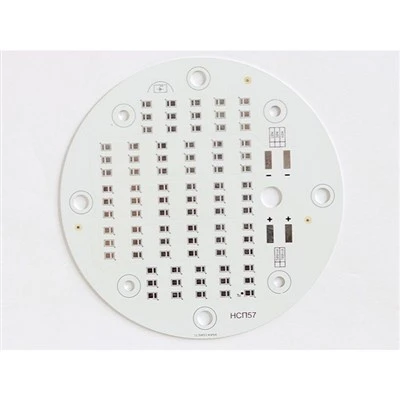
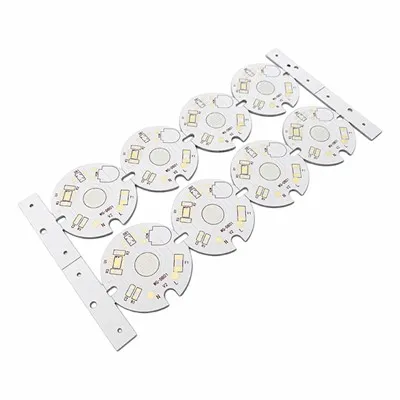
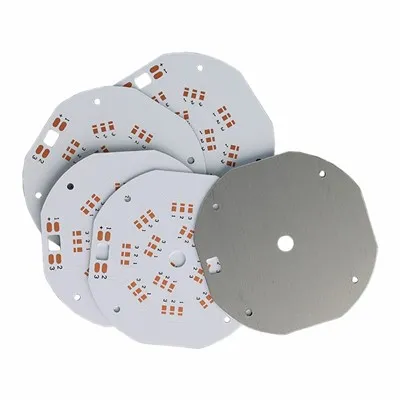
A Thermal Management PCB is designed to efficiently transfer and distribute heat generated by electronic components. It combines PCB materials, copper structures, thermal vias, component placement, and heat dissipation interfaces to help control operating temperature.A properly engineered Thermal Management PCB can help reduce heat accumulation, improve component stability, and support reliable operation in high-power electronic systems.

Core Advantages of Thermal Management PCB
Efficient Heat Dissipation
Thermal structures can provide a controlled path for heat to move away from heat-generating components and toward the final cooling structure.
Reduced Thermal Resistance
Material selection, copper thickness, dielectric properties, and thermal interfaces can be optimized to reduce resistance along the heat transfer path.
Optimized Heat Distribution
Copper areas, thermal vias, and component placement can help spread localized heat across a larger area and reduce concentrated hot spots.
Suitable for High-Power Electronics
Thermal PCB structures can be designed for LEDs, power semiconductors, converters, motor drivers, and other heat-generating components.
Custom Thermal Management PCB Manufacturing
Our Custom Thermal Management PCB solutions can be manufactured according to Gerber files, PCB drawings, mechanical drawings, thermal specifications, and application requirements.
Customization options include:
- Aluminum PCB
- Copper-based PCB
- High thermal conductivity dielectric
- Single-layer construction
- Double-layer construction
- Multilayer structures where applicable
- Thermal vias
- Thermal pads
- Heavy copper options
- Custom board thickness
- Custom substrate thickness
- Custom board dimensions
- White or customized solder mask
- HASL and ENIG surface finishes
- Electrical testing
The PCB construction can be selected according to component power, thermal resistance requirements, operating temperature, circuit complexity, and mechanical constraints.
Thermal Design and Heat Dissipation Path
Effective thermal management starts with understanding the complete heat transfer path.
A Thermal Management PCB can be designed to transfer heat from the component junction through the PCB structure and toward a heat sink, chassis, or other cooling interface.
Important factors include:
- Component power
- Thermal pad design
- Copper thickness
- Copper area
- Dielectric thickness
- Thermal conductivity
- Thermal resistance
- Thermal via arrangement
- Heat sink interface
- Operating environment
Optimizing these factors together can provide a more effective thermal solution than focusing on PCB material alone.
Thermal Vias and Copper Structures
Thermal vias can be used to transfer heat between PCB layers and thermal regions where the circuit construction allows.
For multilayer designs, copper planes can also provide additional heat spreading and power distribution.
The thermal structure may include:
- Thermal vias
- Copper planes
- Thermal pads
- Large copper areas
- Heavy copper sections
- Metal substrates
- Heat spreaders
The appropriate structure depends on the component type, power level, PCB construction, and required thermal performance.
Metal Core Thermal PCB
For applications with higher thermal loads, a Metal Core Thermal PCB can use an aluminum or copper substrate to provide an efficient thermal path.
Aluminum is commonly selected for its balance of thermal performance, weight, mechanical stability, and cost. Copper substrates can be considered when higher thermal conductivity is required.
The substrate can be selected according to:
- Thermal conductivity
- Thermal resistance
- Component power
- Operating temperature
- Weight
- Mechanical requirements
- Cost
Thermal Management PCB for LED Lighting
Thermal Management PCB for LED Lighting is widely used because LED performance can be affected by excessive operating temperature.
Typical applications include:
- High-power LED modules
- LED downlights
- LED street lights
- LED panels
- Automotive lighting
- Industrial lighting
- Outdoor lighting
The PCB thermal structure can be customized according to LED power, component density, board dimensions, and heat sink configuration.
Thermal Management PCB for Power Electronics
Power electronics often generate substantial heat during operation.
A Thermal Management PCB for Power Electronics can be designed for:
- MOSFETs
- IGBTs
- Power modules
- DC-DC converters
- AC-DC converters
- Inverters
- Motor drivers
- Battery systems
Copper thickness, thermal vias, thermal pads, substrate material, and component placement can be optimized according to electrical and thermal requirements.
Thermal PCB Design for High-Density Electronics
As component density increases, localized heat can become more difficult to manage.
A Thermal Management PCB can incorporate thermal structures around high-power components while maintaining the required electrical routing.
Thermal design can be considered during component placement and PCB layout to avoid unnecessary hot spots and improve heat distribution.
For high-density boards, electrical and thermal requirements should be evaluated together during the design stage.
Applications of Thermal Management PCB
Automotive Electronics
Power modules, LED lighting, motor control systems, battery electronics, and other automotive systems can require effective PCB thermal management.
01
LED Lighting
High-power LED products can use thermal PCBs to transfer heat away from LED components and support stable operation.
02
Industrial Equipment
Motor drives, power controllers, industrial instruments, and automation equipment can benefit from improved thermal performance.
03
Power Electronics
Power supplies, converters, inverters, and semiconductor-based power systems can use thermal PCB structures to manage operating temperature.
04
Energy Systems
Battery systems, charging equipment, energy storage systems, and power conversion equipment can use thermal management PCB solutions.
05
Thermal Management PCB Prototype and Mass Production
A Thermal Management PCB prototype allows engineers to evaluate thermal performance before mass production.
Prototype testing can include:
- Temperature measurement
- Thermal resistance evaluation
- Heat distribution
- Component temperature
- Electrical continuity
- Board dimensions
- Mechanical fit
- Assembly compatibility
Thermal testing under actual operating conditions can help determine whether the selected PCB structure meets the required temperature limits.
After prototype approval, the validated materials, thermal structure, stack-up, and manufacturing specifications can be transferred to volume production.

Thermal Management PCB Assembly
Thermal Management PCB assembly can be provided together with PCB fabrication for customers requiring a complete manufacturing solution.
Assembly capabilities may include:
- SMT assembly
- Power component assembly
- LED assembly
- BGA and fine-pitch assembly
- Component sourcing
- AOI inspection
- X-ray inspection
- Functional testing
Thermal pads and high-power components can be assembled according to the approved PCB design and process requirements.

Quality Control and Certifications
Quality control for Thermal Management PCB manufacturing can include material verification, thermal material specifications, copper thickness, dielectric thickness, trace width and spacing, thermal via quality, board dimensions, surface finish, solder mask quality, and electrical testing.
Depending on the application and target market, applicable requirements such as UL, RoHS, and REACH can be supported.
Additional thermal cycling, temperature, electrical, mechanical, or reliability testing can be arranged according to customer requirements.
FAQ
1. What is a Thermal Management PCB?
A Thermal Management PCB is a circuit board designed with materials and structures that improve heat transfer and help control the operating temperature of electronic components.
2. What factors affect PCB thermal performance?
Thermal conductivity, thermal resistance, dielectric thickness, copper thickness, component power, thermal vias, component placement, heat sink design, and operating conditions can all affect thermal performance.
3. Are thermal vias necessary for thermal PCB design?
Not always. Thermal vias can be useful for transferring heat between layers or thermal regions, but the appropriate thermal structure depends on the PCB construction and application.
4. Can aluminum be used for Thermal Management PCB?
Yes. Aluminum is widely used as a metal substrate because it provides a practical combination of thermal performance, mechanical stability, low weight, and cost.
5. Can Thermal Management PCB be used for high-power components?
Yes. It can be designed for high-power LEDs, MOSFETs, IGBTs, power modules, converters, motor drivers, and other heat-generating components.
Hot Tags: thermal management pcb, China thermal management pcb manufacturers, suppliers, factory, alu pcb, aluminum pcb board, double sided aluminum pcb, flexible aluminum pcb, led aluminum pcb, led aluminum plate pcb board