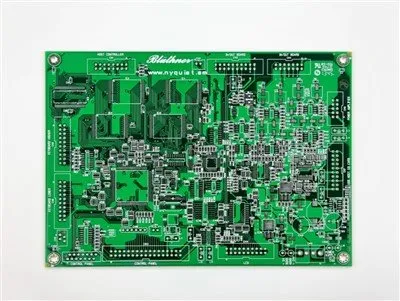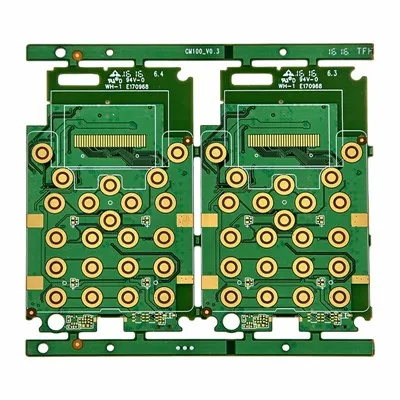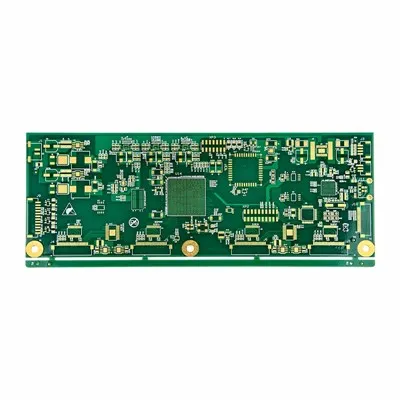

In the automotive electronics industry, reliability is always the first priority. Unlike ordinary consumer products, automotive electronic systems must work under demanding conditions such as temperature changes, vibration, humidity, long operating hours, and continuous electrical load. A small PCB defect may lead to unstable signal transmission, functional failure, assembly delay, or higher after-sales cost. For this reason, choosing a reliable automotive rigid PCB board manufacturer is not only about production price, but also about long-term product safety, process control, and batch consistency.
We provide custom rigid PCB manufacturing services for automotive control modules, lighting systems, battery management systems, sensors, charging systems, dashboard electronics, infotainment products, and other vehicle-related electronic applications. From prototype development to mass production, we help customers reduce common sourcing risks, including poor solderability, material mismatch, unstable copper plating, warpage, delayed delivery, and inconsistent production quality.
For customers developing a new Vehicle PCB, our team can support engineering review, material selection, surface finish recommendation, manufacturability checking, and production planning. Our goal is to help customers achieve stable electrical performance, reliable mechanical strength, and consistent quality for demanding automotive applications.
Rigid PCB Solutions for Automotive Electronics

Automotive electronic products require rigid PCBs with strong durability, stable insulation, reliable copper plating, and good thermal performance. Many customers are not only concerned about whether the board can be produced, but whether it can perform reliably in the final application. This is especially important for products used in power control, lighting, safety monitoring, sensors, and battery systems.
Customers often face several pain points when sourcing automotive rigid boards. Some suppliers may be able to produce standard PCBs, but may not understand the higher reliability expectations of automotive projects. Some boards pass the sample stage but show inconsistent quality during volume production. Other projects suffer from delays because the supplier cannot provide timely DFM feedback or does not clearly communicate material and process risks before manufacturing.
Our rigid PCB solutions are designed to solve these concerns. Before production, we can review the Gerber files and check important design points such as spacing, hole size, copper thickness, solder mask clearance, panelization, board thickness, and surface finish suitability. This helps customers identify potential risks earlier and avoid unnecessary redesign, assembly failure, or production delay.
For automotive electronic products, we focus on:
- Stable electrical connection for long-term operation
- Strong mechanical support under vibration and movement
- Heat-resistant material options for demanding environments
- Reliable solderability for SMT and through-hole assembly
- Controlled manufacturing process for repeat orders
- Clear production specifications for sample and mass production
- Testing support to reduce open circuits, shorts, and hidden defects
A high-quality Automotive Electronics PCB should not only meet dimensional and electrical requirements, but also provide stable performance throughout the product life cycle. That is why our production process emphasizes material control, engineering communication, inspection standards, and traceability.
Automotive Rigid PCB Applications
Automotive rigid PCBs are widely used in different vehicle systems. Each application has different design priorities, so the PCB solution should be selected according to the electrical load, working environment, assembly method, and reliability target.
Common automotive PCB applications include vehicle lighting systems, battery management systems, EV charging modules, power control units, engine-related control modules, sensor systems, dashboard electronics, infotainment devices, door and window control modules, seat control systems, mirror control systems, and smart vehicle accessories.
For lighting systems, customers usually care about heat resistance, copper thickness, soldering reliability, and long-term stable output. For battery management systems and power modules, electrical safety, insulation distance, current capacity, and copper reliability are important. For sensors and communication modules, signal stability, dimensional accuracy, and impedance control may become key concerns.
The following application overview helps customers quickly understand common requirements:
|
Application |
Main PCB Concerns |
|
Automotive lighting |
Heat resistance, solderability, stable current transmission |
|
Battery management system |
Electrical safety, copper reliability, insulation performance |
|
EV charging module |
Thermal performance, current capacity, long-term durability |
|
Sensor system |
Signal stability, precision, reliable connection |
|
Dashboard electronics |
Stable function, appearance control, batch consistency |
|
Infotainment system |
Signal quality, component density, assembly compatibility |
By understanding the final product application, we can provide more practical manufacturing suggestions instead of offering only a standard board production service.
Manufacturing Capabilities
Clear manufacturing capability is important for engineers and buyers when evaluating a PCB supplier. Automotive projects often require stable material sourcing, accurate process control, and reliable inspection. Our manufacturing services support different project stages, from engineering samples to long-term production orders.
|
Item |
Capability |
|
PCB Type |
Rigid PCB, FR4 PCB, multilayer PCB, heavy copper PCB |
|
Layers |
Single-sided, double-sided, multilayer options |
|
Materials |
FR4, High-Tg FR4, halogen-free material options |
|
Copper Thickness |
Standard copper and customized copper thickness |
|
Surface Finish |
Lead-free HASL, ENIG, OSP, immersion silver |
|
Solder Mask |
Green, black, white, blue, red, matte options |
|
Testing |
AOI, electrical test, flying probe test, impedance test if required |
|
Production Volume |
Prototype, small batch, pilot run, mass production |
For automotive designs, small manufacturing details can directly affect final product reliability. Poor drilling accuracy may reduce hole quality. Unstable plating may increase the risk of failure under long-term operation. Incorrect surface finish selection may affect solderability. Unbalanced copper distribution may cause warpage or assembly issues. Our engineering and production teams pay attention to these details before and during manufacturing.
Materials and Surface Finishes
Material selection is one of the most important parts of automotive rigid PCB manufacturing. The right material helps improve heat resistance, insulation reliability, dimensional stability, and long-term electrical performance. Customers often need support when choosing between standard FR4, High-Tg FR4, halogen-free materials, or heavier copper options.
Standard FR4 is suitable for many general automotive control boards where the working environment is moderate and cost control is important. High-Tg FR4 is recommended for applications that require better thermal resistance or dimensional stability. Halogen-free materials are suitable for customers with environmental requirements. Heavy copper options can be used for power-related applications where higher current capacity and better heat distribution are required.

Surface finish also affects solderability, shelf life, assembly quality, and cost. ENIG is often selected for fine-pitch components, higher reliability requirements, and flatter surface needs. Lead-free HASL is a practical choice for many standard automotive electronic products. OSP may be suitable for cost-sensitive batch production when the assembly process is well controlled. Immersion silver can be considered for selected applications requiring good conductivity and solderability.
The best choice is not always the most expensive one. A practical PCB solution should match the actual application, component type, assembly process, operating environment, and budget. Our team can help customers compare different options and select a balanced solution for performance and cost.

Quality Control and Testing
vehicle electronics must be consistent, traceable, and reliable. Customers need to know how the factory controls risks before shipment, not only how the board looks after production.
Our quality control process starts with material inspection and continues through production, testing, and final packaging. Important inspection steps include incoming material inspection, inner layer checking for multilayer boards, AOI inspection, drilling quality control, plating inspection, solder mask inspection, surface finish inspection, electrical testing, final visual inspection, and packaging protection.
For projects with higher requirements, additional testing or inspection can be arranged according to customer specifications. This may include impedance testing, micro-section analysis, copper thickness checking, solderability inspection, or special reporting requirements.

The purpose of testing is not only to find defects, but also to prevent repeated problems. Common automotive PCB risks include open circuits, short circuits, insufficient copper thickness, poor solder mask adhesion, surface contamination, warpage, delamination, and unstable solderability. By controlling these risks, we help customers improve assembly yield and reduce long-term failure concerns.
A reliable Automotive Electronics Rigid PCB requires stable production documentation, consistent inspection standards, and clear communication from sample approval to volume manufacturing.

Prototype and Mass Production Support
Automotive electronic projects usually go through several stages before final mass production. Customers may first need prototypes for design verification, then small batches for functional testing, followed by pilot production and stable volume manufacturing. Each stage has different priorities.
During the prototype stage, speed and engineering feedback are important. Customers need to confirm whether the design works, whether the board fits the product structure, and whether the selected material and surface finish are suitable. During the pilot run, process stability and assembly performance become more important. In mass production, customers focus on consistency, delivery reliability, traceability, and long-term supply support.
We support:
- Prototype production for design verification
- Small-batch production for testing and validation
- Pilot run before full-scale manufacturing
- Mass production for long-term supply
- DFM review before production
- Material and surface finish recommendations
- Panelization support for cost optimization
- Engineering support for special requirements
To receive a faster and more accurate quotation, customers are encouraged to provide Gerber files, drill files, quantity, board thickness, copper thickness, material requirements, surface finish, solder mask color, silkscreen color, testing requirements, and any special notes such as impedance control, heavy copper, or urgent delivery.
Complete project information helps reduce repeated communication and allows our team to provide a more accurate production plan.
FAQ
Q1: What types of rigid PCBs are commonly used in automotive electronics?
Common options include single-sided rigid PCB, double-sided rigid PCB, multilayer PCB, FR4 PCB, High-Tg PCB, and heavy copper PCB. The right type depends on the product function, electrical load, size, and reliability requirements.
Q2: Why is material selection important for automotive PCB projects?
Automotive applications may face heat, vibration, humidity, and long operating hours. Suitable materials help improve thermal stability, insulation performance, mechanical strength, and long-term reliability.
Q3: Which surface finish is suitable for automotive rigid PCBs?
ENIG is suitable for fine-pitch or higher-reliability designs. Lead-free HASL is practical for many standard applications. OSP may be used for cost-sensitive projects with controlled assembly conditions. The final choice should depend on the component type, assembly process, and product requirements.
Q4: Can you support automotive PCB prototypes and mass production?
Yes. We support prototypes, small batches, pilot runs, and mass production. This helps customers verify their design first and then move smoothly into stable volume manufacturing.
Q5: Can you review my PCB design before production?
Yes. We can provide DFM review to check spacing, hole design, solder mask clearance, copper balance, panelization, material selection, and surface finish suitability before production.
Q6: What are the common pain points when sourcing automotive rigid PCBs?
Common pain points include unstable quality, poor solderability, insufficient engineering support, unclear material selection, delivery delays, inconsistent batch production, and lack of traceability. A reliable manufacturer should help reduce these risks before and during production.
Q7: What information is needed for a quotation?
Please provide Gerber files, quantity, board thickness, copper thickness, material type, surface finish, solder mask color, testing requirements, and any special requirements. This helps us provide a faster and more accurate quotation.
Hot Tags: automotive rigid PCB, China automotive rigid PCB manufacturers, suppliers, factory