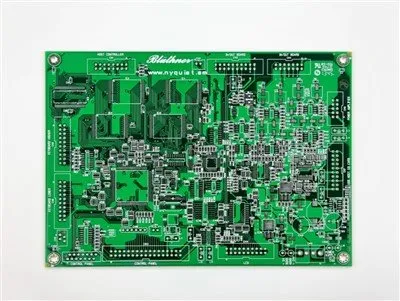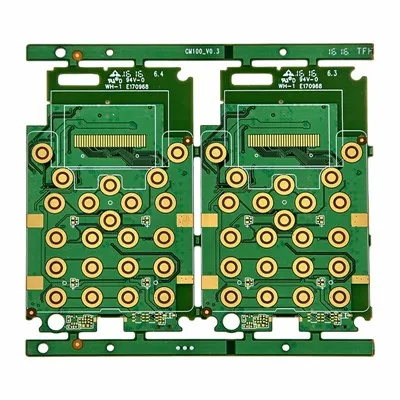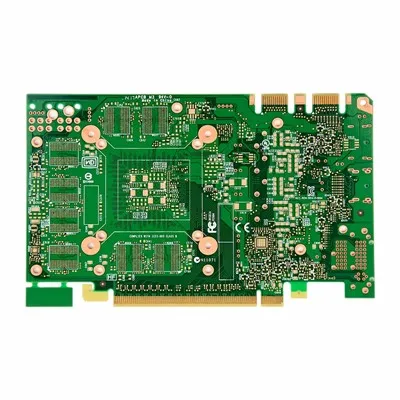
A PCB (Printed Circuit Board) is a crucial component of the electronics industry. Almost every electronic device, from small items like watches and calculators to large systems like computers, communication devices, and military weaponry, utilizes PCBs to enable electrical interconnection between integrated circuits and other electronic components. A PCB consists of an insulating substrate, connecting wires, and solder pads for mounting and soldering electronic components, serving the dual function of conductive lines and an insulating base. It replaces complex wiring, simplifying assembly and soldering, reducing the workload of traditional wiring methods, significantly alleviating worker fatigue, reducing overall device size, lowering costs, and improving the quality and reliability of electronic equipment. PCBs offer excellent product consistency, allowing for standardized designs that facilitate mechanization and automation in production. Furthermore, a completed PCB can serve as a spare part, facilitating interchangeability and maintenance of the entire product. Currently, PCBs are widely used in the manufacturing of electronic products.
The earliest printed circuit boards (PCBs) used were paper-based copper-clad laminates. Since the advent of semiconductor transistors in the 1950s, the demand for PCBs has increased dramatically. In particular, the rapid development and widespread application of integrated circuits have led to increasingly smaller electronic devices and increasingly dense and complex circuit wiring, requiring continuous updates to PCB designs. Currently, PCB types have evolved from single-sided boards to double-sided boards, multilayer boards, and flexible boards; their structure and quality have also advanced to ultra-high density, miniaturization, and high reliability; new design methods, design tools, board materials, and manufacturing processes are constantly emerging. In recent years, various computer-aided design (CAD) PCB application software programs have become widespread and popular in the industry, and in specialized PCB manufacturers, mechanized and automated production has completely replaced manual operations.