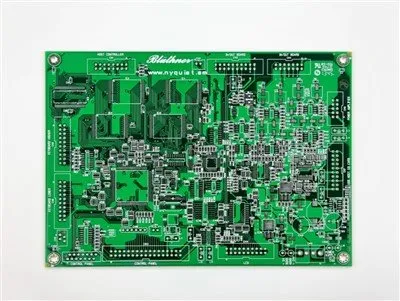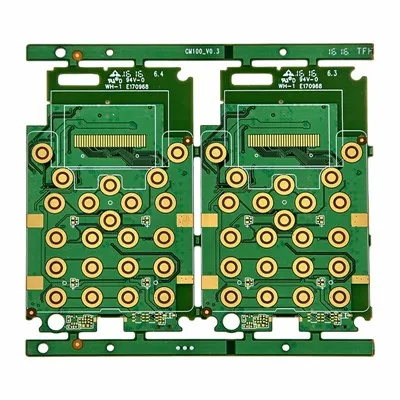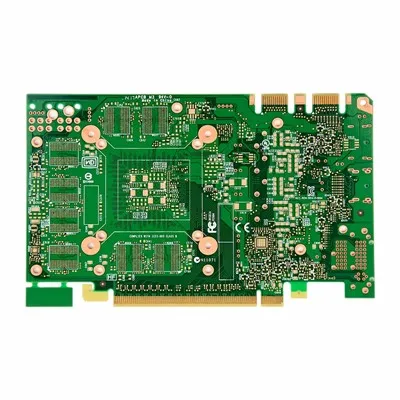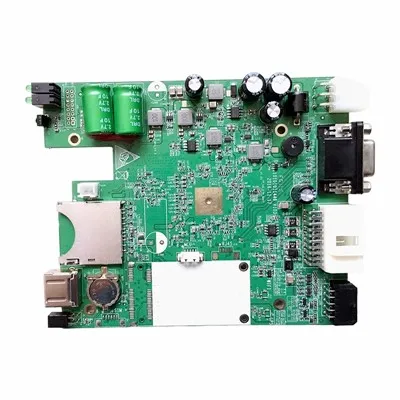

LED products are widely used in commercial lighting, residential lighting, automotive lighting, display modules, industrial lamps, smart lighting products, and decorative illumination. For customers, the PCB is not only a carrier for LED components. It directly affects heat dissipation, brightness stability, soldering quality, production yield, service life, and overall product cost. A poorly designed or poorly manufactured LED PCB may cause overheating, brightness decay, solder joint failure, unstable current transmission, or early product failure.
We provide custom rigid PCB manufacturing solutions for LED applications, helping customers choose suitable materials, copper thickness, surface finishes, solder mask options, and production processes according to actual product requirements. Whether the project is for low-power LED indicators, indoor lighting, outdoor lamps, LED modules, or a High Power LED PCB, our goal is to help customers improve thermal performance, reduce production risks, and achieve stable quality from prototype to mass production.
Many customers face similar problems when sourcing LED PCBs: they are unsure whether to use FR4, aluminum base, or copper base material; they worry that poor heat dissipation will shorten LED lifetime; they need stable solderability for SMT assembly; they want good quality but also need to control cost. Our LED rigid PCB solutions are designed around these real customer concerns.
Heat Dissipation

Heat dissipation is one of the most important factors in LED PCB design and manufacturing. During operation, LED components continuously generate heat. If the heat cannot be transferred away from the LED efficiently, the product may suffer from reduced brightness, color shift, shorter lifetime, unstable solder joints, or even complete failure.
Customers usually want to know whether the PCB can support long working hours and whether the board material is suitable for the LED power level. For low-power LED products, FR4 may be enough if the thermal load is not high. For lighting products with higher power density, aluminum-based or metal core boards are often a better choice because they can transfer heat more effectively.
Our solutions focus on practical thermal management, including suitable base material selection, copper thickness control, board thickness adjustment, thermal path design, surface finish stability, and process consistency. For applications that require continuous operation, such as street lights, panel lights, downlights, and industrial lamps, reliable thermal performance can help reduce maintenance costs and improve end-user satisfaction.
Material Selection
Material selection directly affects heat dissipation, electrical performance, cost, solderability, and product lifetime. Many customers are not sure which PCB material is best for their project. The right choice should depend on LED power, working current, product structure, operating environment, heat dissipation method, and target budget.
|
Material Option |
Main Features |
Suitable Applications |
Customer Benefit |
|
FR4 Rigid PCB |
Cost-effective, mature process, suitable for standard electronic designs |
Low-power LED indicators, control circuits, decorative lights, small modules |
Helps control cost for products with limited thermal requirements |
|
High-Tg FR4 |
Better thermal resistance and dimensional stability than standard FR4 |
LED products with moderate heat or higher assembly temperature requirements |
Improves stability during assembly and operation |
|
Aluminum Base PCB |
Good heat dissipation, widely used in LED lighting products |
Bulbs, panel lights, downlights, strip modules, street lighting, indoor and outdoor lamps |
Reduces overheating risk and supports longer working life |
|
Copper Base PCB |
Strong thermal conductivity and better heat spreading ability |
High-power LED modules, demanding lighting products, special thermal designs |
Supports more demanding thermal performance |
|
Heavy Copper PCB |
Higher current carrying capacity and better heat spreading |
Power LED modules and products with higher current requirements |
Improves current stability and supports durable operation |
|
Halogen-Free Material |
Environmentally friendly material option |
Export lighting products and projects with environmental requirements |
Supports compliance-focused product development |
The best material is not always the most expensive one. For example, a low-power decorative LED product may not need a copper base board, while a high-power outdoor lamp may require better thermal performance than standard FR4 can provide. We help customers evaluate the actual application and select a balanced solution for cost, performance, and reliability.
Lighting Applications
LED rigid PCBs can be used in a wide range of lighting and display products. Different applications have different design priorities. For example, LED strips often require stable soldering and cost control, while street lights require heat resistance and long service life. Smart lighting products may require both power control and signal stability.
Our PCB solutions can support LED bulbs, LED tube lights, LED panel lights, LED downlights, LED street lights, LED strip products, LED display modules, backlight modules, automotive LED lamps, smart lighting controllers, industrial lamps, and decorative lighting products. For every Lighting System, the PCB should match the thermal load, assembly method, working environment, and reliability requirements.
For outdoor lighting, customers often care about long operating life, humidity resistance, heat control, and stable current transmission. For indoor commercial lighting, customers may focus on brightness consistency, smooth assembly, and cost efficiency. For display-related LED products, stable signal and accurate layout are especially important. Understanding the final application allows us to provide more useful manufacturing recommendations instead of only producing a standard board.
Solderability
Solderability is a common pain point in LED PCB assembly. Poor solderability can cause weak solder joints, component misalignment, high defect rates, rework, and production delays. Since many LED products use automated SMT assembly, the PCB surface finish, solder mask quality, flatness, and cleanliness must be well controlled.
We support common surface finishes such as lead-free HASL, ENIG, OSP, and immersion silver according to customer requirements. Lead-free HASL is often used for standard LED products that require cost-effective soldering performance. ENIG provides a flatter surface and is suitable for fine-pitch components or higher-reliability applications. OSP may be used for cost-sensitive mass production when the assembly process is well controlled.

For an LED Circuit Board, stable solderability helps improve assembly efficiency and reduce hidden quality risks. We pay attention to surface finish consistency, solder mask registration, board cleanliness, and packaging protection to help customers achieve smoother assembly and better production yield.

Long-Term Reliability
LED products are often expected to work for long hours, sometimes in outdoor, high-temperature, or enclosed environments. Long-term reliability is therefore a key concern for customers. A PCB that performs well during initial testing may still fail later if the material, copper plating, solder mask, or thermal design is not suitable.
Common reliability concerns include overheating, warpage, delamination, oxidation, poor solder mask adhesion, unstable current transmission, and brightness degradation caused by excessive heat. To reduce these risks, we focus on material control, copper thickness stability, accurate routing, drilling quality, surface finish inspection, electrical testing, and final visual inspection.

For customers, reliability means fewer product returns, lower maintenance costs, better brand reputation, and more stable market performance. A dependable LED Lighting PCB Board should support not only electrical connection, but also thermal management, assembly stability, and consistent long-term operation.

Cost Control
Cost control is especially important in the LED lighting market because many products are price-sensitive and produced in large quantities. However, choosing the lowest-cost PCB without considering thermal performance or assembly quality may lead to higher total cost later, including rework, product failure, warranty claims, and delayed delivery.
We help customers control cost in a practical way. This may include choosing the most suitable material instead of over-specifying the board, optimizing copper thickness according to current requirements, selecting the right surface finish, improving panelization, reducing unnecessary complexity, and checking manufacturability before production.
For example, if a product has low thermal requirements, standard FR4 may be enough. If the product generates more heat, aluminum base material may reduce long-term failure risk. If the board is used in high-volume production, panel design and material utilization can also have a direct impact on unit cost. Our goal is to help customers achieve the right balance between performance and budget.
Prototype to Mass Production
LED projects often begin with prototype testing before moving to small-batch production and then mass manufacturing. During the prototype stage, customers usually need to verify brightness, temperature rise, soldering performance, mechanical fit, and electrical function. During mass production, customers care more about consistency, delivery time, production yield, and quality control.
We support the full project process from prototype to volume production. Before manufacturing, we can review Gerber files and check key points such as material selection, board thickness, copper thickness, surface finish, solder mask design, spacing, panelization, and production tolerance. This helps customers identify potential risks early and reduce repeated revisions.
For faster quotation and production preparation, customers can provide Gerber files, quantity, board size, material requirement, board thickness, copper thickness, surface finish, solder mask color, LED power, working current, thermal requirements, and any special testing requirements.
With engineering support, stable manufacturing processes, and quality inspection, we help customers move from initial samples to reliable mass production with lower risk and better production efficiency.
FAQ
Q1: What material is best for LED rigid PCB boards?
The best material depends on the LED power, working current, heat dissipation requirement, product structure, and budget. FR4 is suitable for low-power LED products and control circuits, while aluminum base PCB is widely used for LED lighting products that need better heat dissipation. For high-power or demanding thermal applications, copper base PCB or heavy copper PCB can be considered.
Q2: Why is heat dissipation important for LED PCB boards?
LED components generate heat during operation. If the PCB cannot transfer heat efficiently, the product may suffer from brightness reduction, color shift, shorter service life, solder joint failure, or early product damage. Good thermal management helps improve lighting stability and long-term reliability.
Q3: Can you manufacture LED PCB boards for high-power lighting products?
Yes. We can support LED PCB boards for high-power lighting applications by recommending suitable materials, copper thickness, surface finishes, and board structures according to the product's thermal and electrical requirements.
Q4: What surface finish is suitable for LED PCB boards?
Common surface finishes include lead-free HASL, ENIG, OSP, and immersion silver. Lead-free HASL is cost-effective for standard LED products. ENIG provides a flat surface and is suitable for fine-pitch components or higher-reliability products. OSP is often used for cost-sensitive mass production with controlled assembly conditions.
Q5: Do you support LED PCB prototype and mass production?
Yes. We support prototype production, small-batch production, pilot runs, and mass production. This helps customers verify lighting performance, heat dissipation, solderability, and product structure before moving to volume manufacturing.
Q6: How can I reduce the cost of an LED PCB project?
Cost can be optimized by selecting the right material, using suitable copper thickness, choosing an appropriate surface finish, improving panelization, and avoiding unnecessary design complexity. We can review the project requirements and recommend a balanced solution between cost and performance.
Q7: What information is needed for an LED PCB quotation?
For a faster and more accurate quotation, please provide Gerber files, quantity, board size, material type, board thickness, copper thickness, surface finish, solder mask color, LED power, working current, thermal requirements, and any special testing or tolerance requirements.
Q8: What applications can LED rigid PCB boards be used for?
LED rigid PCB boards are commonly used in LED bulbs, LED strip lights, LED panel lights, LED downlights, LED street lights, LED display modules, backlight modules, automotive LED lamps, smart lighting systems, industrial lamps, and decorative lighting products.
Q9: How do you ensure the quality of LED PCB boards?
We control quality through material inspection, copper thickness control, solder mask inspection, surface finish inspection, AOI inspection, electrical testing, visual inspection, packaging protection, and batch consistency management. These steps help reduce risks such as poor solderability, open circuits, short circuits, warpage, and unstable performance.
Q10: Can you help choose the right LED PCB material?
Yes. If customers are unsure whether to use FR4, High-Tg FR4, aluminum base, copper base, or heavy copper material, we can recommend a suitable option based on LED power, heat dissipation requirements, working environment, assembly method, and target cost.
Hot Tags: led rigid PCB board, China led rigid PCB board manufacturers, suppliers, factory