
Product Details
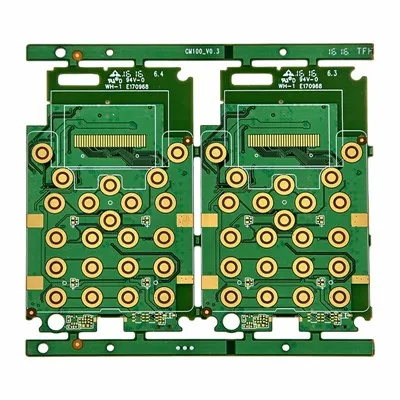
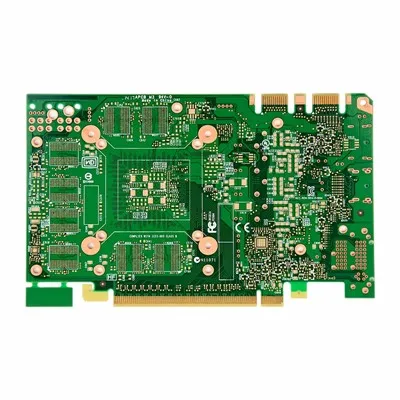
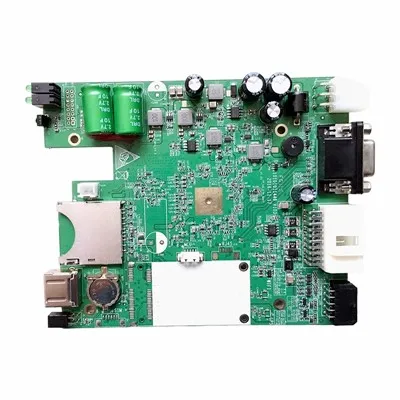
FR4 PCB is the most widely-used rigid printed circuit board, built with woven glass-epoxy FR-4 dielectric material. It balances good mechanical strength, insulation performance, chemical resistance and cost-effectiveness. Standard FR4 supports multilayer stacking, high-speed routing and various surface finishes, covering most consumer electronics, industrial equipment, power supplies and communication products. Special variants such as high-TG FR4 are available for environments with elevated operating temperatures. Although FR4 delivers comprehensive general-purpose performance, it is not suitable for dynamic bending scenarios and high-frequency RF applications requiring ultra-low dielectric loss. Engineers and buyers should select standard or high-TG FR4 according to operating temperature, signal requirements and cost budgets.

Understanding FR4 Material
FR4 is a glass fiber reinforced epoxy laminate that provides mechanical strength, electrical insulation and thermal stability. The term "FR" stands for Flame Retardant, while the number "4" refers to the material classification standard.
Because of its balanced properties, FR4 has become the industry standard substrate for rigid PCB manufacturing.
Typical characteristics include:
- Good electrical insulation
- Stable mechanical strength
- Flame-retardant properties
- Wide material availability
- Compatibility with standard PCB processes
- Competitive manufacturing cost
For most industrial and commercial electronic products, FR4 delivers sufficient performance without requiring specialized materials.

FR4 vs Other PCB Materials
One of the most common purchasing mistakes is selecting materials that exceed actual project requirements.
The table below compares FR4 with other popular PCB materials.
|
Material Type |
Main Advantage |
Main Limitation |
Typical Application |
|
FR4 |
Cost-effective and versatile |
Limited thermal conductivity |
Industrial electronics |
|
Aluminum PCB |
Excellent heat dissipation |
Limited multilayer capability |
LED lighting |
|
High TG PCB |
Better thermal resistance |
Higher cost |
Automotive and power electronics |
|
High Frequency PCB |
Low signal loss |
Expensive materials |
RF and communication systems |
|
Ceramic PCB |
Superior thermal performance |
Highest cost |
High-power modules |
For applications operating below standard thermal and frequency limits, FR4 is usually the most economical choice.
Using high-frequency or ceramic materials where they are not required often increases project costs without providing measurable benefits.
Determining FR4 Suitability for Buyers
Instead of selecting PCB materials based solely on specifications, buyers should evaluate actual operating conditions.
FR4 is generally suitable when:
- Operating temperatures remain within standard ranges
- Signal frequencies are not extremely high
- Thermal management requirements are moderate
- Product cost is a priority
- Mechanical strength is important
- Typical applications include:
- Industrial control equipment
- Consumer electronics
- Power adapters
- Security systems
- Smart home products
- Measurement instruments
However, if a design involves high-power heat generation, RF communication or continuous high-temperature operation, alternative materials may be more appropriate.
Common FR4 PCB Specifications
FR4 boards can be manufactured in a wide variety of configurations depending on product requirements.
Typical specification ranges include:
|
Item |
Common Range |
|
Layer Count |
1–30+ Layers |
|
Board Thickness |
0.2–6.0 mm |
|
Copper Weight |
0.5–6 oz |
|
Surface Finish |
ENIG, HASL, OSP |
|
Material Grade |
Standard TG to High TG |
|
Solder Mask Color |
Multiple Options |
This flexibility allows FR4 to support both simple consumer products and complex industrial systems.
Because FR4 is widely available, procurement teams also benefit from shorter sourcing cycles and broader supplier options.
Cost Factors That Affect FR4 PCB Pricing
Although FR4 is considered a cost-effective material, board pricing can vary significantly based on design complexity.
Several factors influence final cost:
Layer Count
A 6-layer board requires additional materials and processing compared with a double-sided PCB.
01
Board Size
Larger panels generally consume more raw material and production capacity.
02
Copper Thickness
Heavy copper designs increase material costs and manufacturing complexity.
03
Surface Finish
Premium finishes such as ENIG usually cost more than HASL.
04
Special Requirements
Controlled impedance, blind vias and tight tolerances may increase manufacturing costs.
Understanding these factors helps purchasing teams compare quotations more effectively and identify opportunities for cost optimization.
05
Reliability Considerations
While FR4 is widely recognized for its affordability, reliability remains one of its strongest advantages when properly applied.
Key reliability benefits include:
- Stable dimensional performance
- Good mechanical strength
- Consistent electrical insulation
- Proven manufacturing history
- Wide industry acceptance
For most industrial and commercial products, FR4 provides a dependable foundation for long-term operation.
Reliability issues are more commonly caused by design errors, assembly defects or unsuitable operating conditions than by the FR4 material itself.
Quality Control During Manufacturing
A high-quality FR4 PCB depends not only on material selection but also on manufacturing control.
Important inspection procedures include:
- Automated Optical Inspection (AOI)
- Electrical testing
- Hole wall analysis
- Solderability verification
- Dimensional inspection
- Visual quality review
Consistent quality control helps ensure that boards meet both performance and reliability requirements before shipment.
For products used in industrial environments, quality management often has a greater impact on field performance than minor material upgrades.
Future Demand for FR4 PCB
Although advanced materials continue to emerge, FR4 remains the dominant PCB substrate across the electronics industry.
Several factors support its continued popularity:
- Competitive cost
- Mature supply chain
- Broad manufacturing compatibility
- Reliable performance
- Continuous material improvements
As industrial automation, smart devices and connected products continue to expand, FR4 PCB technology is expected to remain a core component of global electronics manufacturing.
For many applications, it offers the best balance between performance, reliability and overall project cost.
FAQ
What does FR4 stand for?
FR4 stands for Flame Retardant Grade 4, a classification used for glass fiber reinforced epoxy laminate materials.
Is FR4 suitable for high-frequency applications?
FR4 can support some communication products, but dedicated high-frequency materials generally provide better signal performance for RF applications.
What industries commonly use FR4 PCBs?
Industrial automation, consumer electronics, power supplies, telecommunications equipment and security systems all widely use FR4 PCBs.
Is FR4 more affordable than other PCB materials?
In most cases, yes. FR4 offers one of the best cost-to-performance ratios available in PCB manufacturing.
Hot Tags: fr4 pcb, China fr4 pcb manufacturers, suppliers, factory, rigid printed circuit board, rigid rigid and flexible pcb